
The Hidden System Constraints Behind Growth Limits
Many construction companies reach a point where growth becomes difficult.
Revenue increases, projects expand, teams grow.
Yet internally, operations become more complex, less predictable, and harder to control.
At some point, growth starts creating more problems than opportunities.
This is where many construction companies hit a hidden ceiling.
The issue is not market demand.
It is not a lack of projects.
It is not even a lack of capability.
The real constraint is structural.
Growth Without Systems Creates Instability
In the early stages, construction companies rely heavily on:
- Experienced project managers
- Strong site execution
- Direct leadership involvement
This works when the number of projects is limited.
But as the company grows:
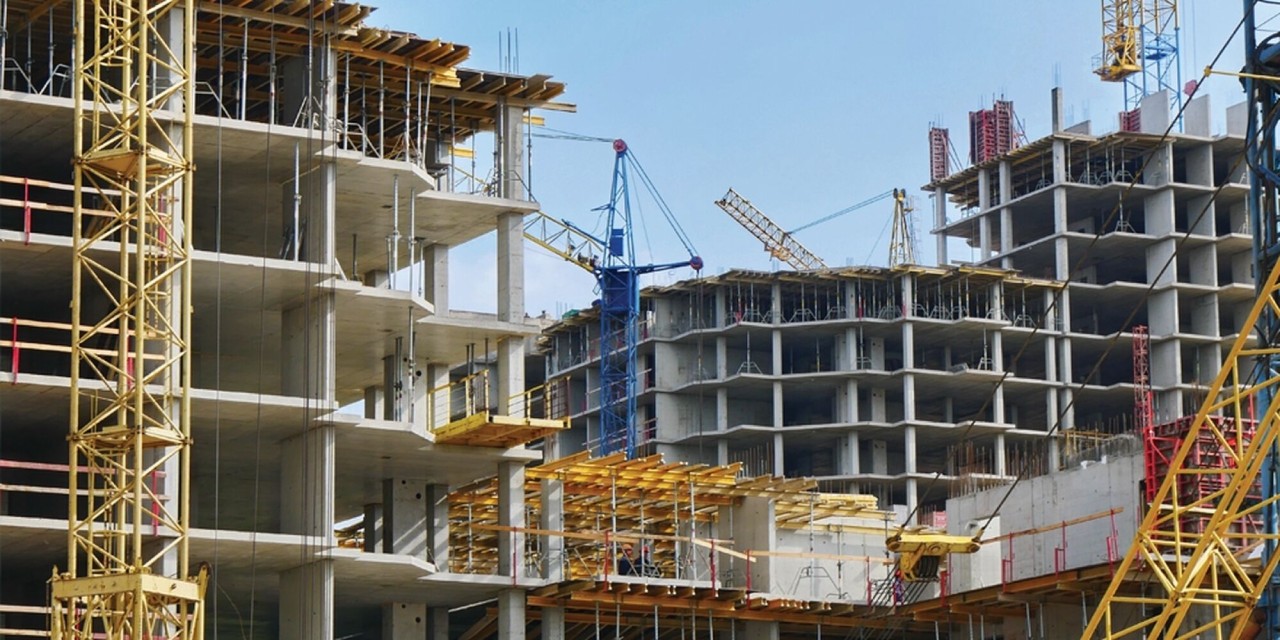
- More projects run simultaneously
- Coordination complexity increases
- Dependencies between teams multiply
Without a system to manage this complexity, growth leads to instability.
The Dependency on Individuals

One of the biggest barriers to scaling is over-reliance on key individuals.
In many companies:
- Critical knowledge stays with project managers
- Decisions depend on a few experienced leaders
- Performance varies between teams
This creates inconsistency.
And inconsistency prevents scalability.
Because scaling requires repeatable performance, not individual excellence.
Fragmented Project Control

As companies expand, project control becomes fragmented.
Different projects operate differently:
- Different reporting structures
- Different scheduling approaches
- Different cost tracking methods
Without standardization:
- Leadership cannot compare performance across projects
- Risks cannot be identified early
- Best practices cannot be replicated
Growth becomes difficult to manage.
The Data Visibility Problem

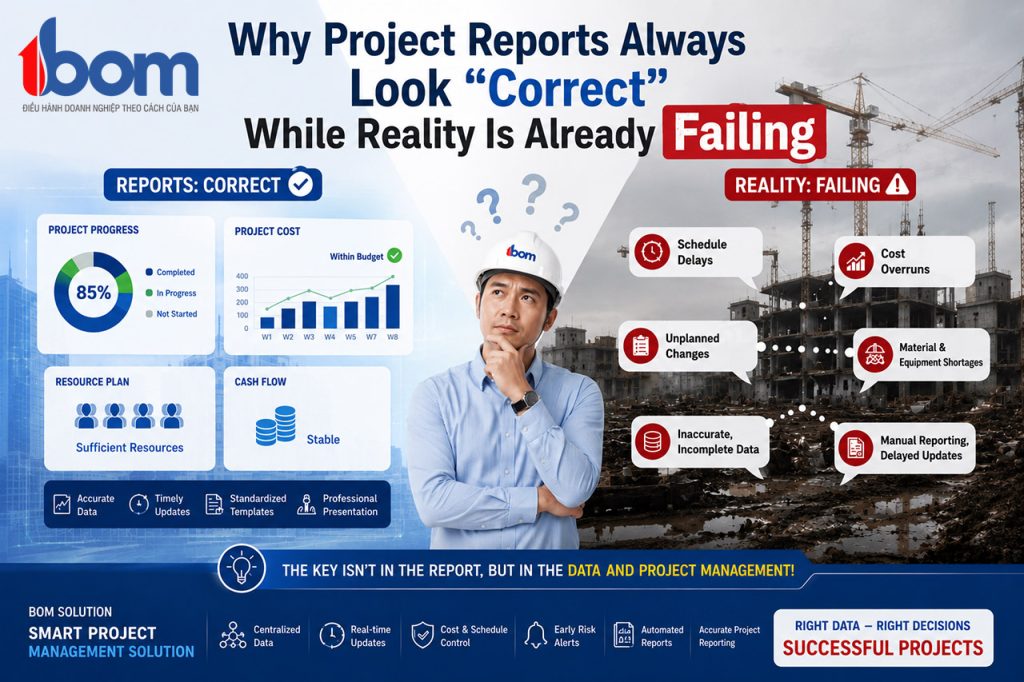
Even when companies generate large amounts of project data, leadership often lacks visibility.
This is due to:
- Disconnected systems
- Manual reporting
- Lack of real-time data
As a result:
- Decisions are delayed
- Issues are identified too late
- Strategic control is weakened
Scaling without visibility is like expanding without control.
No System-Level Governance

Many construction companies manage projects.
Few manage project systems.
Without system-level governance:
- There is no unified structure for project execution
- No consistent control mechanisms
- No feedback loop across projects
This prevents organizations from learning and improving at scale.
From Growth to Scalable Systems
To scale effectively, construction companies must shift from:
Managing projects → Designing systems that manage projects.
This requires:
Standardized project frameworks
Integrated project management systems
Real-time visibility across the portfolio
System-level governance
Solutions like IBOM are built to enable this shift—transforming fragmented project operations into structured, scalable systems.
The Real Question for Construction Leaders
The challenge is no longer:
“How do we grow?”
But:
“How do we build a system that allows us to grow without losing control?”
Because in construction, the companies that scale successfully are not the ones that execute projects better.
They are the ones that design systems that allow projects to perform consistently—at scale.
Đỗ Hữu Binh
CEO, ISOFT
This article is part of a professional series analyzing construction project management and cost control strategies.
© 2026 Đỗ Hữu Binh. All rights reserved.
Any citation or reuse of this content must clearly state the source and author.
- From Data Visibility to Strategic Control: Governance in the Age of AI
- From Construction Site Data to CEO Decisions: Why Real-Time Project Visibility Matters in Construction
- AI Governance — The Next Strategic Battlefield
- Why Quantity Changes Break Down at Scale in Construction Projects
- Why Construction Projects Always Run Late