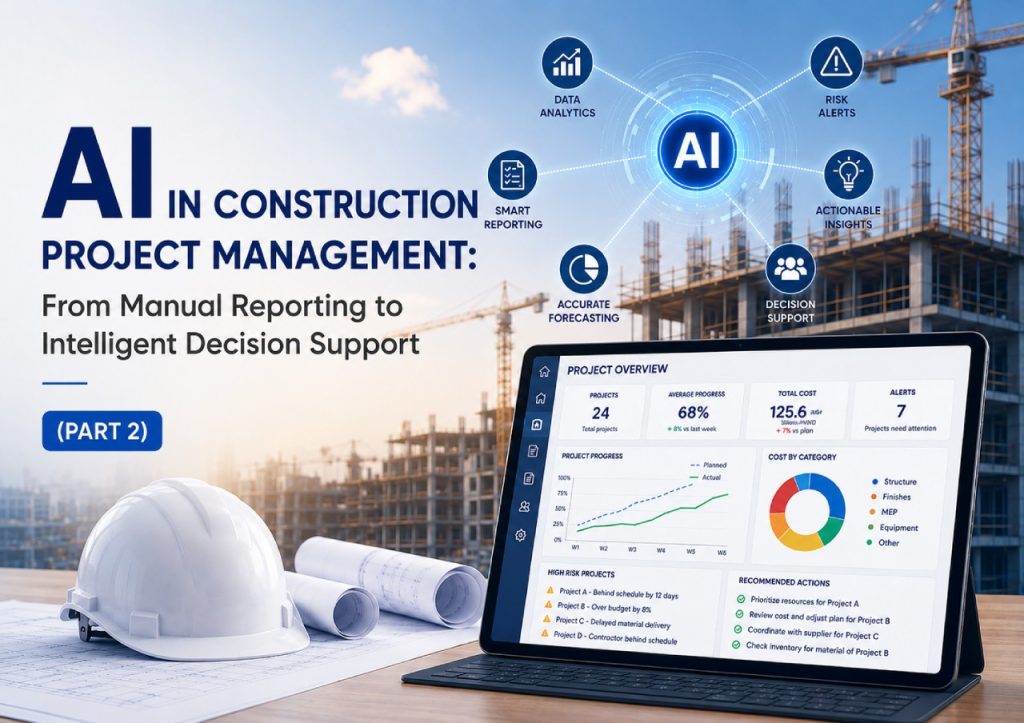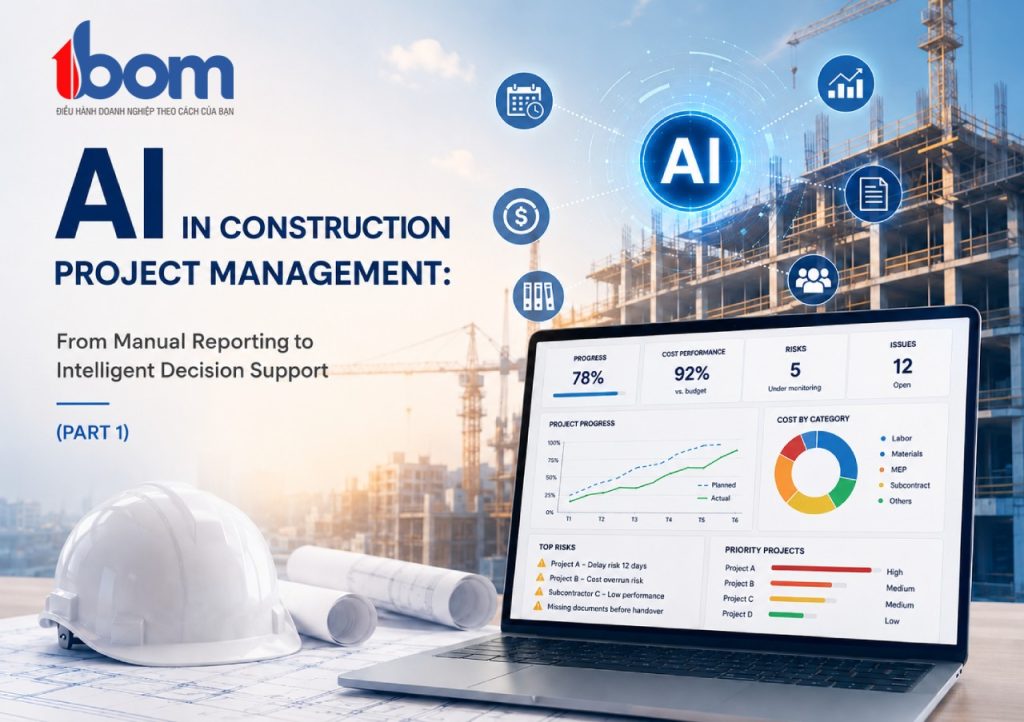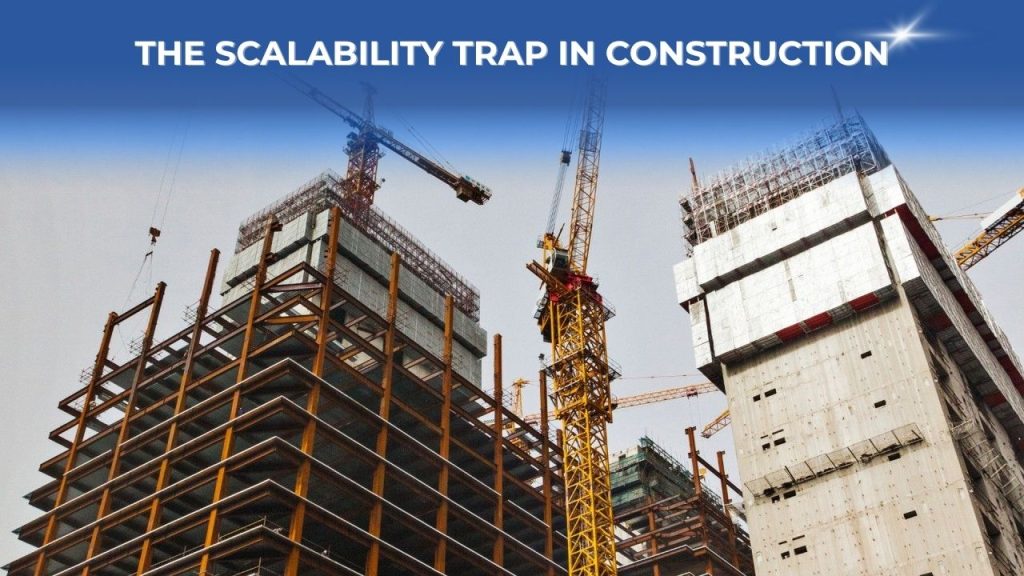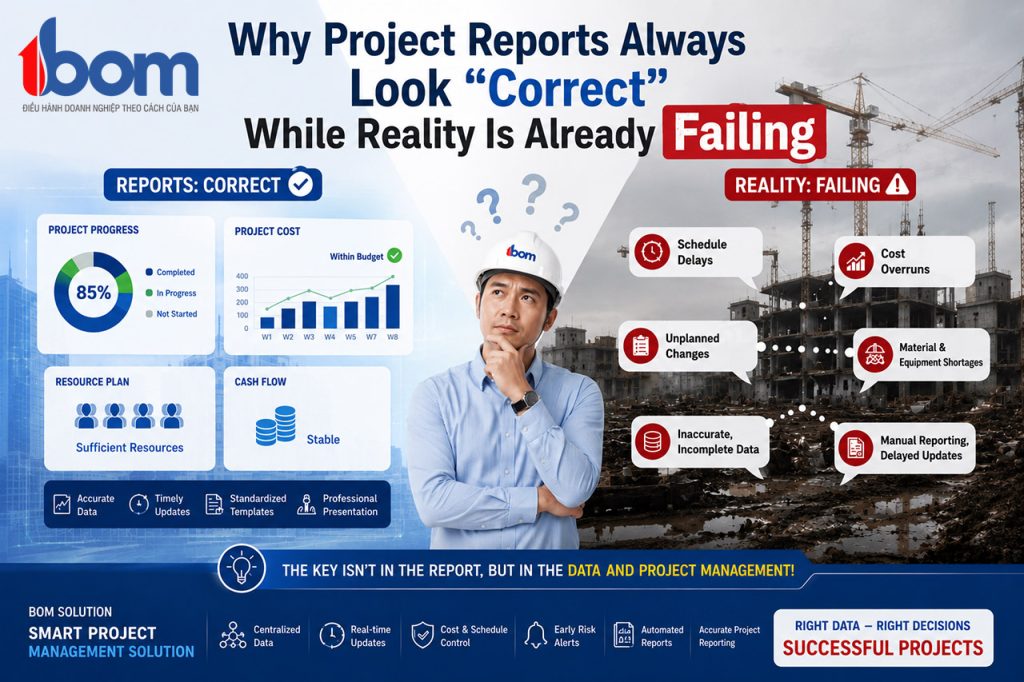

In construction businesses, project failure rarely starts on site.
It starts when leadership receives late, filtered, or unreliable information.
For CEOs, the real challenge is no longer project management — it is seeing the real status of projects early enough to act.
Construction Projects Amplify Small Mistakes

Construction projects are uniquely risky because:
- Multiple execution layers create information distortion
- Cost overruns are often irreversible
- Schedule delays directly impact financial outcomes
A small issue today can turn into a major loss in months.
Traditional Reporting Creates False Confidence

Many construction firms still rely on:
- Manual Excel reports
- Periodic summaries
- Subjective progress updates
By the time problems appear in reports, projects are already off track.
Late data leads to wrong decisions.
What Construction CEOs Really Need to See
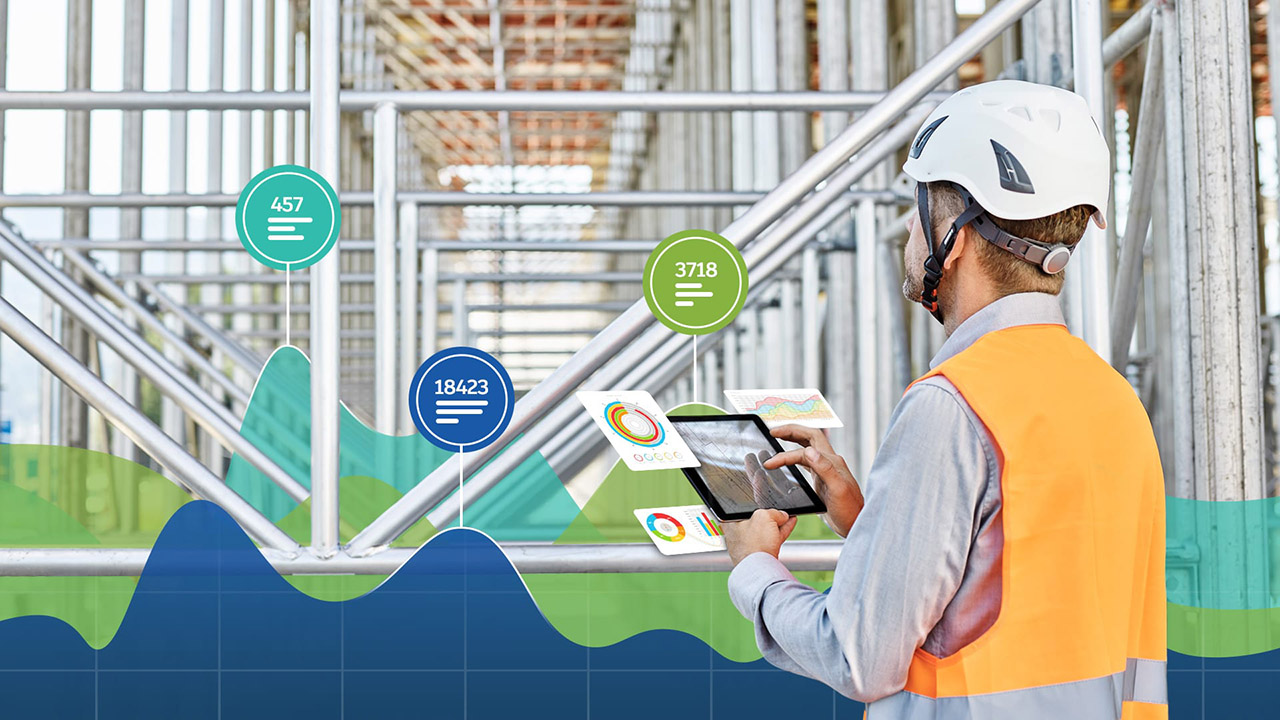
CEOs do not need operational details.
They need clarity on:
- Budget vs actual vs forecasted cost
- Emerging schedule risks
- Projects consuming capital faster than planned
- When executive-level intervention is required
This is leadership data, not site data.
Turning Project Data into Strategic Control

With centralized, real-time project data:
- Decisions become proactive
- Meetings focus on solutions
- Capital allocation becomes more accurate
Execution visibility evolves into strategic governance.
Digital Platforms as a CEO’s Control System

Modern construction leaders are asking:
- “Can I trust the data I’m seeing?”
- Platforms like IBOM are not just tools.
- They are decision systems connecting investment, execution, and finance.
IBOM – From Project Management Tool to a CEO-Level Project Operating System

Many construction companies already use multiple software tools.
However, the real issue is not the number of tools — it is whether project data is connected and reliable enough for executive decisions.
IBOM is designed not just to manage tasks, but to address the real needs of construction CEOs:
- End-to-end project lifecycle integration
From investment approval to execution, cost control, and performance evaluation - A single source of truth for leadership
CEOs no longer rely on fragmented reports or subjective interpretations - Early risk visibility, not post-failure reporting
IBOM helps identify:- Projects exceeding planned budgets
- Contractors or packages threatening schedule integrity
- Issues requiring executive-level intervention
- Enabling CEOs to lead strategically, not operationally
Without diving into daily tasks, CEOs can still:- Control capital allocation
- Monitor real project health
- Make data-driven decisions with confidence
At this point, IBOM becomes more than software — it becomes a project operating system for construction leadership.
Conclusion
Strong strategies fail without execution visibility.
In construction, seeing early means saving projects.
For CEOs, real-time project visibility is no longer optional — it is the foundation for sustainable growth.
Đỗ Hữu Binh
CEO, ISOFT
This article is part of a professional series analyzing construction project management and cost control strategies.
© 2026 Đỗ Hữu Binh. All rights reserved.
Any citation or reuse of this content must clearly state the source and author.
- How Does a Construction Project Really Operate from A to Z
- AI Will Not Replace Managers — It Will Expose Them
- How AI Can Optimize Construction Planning and Site Resource Coordination
- Construction Leadership Truth #5
- AI in Construction Project Management: From Manual Reporting to Intelligent Decision Support (The end)