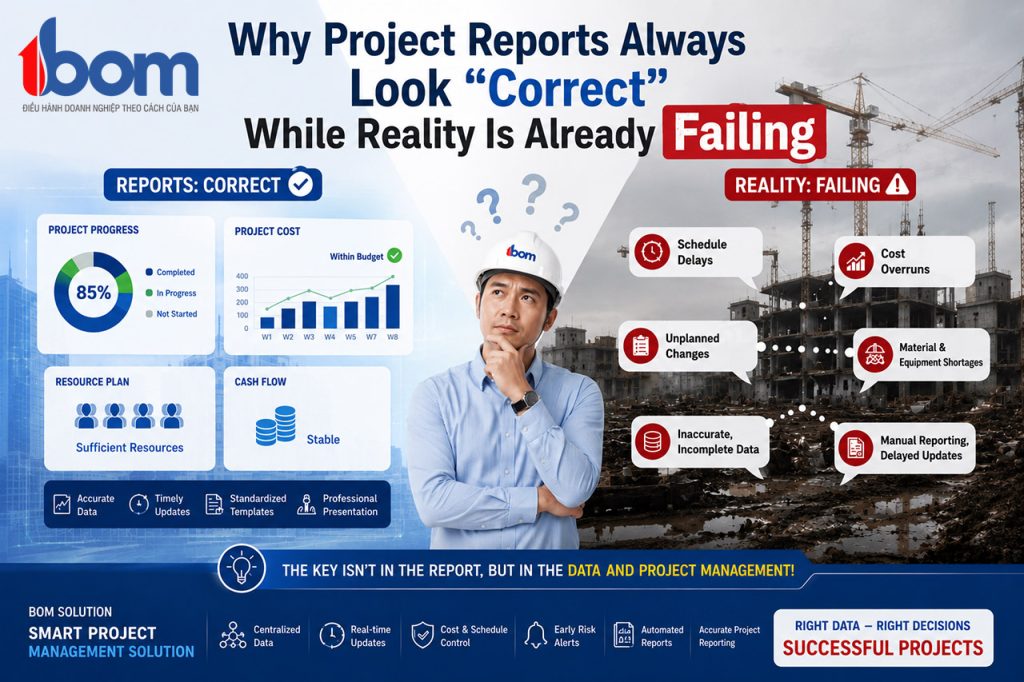

Artificial Intelligence is entering the workplace fast.
- Dashboards are smarter.
- Reports are automated.
- Assistants can remind, summarize, and predict.
Yet one truth is becoming clear:
- AI does not remove management problems.
- It makes them visible.
The Illusion Companies Believe

Many organizations quietly hope AI will fix execution issues:
- Late reports
- Missed deadlines
- Unclear responsibilities
- Managers constantly “chasing” teams
But AI cannot manage what leadership has not defined.
If roles are unclear, AI sends reminders to the wrong people.
If workflows are broken, AI only accelerates the breakdown.
If accountability is weak, AI produces more data — not better decisions.
What AI Actually Does to an Organization

When AI enters operations, three things happen:
1. Delays become measurable
Excuses turn into timestamps.
2. Ownership becomes traceable
Every task has a name attached.
3. Management gaps become obvious
Bottlenecks show up in data, not opinions.
This is uncomfortable — but powerful.
Because now the real issue is no longer technology. It is leadership discipline.
AI Needs Structure to Be Useful

AI works best in environments where:
- Workflows are defined
• Responsibilities are assigned
• Deadlines are structured
• Reporting is consistent
Without structure, AI creates noise. With structure, AI multiplies execution capacity.
That is why AI is not step one in digital transformation. Operational design is.
Where IBOM and iBot Come In
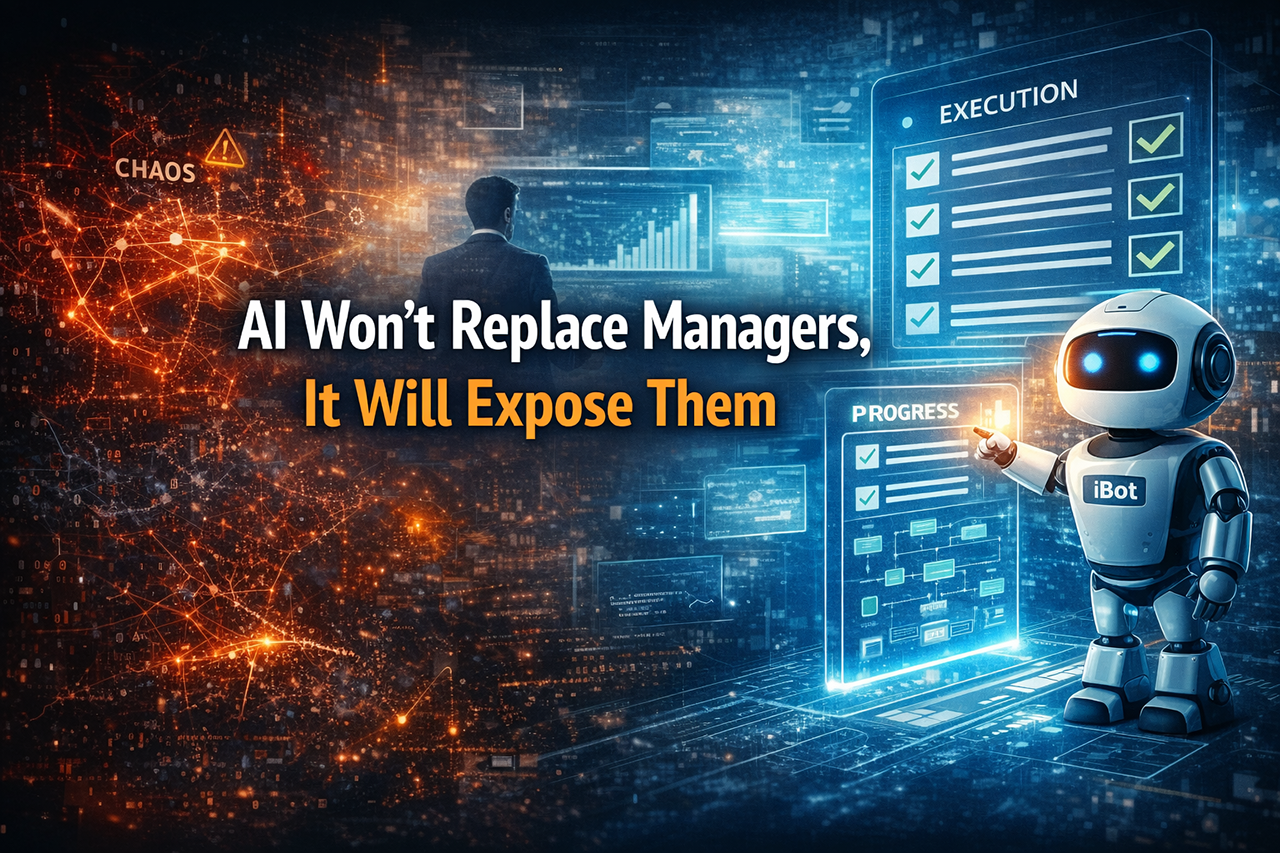
IBOM provides the execution structure organizations lack:
- Clear workflows
- Defined responsibilities
- Standardized processes
- Real‑time visibility
On top of that structure, iBot operates as an execution AI assistant:
- Reminds the right people at the right time
- Flags delays early
- Enforces reporting rhythm
- Reduces managerial chasing
AI here does not replace managers. It strengthens disciplined management.
The Leadership Shift AI Forces

In the AI era, managers can no longer rely on:
- Verbal updates
- Informal follow‑ups
- “I thought someone else handled it”
AI-supported systems expose execution reality in real time.
This shifts leadership from supervision to system design.
Great managers in the AI era are not better at chasing. They are better at designing how work flows.
Digital Transformation Is Becoming a Leadership Test
AI is not a shortcut. It is a mirror.
Organizations that design clear execution systems will scale faster than ever. Those that do not will simply see their inefficiencies faster.
The question is no longer: “Should we use AI?”
It is: “Are we ready for the transparency AI brings?”
Đỗ Hữu Binh
CEO, ISOFT
This article is part of a professional series analyzing construction project management and cost control strategies.
© 2026 Đỗ Hữu Binh. All rights reserved.
Any citation or reuse of this content must clearly state the source and author.
- From Construction Site Data to CEO Decisions: Why Real-Time Project Visibility Matters in Construction
- Scaling Project Control Across Multiple Construction Projects – Without Losing Flexibility
- AI in Construction Project Management: From Manual Reporting to Intelligent Decision Support (Part 1)
- How Construction Teams Implement System-Based Quantity Control – Step by Step, Without Disrupting Ongoing Projects
- Construction Leadership Truth #1