
Quantity Changes are normal. Losing control is not.

Design revisions, site conditions, client requests, and value engineering decisions all lead to quantity changes.
In construction projects, change is not an exception—it is the default.
Yet many contractors experience the same pattern: a few early changes are manageable, but as the project progresses, quantity updates become slower, less reliable, and increasingly disconnected from cost and contract impact.
The problem is not the existence of change. It is the inability to manage change at scale.
Why quantity changes become unmanageable

Most construction organizations manage quantity changes using the same tools and workflows they used when projects were smaller and simpler.
Typically, this means:
- Quantity takeoff updates in separate Excel files
- Manual BOQ revisions
- Change logs tracked independently from cost control
- Limited visibility across departments
This approach works only when change volume is low.
Once projects reach a certain level of complexity, manual coordination breaks down. Each additional change increases the effort required to maintain consistency—until teams can no longer keep up.
Scale exposes structural weaknesses

When quantity changes scale up, three weaknesses become obvious:
- Fragmented data – quantities, costs, and variations live in different places
- Delayed impact visibility – teams see changes, but not their consequences
- Reactive decision-making – actions are taken after costs are already committed
At this point, experience and individual effort are no longer enough to maintain control.
The difference between tracking changes and controlling them

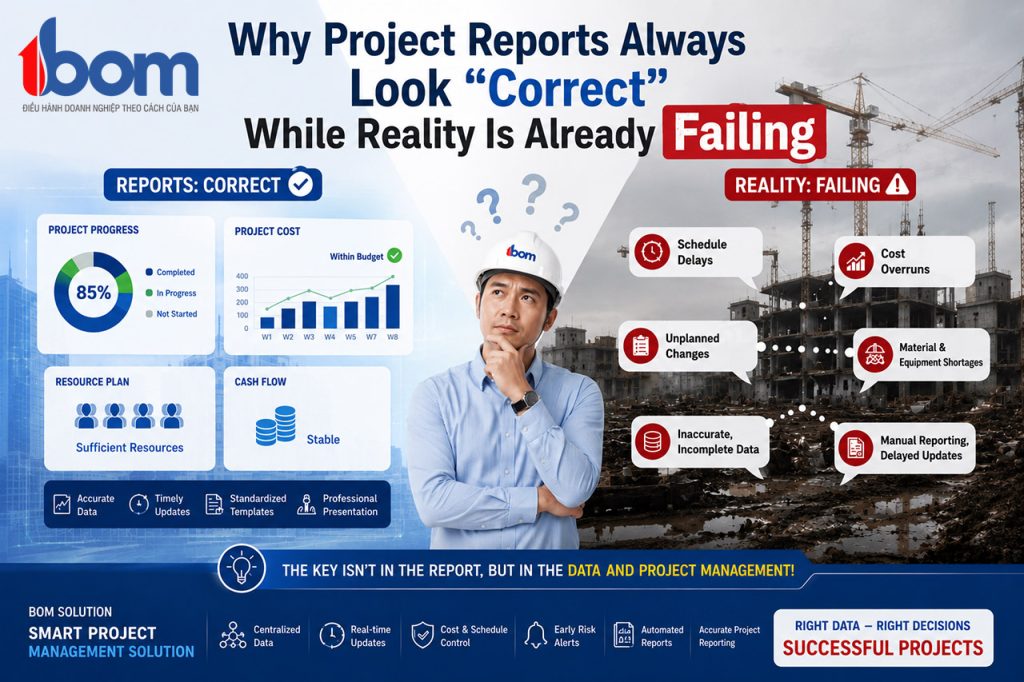
Many teams believe they are managing changes because they record them.
In reality, there is a fundamental difference between:
- Tracking quantity changes
- Controlling their impact
Control means understanding how each change affects: – Procurement commitments – Subcontractor scopes – Cash flow – Project margin
Without this connection, change management becomes a documentation exercise rather than a control mechanism.
What projects that stay in control do differently
Projects that maintain control as changes scale share several characteristics:
- Quantity changes are managed in a structured, centralized system
- Every change is linked to cost and contract impact
- Teams work from a single, consistent source of information
- Visibility is available early—before decisions are locked in
These projects do not eliminate change. They eliminate surprises.
A gradual shift toward system-based control
Leading contractors are increasingly recognizing that quantity change management cannot rely solely on spreadsheets and manual coordination.
As project complexity grows, control requires:
- Structured quantity data
- Clear versioning and traceability
- Real-time visibility across functions
This shift is less about technology adoption and more about protecting margin and decision quality.
Looking ahead
In the next article IBOM, we will explore how modern construction teams are building systematic control over quantities, costs, and changes—without adding complexity to daily workflows.
The goal is not to stop change, but to stay ahead of it.
Đỗ Hữu Binh
CEO, ISOFT
This article is part of a professional series analyzing construction project management and cost control strategies.
© 2026 Đỗ Hữu Binh. All rights reserved.
Any citation or reuse of this content must clearly state the source and author.
- The CEO’s Project Governance Framework
- How Modern Construction Teams Build Systematic Control Over Quantities, Costs, and Changes — Without Adding Complexity
- The Scalability Trap in Construction
- The Hidden Cost of Construction Projects: It’s Not What You Think
- AI Governance — The Next Strategic Battlefield