
The Illusion of “Non-Loss” Projects

Many construction companies believe a project is successful if it does not report a financial loss.
But globally, the conversation has shifted.
According to industry research from organizations such as McKinsey and PMI:
- Large construction projects typically take 20% longer to finish than scheduled.
- Cost overruns of 10–30% are common in infrastructure and building projects.
- Productivity growth in construction has significantly lagged behind manufacturing for decades.
The issue is rarely a catastrophic mistake.
It is systemic inefficiency.
Construction Project Management: The Control Gap

Traditional project management focuses on:
- Progress tracking
- Quantity verification
- Periodic financial summaries
However, modern construction enterprises require:
- Real-time budget variance tracking
- Integrated contract and change order management
- Cross-department cost synchronization
- Lifecycle-based cost control
- Predictive risk indicators
The gap between “tracking performance” and “controlling performance” is where profit quietly erodes.
Construction Cost Control: Where Margin Disappears

Margins in construction are structurally thin. In many markets, net margins range between 3–8%.
When operating within such narrow boundaries:
- A 2% variance caused by delayed updates
- A 3% deviation due to misaligned cash flow
- A 1–2% inefficiency from manual reconciliation
Can eliminate 50% or more of expected profit.
This is not a budgeting problem.
It is a visibility and structural integration problem.
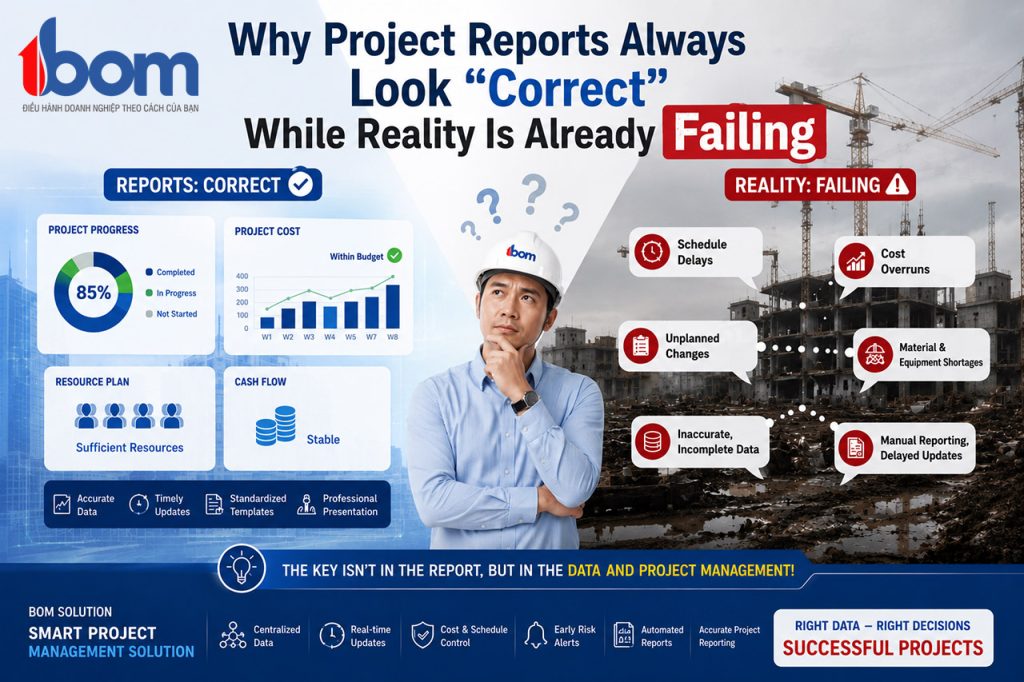
When cost data is fragmented across spreadsheets, messaging platforms, and independent departmental systems, leadership cannot act in time.
Decisions become retrospective instead of predictive.
Digital Transformation in Construction: From Tool Adoption to Structural Redesign
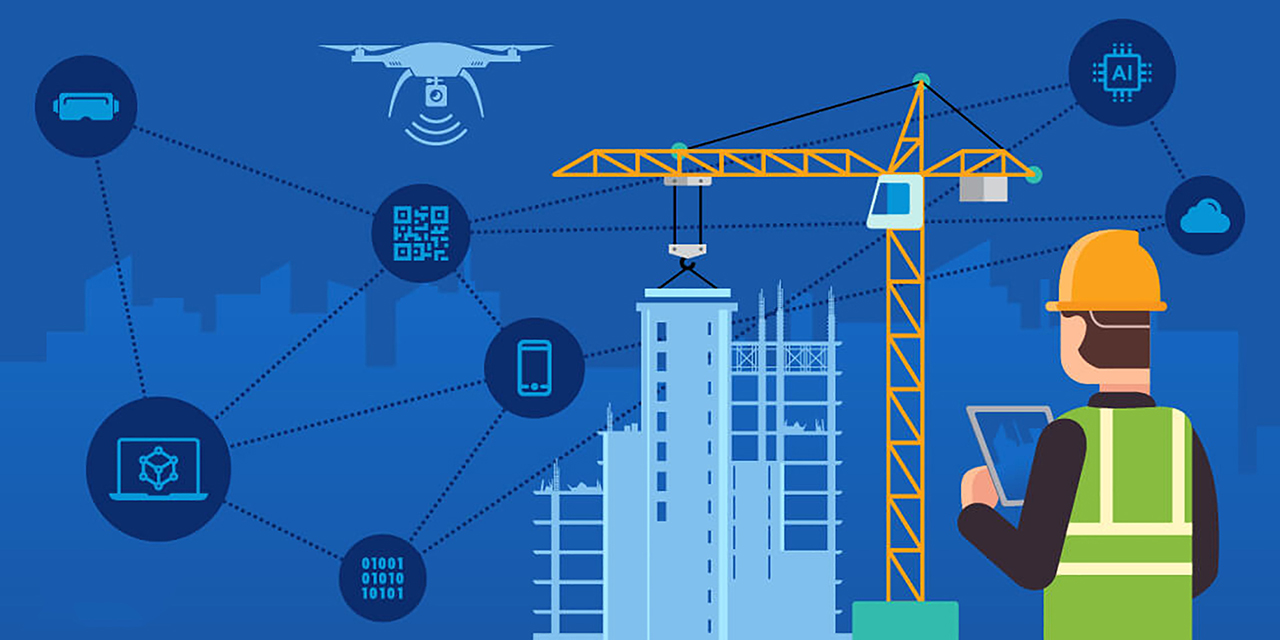
Globally, leading construction firms are not simply “adopting software.”
They are redesigning their management architecture.
This includes:
- Centralized data environments
- Standardized digital workflows
- Real-time financial dashboards
- Cross-functional transparency
- Automated approval and audit trails
Digital transformation in construction is no longer an IT initiative.
It is an executive-level structural strategy.
Construction Management Software: Strategic Infrastructure

The future of construction management software is not feature-driven.
It is infrastructure-driven.
An integrated system must:
- Connect investment, design, procurement, execution, and finance
- Provide unified cost visibility across the project lifecycle
- Enable real-time margin control
- Reduce person-dependent management risk
- Support scalable portfolio oversight
When management becomes system-driven rather than personality-driven, sustainable growth becomes possible.
The Strategic Divide

Over the next 3–5 years, the construction industry will experience a widening gap between:
Traditional operators
and
Digitally structured enterprises.
The companies that master:
- Data integrity
- Process standardization
- Cost transparency
- Operational efficiency
Will not only protect margins.
They will gain structural competitive advantage.
The real question for construction leaders is not:
“Should we digitalize?”
But:
How long can we afford structural inefficiency in a margin-constrained industry?
Practical Perspective
In working with construction and investment enterprises, one consistent pattern emerges:
The challenge is not a lack of tools.
It is the absence of structural integration.
An effective management system does more than digitize workflows.
It must:
- Standardize how projects are governed
- Integrate data across investment, execution, and finance
- Create a single source of truth for executive leadership
- Enable real-time cost and margin control
This is the direction modern construction management platforms such as IBOM are designed to support.
Not merely as software solutions,
but as digital operating infrastructure for construction enterprises.
In a margin-constrained and transparency-driven environment, structural control is no longer an advantage.
It is a necessity.
Đỗ Hữu Binh
CEO, ISOFT
This article is part of a professional series analyzing construction project management and cost control strategies.
© 2026 Đỗ Hữu Binh. All rights reserved.
Any citation or reuse of this content must clearly state the source and author.
- Construction Material Management: Controlling Demand, Supply, Inventory and Consumption
- The Data Blind Spot in Construction Companies
- Autonomous Organization — When the System Starts to Run Itself
- Why Construction Companies Will Compete on Decision Speed, Not Execution Speed
- When Does a Construction Project Actually Start Falling Behind?