
In the journey of digital transformation, organizations have heavily invested in systems such as ERP, BI, and dashboards.
They now have access to:
- financial data
- planning data
- reporting data
Yet, they still face a fundamental problem:
they lack visibility into how work is actually executed.
This gap defines one of the most critical missing layers in modern management:
Execution Data — data that captures how work truly happens.
1. What is Execution Data?
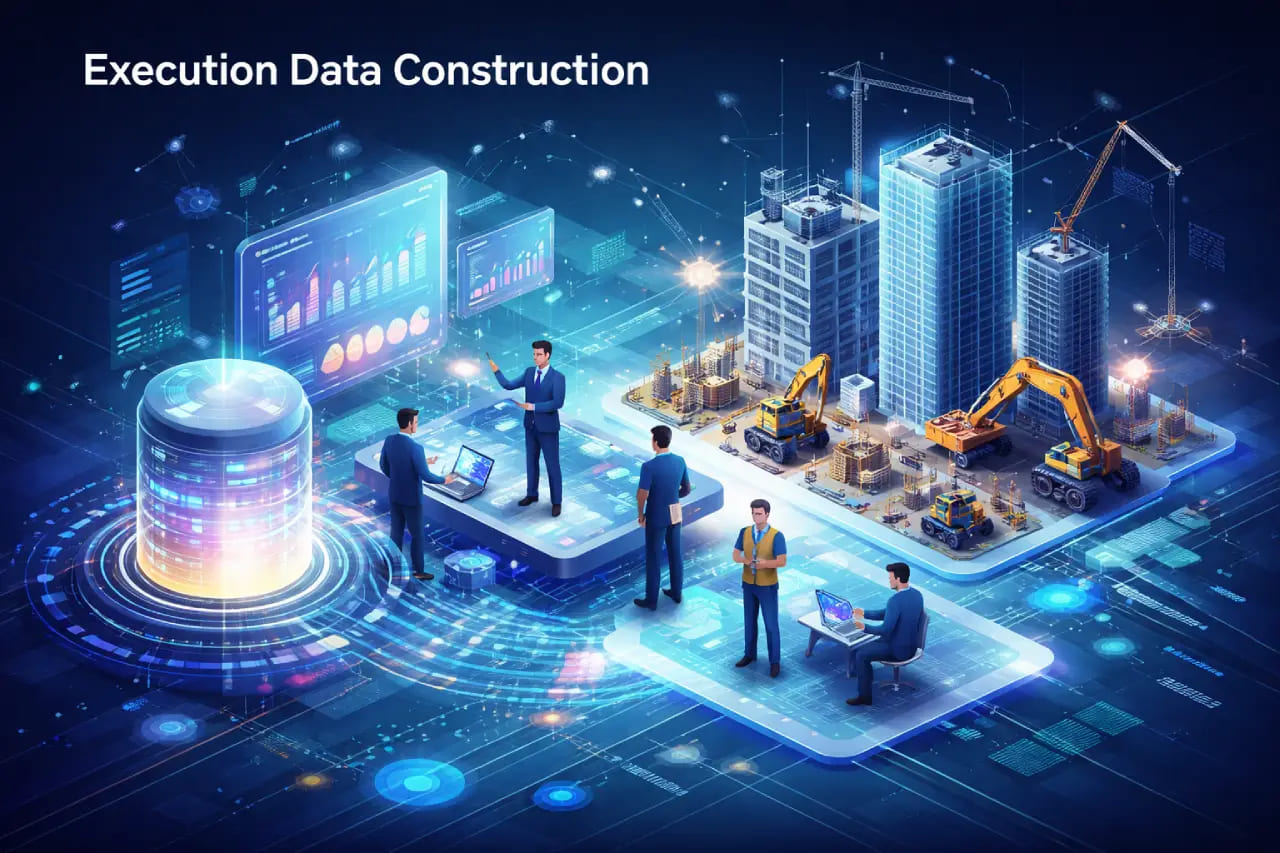
Execution Data represents the real-time state of work execution within an organization.
It answers questions such as:
- What tasks are currently being performed?
- Who is responsible?
- What is the actual progress?
- Where are the bottlenecks?
In construction, this includes:
- task-level progress
- on-site execution status
- contractor performance
- operational bottlenecks
2. Business Data vs Execution Data
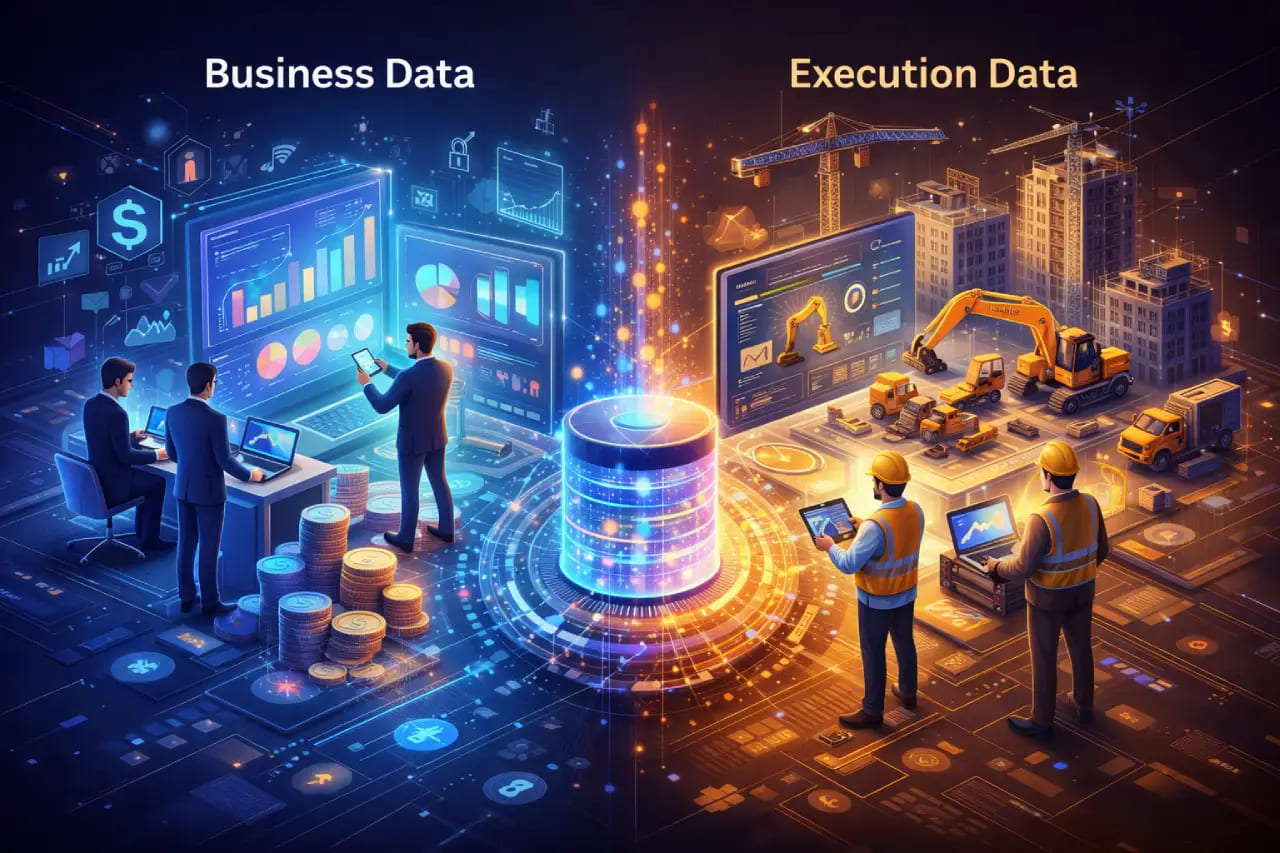
Most organizations rely heavily on Business Data:
- financial reports
- budgets
- project plans
However, Business Data reflects outcomes, not processes.
| Data Type | Characteristics |
| Business Data | Aggregated, delayed, reporting-focused |
| Execution Data | Real-time, granular, operational |
Without Execution Data, organizations:
- detect problems too late
- fail to control project progress
- struggle with cost management
From Data Visibility to Strategic Control: Governance in the Age of AI
3. Why Execution Data is Missing

Execution Data is not absent because data does not exist.
It is missing because:
Work is not properly digitized
Execution still happens through fragmented tools.
Data is not standardized
Each team operates differently.
Systems do not capture execution
Most systems track plans and outcomes—not execution.
4. Why Execution Data Matters

Execution Data enables:
Real-time project control
Leaders can detect delays instantly.
Cost control
Costs are linked directly to actual work.
Better project management
Decisions are based on reality, not assumptions.
5. Execution Data and Decision Infrastructure
Execution Data is the input layer of Decision Infrastructure.
Without it:
- decisions are delayed
- decisions are inaccurate
With it:
- decisions become faster
- management becomes data-driven
Decision Infrastructure: The Next Competitive Advantage for Modern Organizations
6. Execution Data in Construction
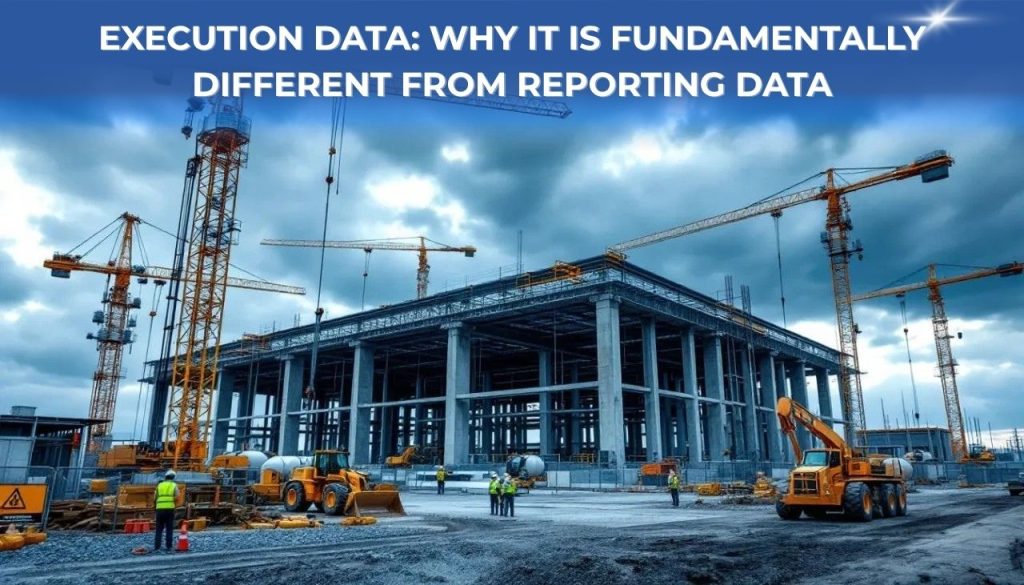
Construction is one of the industries where Execution Data is most critical:
- long project cycles
- multiple stakeholders
- high operational risk
Without Execution Data:
- project progress cannot be controlled
- contractor performance is unclear
- cost overruns are inevitable
With it:
organizations can achieve true data-driven construction management.
7. Execution Data as a Competitive Advantage
In the future, competitive advantage will not come from:
- scale
- capital
- workforce
But from:
👉 the ability to understand and control execution
Execution Data is the foundation of that capability.
Conclusion
Execution Data is the missing layer in most modern organizations.
It connects:
- plans to reality
- data to action
- strategy to execution
In the age of AI, Execution Data will become the defining factor of enterprise competitiveness.
When combined with Decision Infrastructure, it enables a new management paradigm:
real-time, execution-driven organizations.
Đỗ Hữu Binh
CEO, ISOFT
This article is part of a professional series analyzing construction project management and cost control strategies.
© 2026 Đỗ Hữu Binh. All rights reserved.
Any citation or reuse of this content must clearly state the source and author.
- Most CEOs Don’t Have an Execution Problem — They Have an Accountability Problem
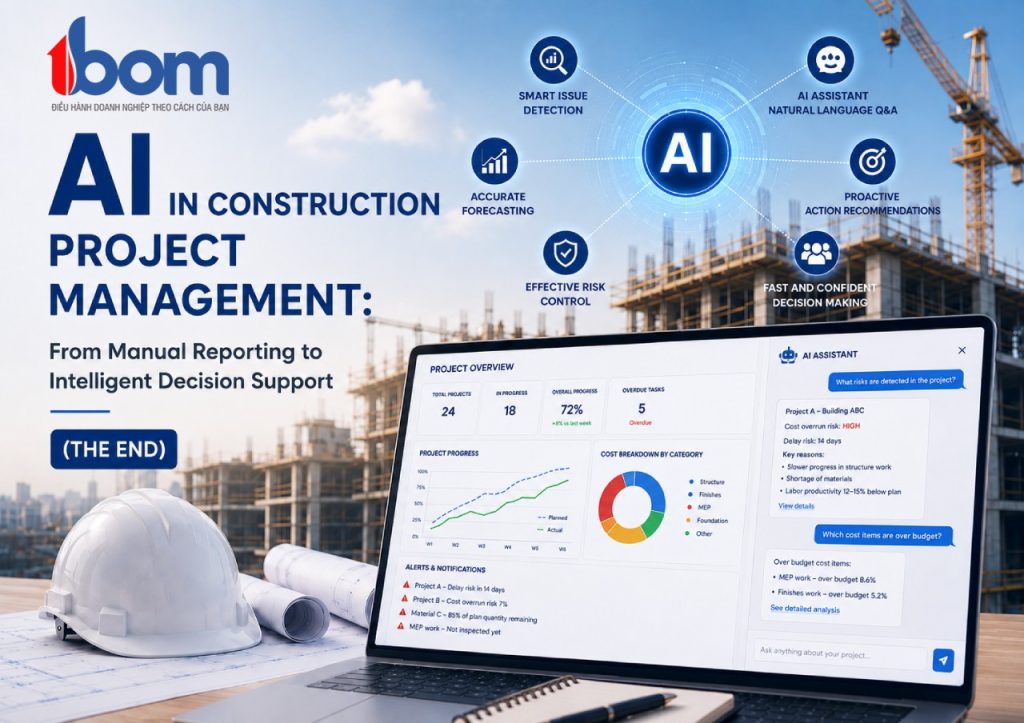
- AI in Construction Project Management: From Manual Reporting to Intelligent Decision Support (The end)
- Why Quantity Changes Break Down at Scale in Construction Projects
- AI & Power: Whoever Controls the Algorithm Controls the Advantage
- AI Does Not Replace Managers – It Exposes Them