
You Don’t Have a Visibility Problem. You Have an Action Problem.

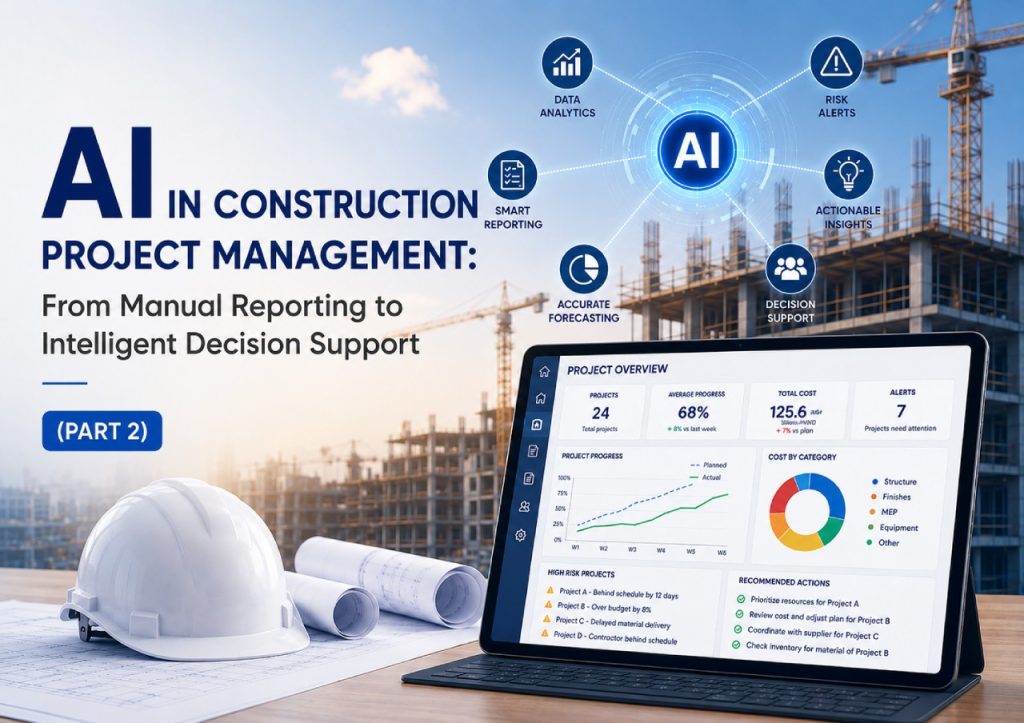
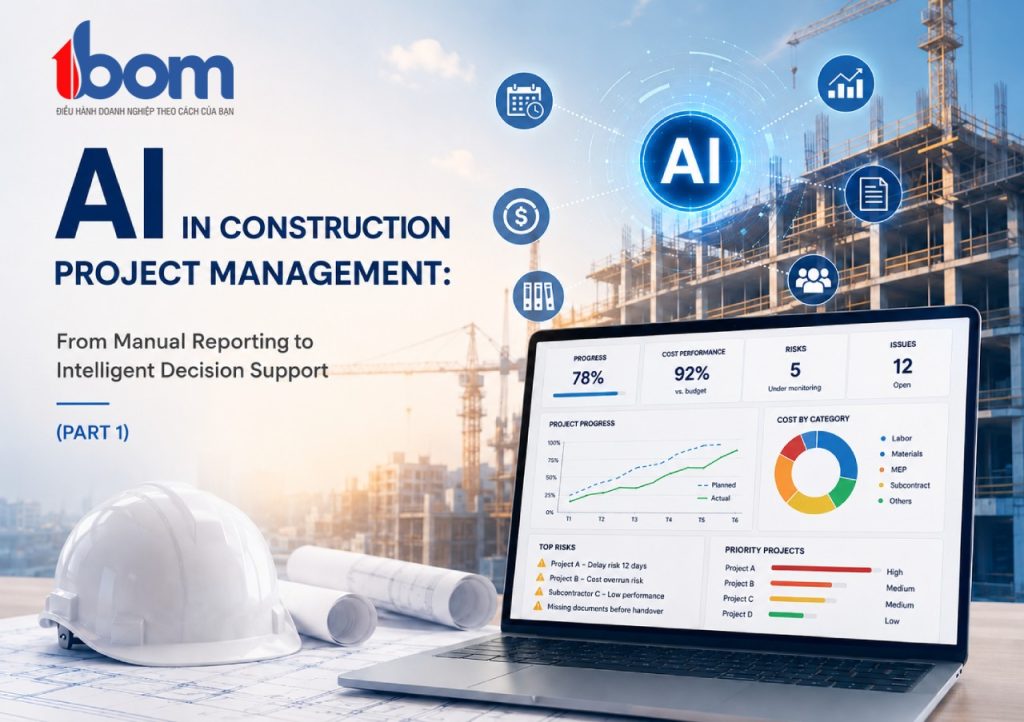
Many construction companies believe their biggest challenge is visibility.
They invest in dashboards.
They implement reporting systems.
They collect more data.
And over time, visibility improves.
Leaders can see more.
Reports become clearer.
Data becomes richer.
Yet something doesn’t change.
Decisions are still slow.
Issues are still not addressed early.
Problems still escalate.
This reveals a deeper issue:
Visibility alone does not create control.
1. The Illusion of Visibility

In many organizations, visibility is treated as the end goal.
If leaders can see what is happening, the assumption is that they can manage it.
But in reality:
Seeing is not acting.
A dashboard can show delays.
A report can highlight cost overruns.
But unless something happens after that:
Nothing changes.
2. Why Insight Does Not Lead to Action

The gap between insight and action is where most organizations fail.
Even when problems are visible:
- No one is clearly responsible for acting
- There is no defined trigger for intervention
- There is no standard response mechanism
As a result:
Issues are acknowledged.
But not resolved.
3. The Hidden Gap: From Knowing to Acting

Construction companies often operate in a state where:
They know what is happening.
But they don’t act fast enough.
This creates a dangerous delay.
Small issues remain small for a short time.
Then they grow.
By the time action is taken:
- The impact has spread
- Recovery becomes expensive
- Control is lost
4. What an Action System Looks Like
To close this gap, companies need more than visibility.
They need an action system.
This includes:
Clear triggers
When should action be taken?
Defined ownership
Who is responsible for acting?
Standard responses
What actions should be taken?
Feedback loops
Was the action effective?
Without these elements, visibility remains passive.
5. From Visibility to Control
Control is not achieved by seeing more.
It is achieved by:
Seeing → Understanding → Acting → Adjusting
This sequence requires structure.
Without it:
Visibility becomes information overload.
With it:
Visibility becomes control.
6. From Data to Action Systems
To move forward, construction companies must shift from:
Building visibility → Designing action systems
This means:
- Connecting data to decision triggers
- Embedding actions into workflows
- Ensuring accountability across teams
Platforms like IBOM support this shift by linking project data with actionable workflows.
7. The Leadership Question That Matters
The real question is not:
“Do we have enough visibility?”
But:
“Do we have a system that turns visibility into action?”
Because in construction:
Companies don’t fail because they don’t see problems.
They fail because they don’t act on them in time.
Đỗ Hữu Binh
CEO, ISOFT
This article is part of a professional series analyzing construction project management and cost control strategies.
© 2026 Đỗ Hữu Binh. All rights reserved.
Any citation or reuse of this content must clearly state the source and author.