
Why Construction Leaders Must Manage Projects at a System Level

In most construction companies, project management is seen as an operational responsibility.
Projects are handled by project managers, site teams, and cost controllers. The CEO usually intervenes only when major issues arise—delays, cost overruns, or contractual disputes.
However, this traditional model often creates a critical governance gap.
Because when project management remains purely operational, strategic control over project performance is lost at the leadership level.
For construction CEOs, the real challenge is not managing individual projects—but designing a system that governs all projects simultaneously.
This is where a CEO-level project governance framework becomes essential.
The CEO Should Govern the System, Not the Project
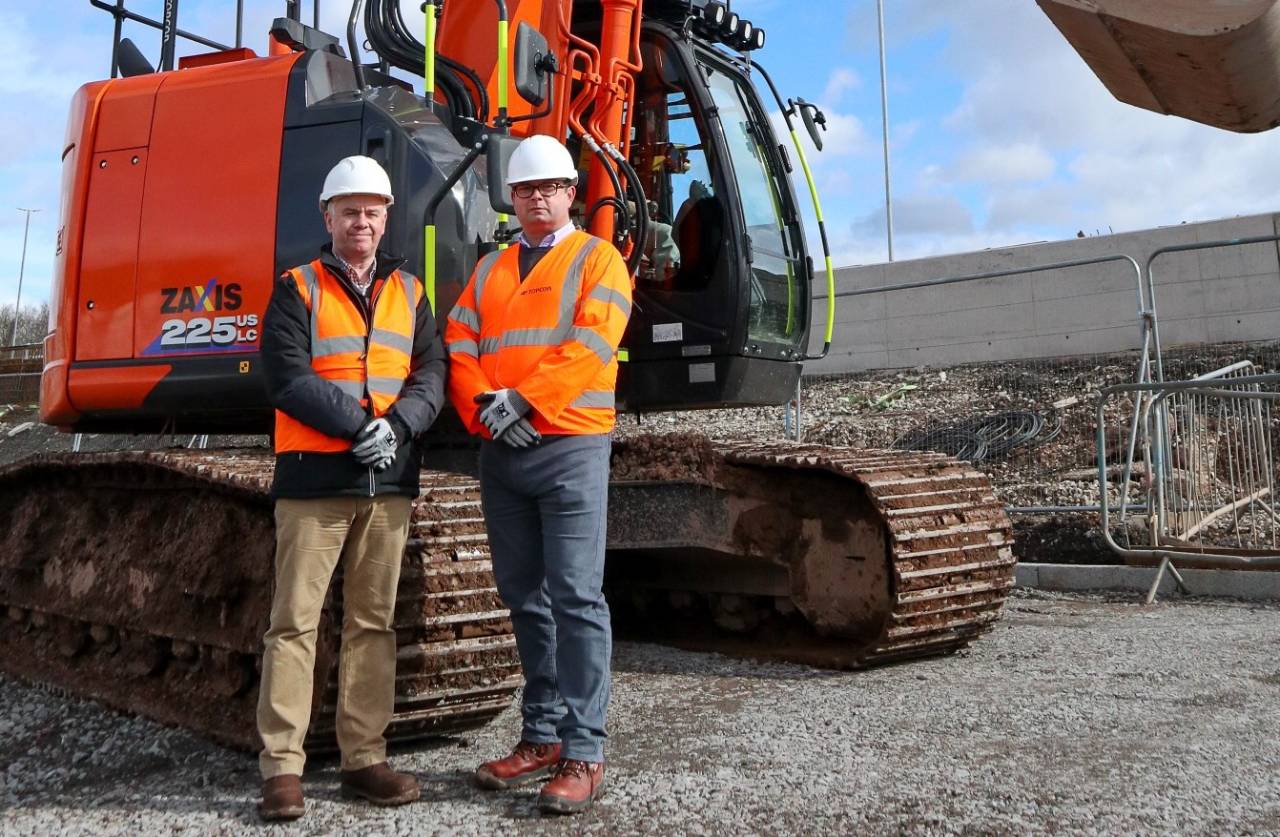
A CEO should not be involved in daily site management.
Instead, the CEO must govern the system that manages projects.
In other words:
Project Managers manage projects.
Executives manage the rules that control projects.
Without this distinction, companies often fall into two common traps:
Trap 1: Micromanagement
The CEO becomes involved in solving operational issues across multiple projects.
This creates:
- Slow decision cycles
- Bottlenecks in leadership
- Over-dependence on individuals
Trap 2: Passive Oversight
Leadership only reviews financial reports or periodic updates.
By the time problems appear, the structural causes have already spread across the system.
A governance framework helps CEOs maintain control without interfering with operational execution.
The Three Governance Layers Every CEO Should Establish
A robust project governance model usually operates across three structural layers.
Layer 1 — Strategic Portfolio Governance
At the highest level, the CEO must oversee the entire project portfolio.
The key questions are:
- Which types of projects should the company pursue?
- What risk exposure exists across the portfolio?
- Are resources allocated optimally across projects?
- How does project selection align with long-term strategy?
Many construction companies focus heavily on winning projects, but much less on portfolio balance.
Without portfolio governance, companies can easily face:
- Too many high-risk projects simultaneously
- Resource fragmentation
- Cash flow instability
The CEO’s role is to ensure strategic alignment across the project portfolio.
Layer 2 — Structural Project Control
The second layer focuses on structural monitoring mechanisms.
This includes standardized control systems such as:
- Cost tracking structures
- Progress monitoring frameworks
- Risk escalation procedures
- Contractual control mechanisms
At this level, the CEO does not analyze individual project details.
Instead, leadership monitors patterns and signals across projects.
For example:
- Are similar cost overruns appearing in multiple projects?
- Are delays concentrated in certain project phases?
- Are contractual risks recurring across clients?
These signals often reveal systemic issues, not isolated project failures.
Layer 3 — Data Integrity and Transparency
The third layer is often the most overlooked.
No governance framework can function without reliable project data.
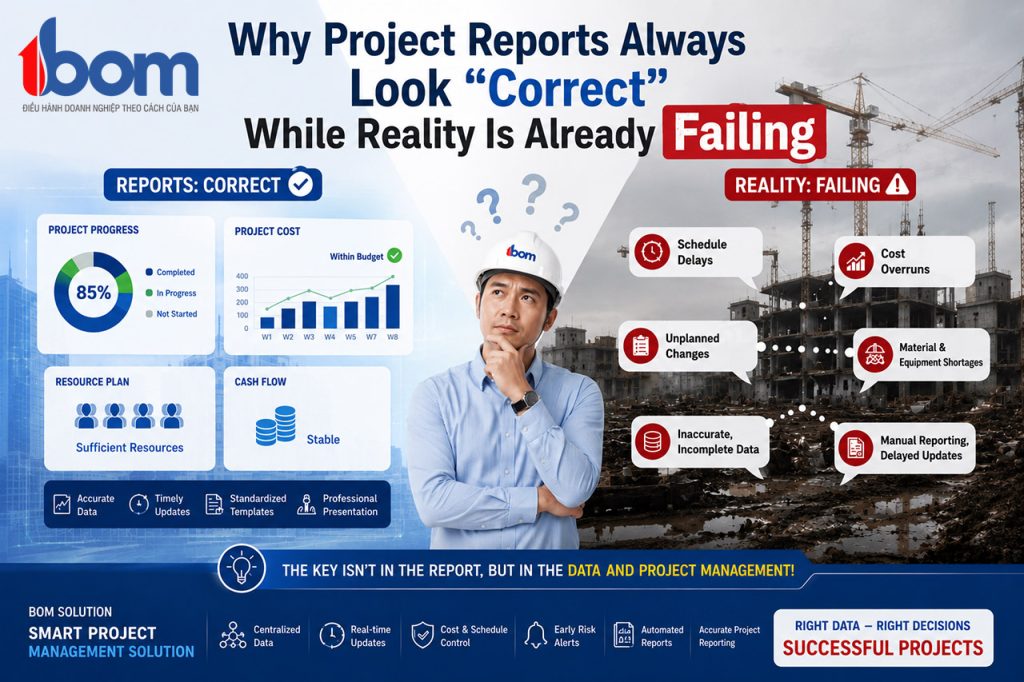
In many construction firms, project reporting is still fragmented across:
- Excel sheets
- Separate accounting systems
- Disconnected site reports
This creates a data blind spot at the executive level.
The CEO may receive reports, but those reports often represent summaries rather than structural insights.
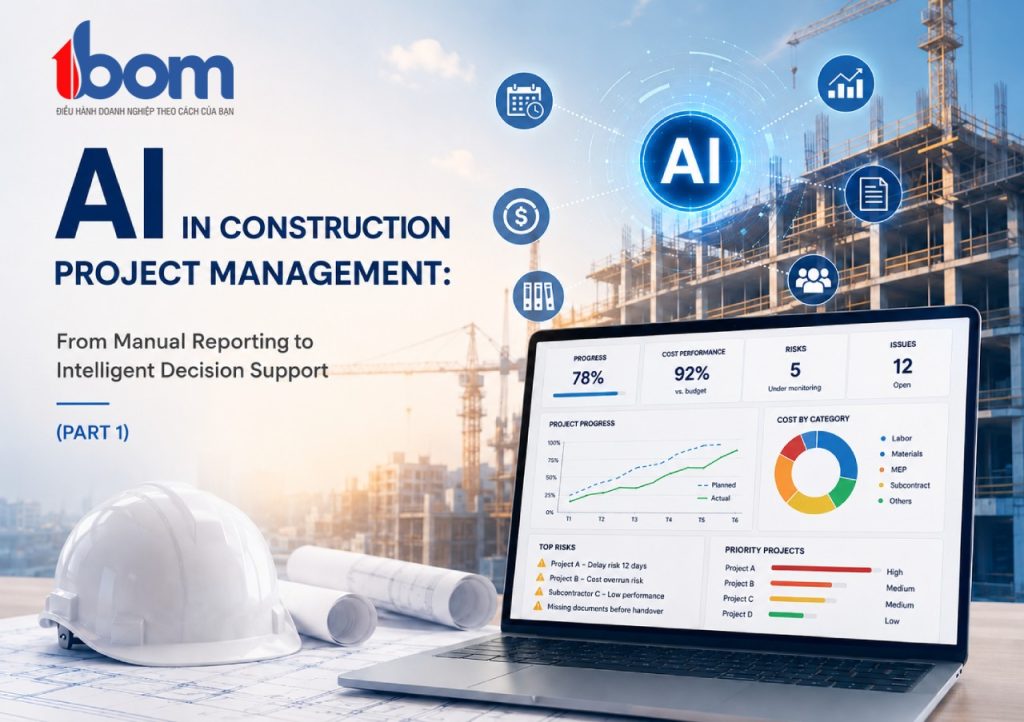
Effective governance requires:
- Standardized data structures
- Real-time reporting pipelines
- Transparent performance indicators
Only when data flows consistently across projects can leadership truly understand how the system behaves.
Why Many Construction CEOs Struggle with Project Governance

The difficulty is not a lack of experience.
Most CEOs in the construction industry have deep operational backgrounds.
The challenge is that operational expertise does not automatically translate into system governance.
Running a project requires:
- Technical coordination
- Contract management
- Site execution
Running a portfolio of projects requires:
- Structural visibility
- Data-driven oversight
- Organizational alignment
This is why many companies unknowingly operate with strong project teams but weak project governance.
And over time, the lack of governance leads to:
- Repeated project risks
- Limited scalability
- Leadership overload
The Future of Construction Leadership

As construction projects become larger and more complex, the CEO’s role is evolving.
Leadership can no longer rely solely on operational intervention.
Instead, the CEO must build a governance architecture that ensures projects perform consistently across the organization.
In the future, the competitive advantage of construction firms will not come only from engineering capabilities or cost efficiency.
It will come from how effectively companies design systems that control project performance at scale.
For construction leaders, the real question is no longer:
“How do we manage projects better?”
But rather:
“How do we design a system where projects manage themselves within a strong governance structure?”
Đỗ Hữu Binh
CEO, ISOFT
This article is part of a professional series analyzing construction project management and cost control strategies.
© 2026 Đỗ Hữu Binh. All rights reserved.
Any citation or reuse of this content must clearly state the source and author.