
Introduction
On a construction site, one of the hardest questions is not whether the project is late, but what should be changed—given the people, equipment, workspace and time currently available—to protect the milestones that matter. A crew can be reassigned, a crane can serve competing work packages, overtime can recover time at a cost, and a sequence can be changed only if technical and safety conditions permit it.
Article “Construction Schedule Management: How to Plan, Update, and Control Project Schedules” established the scheduling foundation: a credible schedule must represent scope, logic, durations and field reality, while recovery planning is inherently a trade-off problem. This article moves from schedule control to prescriptive decision support. Once the project has a reliable execution model, AI and optimization methods can search a much larger solution space than managers can practically test by hand.
Optimization, however, should not be confused with a universal ‘best answer’. In construction it means finding better feasible options within explicit constraints and objectives. A three-day acceleration is not truly better if it creates unacceptable cost, unsafe congestion or an impossible skills requirement.
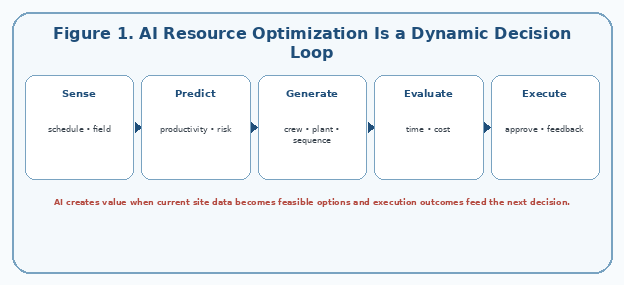
Figure 1. AI Resource Optimization Is a Dynamic Decision Loop
1. From scheduling to dynamic resource coordination
A schedule defines sequence and timing, but execution depends on simultaneous readiness of work fronts, information, materials, crews, equipment and predecessor work. When any one of these changes, resource decisions must change with it.
This makes site coordination dynamic rather than static. AI can help evaluate many reallocations and resequencing options, but only when the model represents the real constraints that make those options feasible.
2. AI must understand the current site state before it can optimize
Optimization begins with state estimation. The system needs more than the approved schedule: it needs actual progress, crew availability and skills, equipment status and location, material readiness, constraints, productivity and work-front conditions.
BIM, RFID/GPS, sensors, computer vision and digital twins can enrich this state, but they are not prerequisites for a useful pilot. A smaller connected dataset with trustworthy activity, resource, productivity and constraint records is often more valuable than a technologically rich but poorly linked data environment.
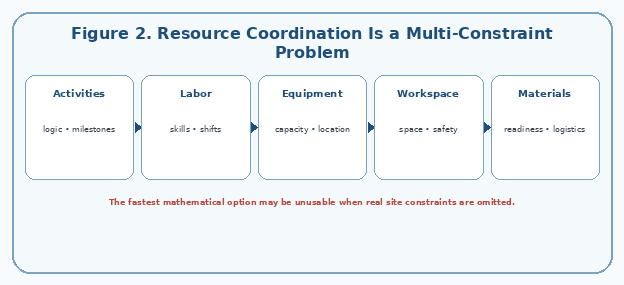
Figure 2. Resource Coordination Is a Multi-Constraint Problem
3. Resource optimization is a multi-constraint problem
Real construction resources are not interchangeable. Skills differ, equipment has capacity and service zones, workspace can become congested, travel and setup consume time, and parallel work can create safety conflicts.
An optimization model therefore needs to represent the constraints that matter to the decision. Otherwise it may produce a mathematically attractive schedule that cannot be executed in the field.
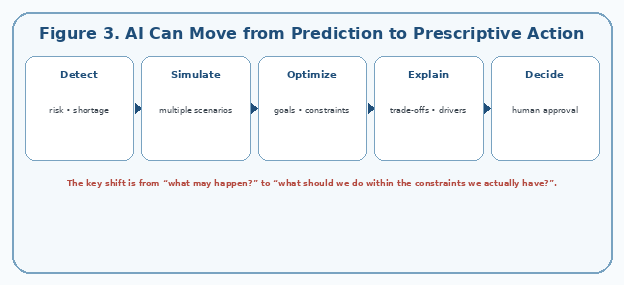
Figure 3. AI Can Move from Prediction to Prescriptive Action
4. Moving from prediction to prescriptive action
Delay prediction asks what may happen. Resource optimization asks what can be changed. If a milestone is forecast to slip, the system can test options such as additional crews, overtime, resequencing, equipment reassignment, work-front splitting or procurement acceleration.
Recent systematic reviews of AI in construction management identify optimization algorithms as a major technique family for scheduling and resource allocation. Genetic algorithms, swarm methods, constraint-based approaches and reinforcement learning are used to explore large constrained solution spaces. The practical output should be several feasible options with their assumptions and consequences, not an unexplained command.
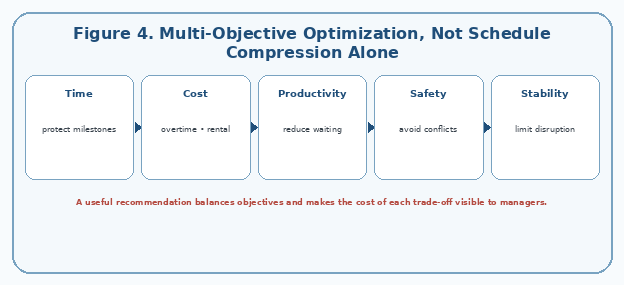
Figure 4. Multi-Objective Optimization, Not Schedule Compression Alone
5. Multi-objective optimization reflects the reality of construction
Optimizing only for duration can produce expensive or unsafe recommendations. Construction decisions simultaneously involve time, cost, productivity, safety, quality, contractual commitments and operational stability.
A useful system therefore exposes trade-offs. One option may recover three days with overtime; another may recover one day with little additional cost; a third may preserve the milestone while reducing site congestion. AI helps quantify the choice, while management determines which trade-off is acceptable.
6. Productivity prediction connects field data to resource decisions
Resource plans depend on productivity assumptions. If a crew is planned at 100 units per day but consistently produces 70, downstream allocations will be wrong. Machine-learning models can use historical and current conditions to update expected productivity.
A 2024 critical review covering 131 journal studies found substantial research on machine learning for construction labor and equipment productivity. In practice, productivity estimates should be treated as uncertain and continuously updated, especially when the current project differs from the historical data used for learning.
7. Labor coordination means the right capability at the right place and time
Headcount alone is not a useful optimization variable. The model needs skills, contractor affiliation, shift, location, productivity and reassignment rules.
AI can forecast demand by time window, identify skill conflicts and compare whether reassignment, overtime or additional mobilization better protects critical work. These recommendations should support workforce planning rather than reduce people to simplistic performance scores.
8. Equipment coordination must consider time, location and dependency
Shared equipment can become a system bottleneck. Cranes, hoists, excavators and specialist plant are constrained by service zones, travel, setup, capacity and maintenance status.
AI can forecast demand windows, detect idle time and compare allocation scenarios. Research on precast production has also demonstrated deep-reinforcement-learning approaches for rescheduling under crew and fixed-resource constraints, although such results should not be generalized uncritically to less structured site environments.
9. Readiness must be optimized alongside visible resources
Adding labor to a task without approved information, material or access does not create production. Resource optimization must therefore include constraint readiness.
Article “Construction Schedule Management: How to Plan, Update, and Control Project Schedules” positioned look-ahead planning as the layer that checks drawings, materials, access, methods, labor, equipment and predecessors before weekly commitment. AI can use those readiness states to rank constraints and avoid optimizing work that is unlikely to become executable.
10. Dynamic rescheduling is where AI can create particularly strong value
Initial plans are built on assumptions. Equipment failures, weather, late materials, work-front changes and productivity loss can invalidate them. The valuable capability is therefore not only generating a plan, but selectively replanning when state changes.
Recent research integrating digital twins and reinforcement learning illustrates a move toward disturbance-triggered scheduling and multi-resource reallocation. A practical contractor does not need to begin at that level: a system that generates three recovery scenarios for one affected work package can already improve weekly control.
11. Recommendations must be explainable
A resource decision can affect cost, contracts, safety and multiple subcontractors. Managers therefore need to understand the problem being solved, the binding constraints, the expected impact and the assumptions most likely to change the result.
Explainability also acts as model quality control. An unreasonable recommendation can reveal incorrect crew capability, equipment location or material status. Explanation is therefore not merely a trust feature; it is part of operational validation.
12. Human decision authority should scale with risk
Not every recommendation should be executed automatically. Low-risk sequencing or idle-resource alerts may be handled quickly, while overtime, cross-contractor labor movement, method changes or safety-sensitive decisions require approval.
A robust operating model is AI recommendation, human contextual review, controlled execution and outcome feedback. Rejected recommendations are also useful data because the rejection may expose a constraint the model did not know.
13. Why resource-optimization initiatives fail
The first failure mode is optimizing a poor schedule. Weak logic, stale status or unrealistic remaining durations produce optimized answers to the wrong model. Article “Construction Schedule Management: How to Plan, Update, and Control Project Schedules” explicitly treated schedule quality as a management object in its own right.
Other failure modes include inconsistent resource identifiers, missing links between productivity and work type, overly narrow objectives, and deploying research-grade models as if they were operationally proven. Recent reviews continue to note the gap between controlled research environments and the dynamic, heterogeneous reality of construction projects.
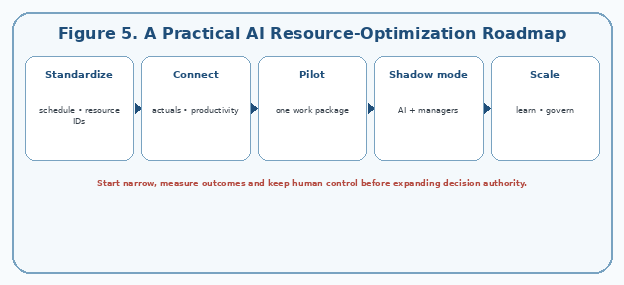
Figure 5. A Practical AI Resource-Optimization Roadmap
14. A practical implementation roadmap
Start with a narrow, measurable problem: finishing crews across repetitive floors, crane allocation in one zone, or labor planning for an MEP package. Define an outcome such as reduced waiting time, improved weekly-plan reliability or milestone recovery.
Standardize the minimum data model, establish a rule-based baseline for comparison, and run the AI recommendation in shadow mode alongside normal planning. Compare feasibility and outcomes before expanding decision authority.
Once performance is stable, broaden the scope, automate more data feeds and allow low-risk decisions to be executed with lighter approval. Continue monitoring model drift because productivity, crews, equipment and project conditions change over time.
Conclusion
AI can improve construction planning and site resource coordination by searching a large constrained solution space, simulating alternatives and making trade-offs visible before managers commit resources.
The prerequisite is not a sophisticated algorithm; it is a credible execution model and connected field data. On that foundation, AI can predict productivity, identify shortages, test scenarios, optimize multiple objectives and reschedule when conditions change.
The most useful system does not simply announce an ‘optimal plan’. It helps managers understand what resource is required to protect a milestone, what risk is accepted if cost is constrained, how a crew reassignment affects other work, and which assumptions could invalidate the recommendation. That is how AI becomes a decision-quality tool rather than another layer of technology.
References
- Buildings (2026), Artificial Intelligence (AI) in Construction Management (CM): A Systematic Review of Models and Methods.
- Buildings (2026), Artificial Intelligence in Construction Project Management: A Systematic Literature Review of Cost, Time, and Safety Management.
- Applied Sciences (2024), Application of Machine Learning in Construction Productivity at Activity Level: A Critical Review.
- Engineering, Construction and Architectural Management (2025), Deep reinforcement learning-based schedule optimization for parallel precast production.
- Advanced Engineering Informatics (2026), Adaptive job scheduling and resource allocation for industrialized construction processes using digital twin and reinforcement learning.
- Why Construction Companies Are Becoming Data Organizations
- When Does a Construction Project Actually Start Falling Behind?
- Construction Project Management in 2026: Profit Erosion Is a Structural Problem, Not an Operational Accident
- Execution Infrastructure — The Missing Foundation of Modern Enterprise Execution
- Construction Project Management: From the Master Plan to Execution Control on Site