
Construction project management is often represented by a master schedule, coordination meetings and periodic reports. Those tools are necessary, but they are only the visible layer. The harder problem is the distance between the approved plan and daily site reality: late drawings, unavailable work fronts, delayed materials, resource shortages, pending inspections, design changes and slow decisions.
Project management should therefore be treated as a continuous operating system. It translates objectives into scope structures and baselines, organizes execution, captures actual conditions, detects variance, diagnoses causes, forecasts impact and triggers corrective action while there is still time to change the outcome.
1. Construction projects are systems of interdependent conditions
Field work starts only when multiple prerequisites are ready at the same time: approved design, access, materials, equipment, labor, methods, predecessor completion and safety requirements. Schedule is therefore the time expression of dependencies among engineering, procurement, contracts, resources and execution.
A late drawing may first delay procurement, then fabrication and delivery, and only later appear as a construction delay. Cost behaves similarly: a design change can add quantity, reduce productivity, create rework, extend site overhead and trigger claims. Effective control must therefore manage these relationships rather than monitor isolated indicators.
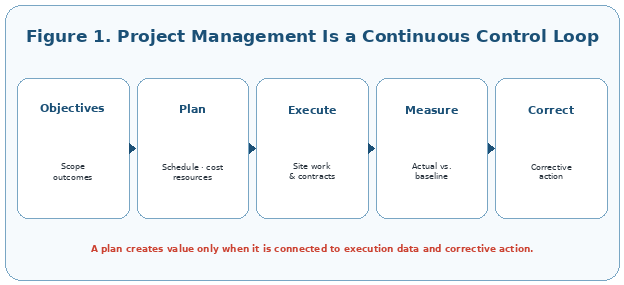
Figure 1. Project management is a continuous loop from objectives and planning to measurement and correction.
2. The master plan is the project’s operating model
A strong master plan defines the execution strategy: work areas, packages, engineering-procurement-construction sequence, control milestones, critical interfaces, resource mobilization and phase-entry conditions. The Work Breakdown Structure (WBS) provides a common backbone for scope, schedule, cost and accountability.
The approved baseline is the reference against which actual performance is compared. It should not be rewritten merely to hide poor performance. At the same time, legitimate approved scope changes may require controlled baseline changes so that management can distinguish execution variance from an authorized change in the target.
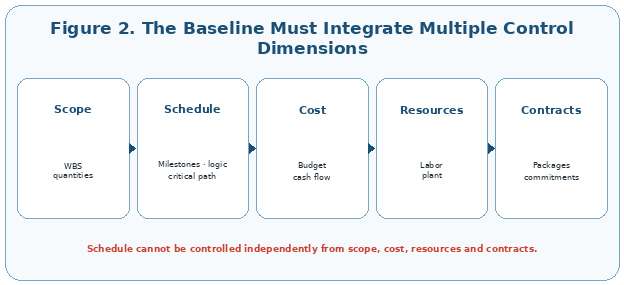
Figure 2. Effective baselines connect scope, schedule, cost, resources and contractual commitments.
3. Planning needs multiple connected levels of resolution
Executives and field crews require different planning resolutions. Leadership needs strategic milestones, critical paths, trends and major risks. Field teams need specific locations, quantities, crews and prerequisites.
A connected hierarchy typically moves from the master plan to phase plans, look-ahead planning, weekly commitments and daily work. Look-ahead planning is valuable because it identifies and removes constraints before work enters the execution window, rather than discovering missing drawings or materials on the planned start date.
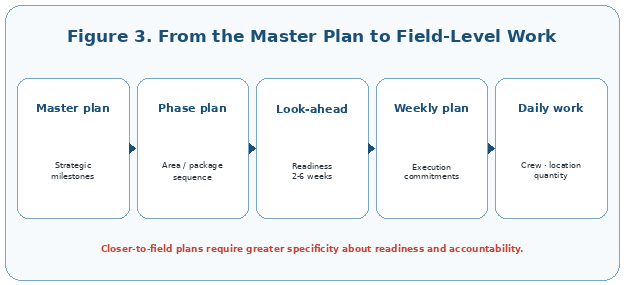
Figure 3. Plans closer to the field require greater specificity about readiness and accountability.
4. Execution control begins with trustworthy actuals
Subjective percent-complete estimates and late updates weaken the warning function of project controls. Actual status should be tied to specific work, location, quantity, state, date and evidence.
Projects also need intermediate states. Work may be installed but not inspected; material may be delivered but not accepted; a document may be submitted but not approved. These queues often explain delay better than a simple complete/not-complete status.
5. Control must go beyond reporting variance
Variance reports explain what has already happened. Management needs three additional steps: diagnose cause, forecast future impact and define corrective action.
A task that is three days late may be harmless when float remains. Another task may not yet be late but can be highly exposed because design approval, procurement or access is deteriorating. Updating describes status at the data date; forecasting asks when the project is now likely to finish under current productivity, resources and constraints.
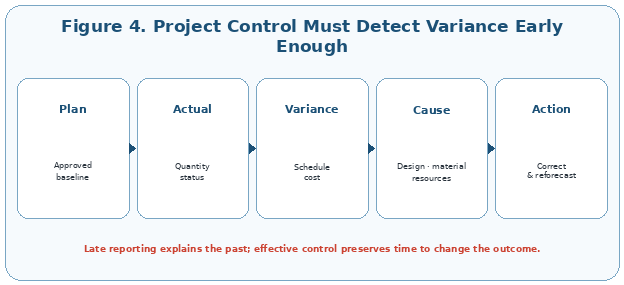
Figure 4. Effective project control detects variance while there is still time to change the outcome.
6. Schedule and cost must be evaluated together
Most recovery decisions carry cost consequences. Overtime, extra crews, resequencing, expedited logistics and parallel work all create trade-offs. Conversely, cost savings may increase lead time or reduce schedule resilience.
Mature control therefore connects the work structure to budgets, commitments, actual costs and estimates to complete. Earned Value Management (EVM) can support integrated measurement, but its indicators only become actionable when managers can trace them to work packages, contracts and operational causes.
7. Change management protects both the project and the baseline
Construction projects inevitably change. The management objective is not to eliminate change but to prevent important changes from becoming invisible.
Each change should be traceable from origin through impact assessment and approval to any resulting baseline update. This preserves reporting integrity and prevents hundreds of small, disconnected changes from accumulating into a major schedule and cost problem.
8. Risks and issues should be connected directly to the plan
A risk register creates limited value when it is detached from the work it may affect. Design approval risk should connect to engineering deliverables, procurement and dependent construction; supplier risk should connect to the item, lead time and required-on-site date.
Risk and issue should also remain distinct. A risk has not yet occurred and requires a response strategy. An issue has occurred and requires ownership, due dates and action. Connecting both to the schedule turns risk management into an operating discipline rather than a compliance document.
9. Project data should create a connected management source of truth
Construction data is commonly fragmented across document systems, scheduling tools, ERP, commercial repositories, field applications, email and chat. The goal is not necessarily to move every record into one application. It is to establish shared identifiers and relationships across systems.
When the same WBS element, area, contract package, contractor, drawing or change event can be traced across schedule, cost, documents and execution, management can move from a headline variance to the operational cause and the open action. This connected data foundation is also essential for reliable AI-based delay prediction.
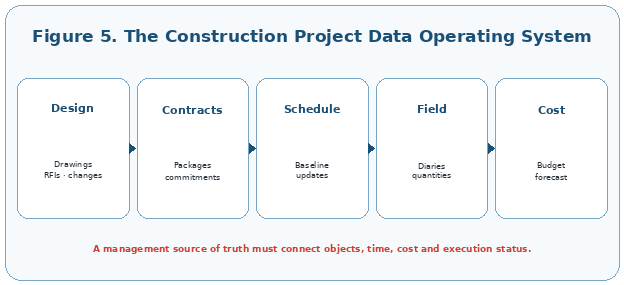
Figure 5. A project management source of truth connects design, contracts, schedule, field execution and cost.
10. Management cadence converts field data into decisions
Digital data alone does not create control. Projects need a clear cadence defining what is updated, who reviews it, which decisions belong at which level and how actions are followed through.
Field coordination may require frequent status updates; weekly management should review look-ahead commitments, constraints and corrective actions; monthly or gate-level governance should focus on completion trends, cost forecasts, major changes and risks. The output of each review should return to the system as a decision, owner and deadline.
11. A practical path to stronger project control
Enterprises should begin by standardizing the management structure: scope breakdown, coding, milestones, status definitions and accountability. Digitizing an inconsistent structure only makes inconsistency move faster.
The next step is to standardize planning and updating, then connect schedule with field, cost, contract and change data. Alerts should have thresholds, owners and response expectations. Only after this foundation is stable should the enterprise expand into advanced analytics and AI, where historical patterns can be used to detect conditions that precede schedule delay.
Conclusion
Construction project management is not the art of keeping a schedule looking on plan. It is the capability to convert investment objectives into a controllable baseline, decompose that baseline into executable commitments, capture trustworthy actuals, detect variance early and organize intervention before problems become irreversible.
When schedule, cost, contracts, risk and field data are connected, management shifts from periodic reporting toward execution-signal management. That foundation also enables AI to identify patterns that precede delay, but only after the enterprise can reliably distinguish the plan, actual reality, the gap between them and the data that explains that gap.
References
- Project Management Institute (PMI), PM-1 Foundations of Project Management in Construction, 2025.
- Project Management Institute (PMI), resources on construction scheduling and project control.
- McKinsey & Company, research on capital-project delivery and project performance.
- PMI/KPMG, project risk and delivery framework materials.
- Most CEOs Don’t Have an Execution Problem — They Have an Accountability Problem
- How Far Can AI Automate Enterprise Processes?
- ERP in the AI Era: From System of Record to Decision Support
- Construction Project Management: From the Master Plan to Execution Control on Site
- A Day in the Life of a Construction Site Manager: What Do They Really Do?