
You Don’t Have a People Problem. You Have a Role Clarity Problem.

In many construction companies, operational problems are often described as “people problems.”
Leaders frequently say:
- “The team lacks accountability.”
- “Departments don’t coordinate well.”
- “Project managers are overloaded.”
- “No one takes ownership.”
As a result, organizations try to solve these issues by:
- hiring more experienced people
- increasing supervision
- replacing managers
- adding more meetings and approvals
But after a while, the same problems return.
Different projects.
Different teams.
Different people.
This reveals something important:
The issue is often not the people themselves.
It is the structure surrounding them.
More specifically:
👉 the lack of role clarity inside the organization.
1. Why Good People Still Create Operational Chaos
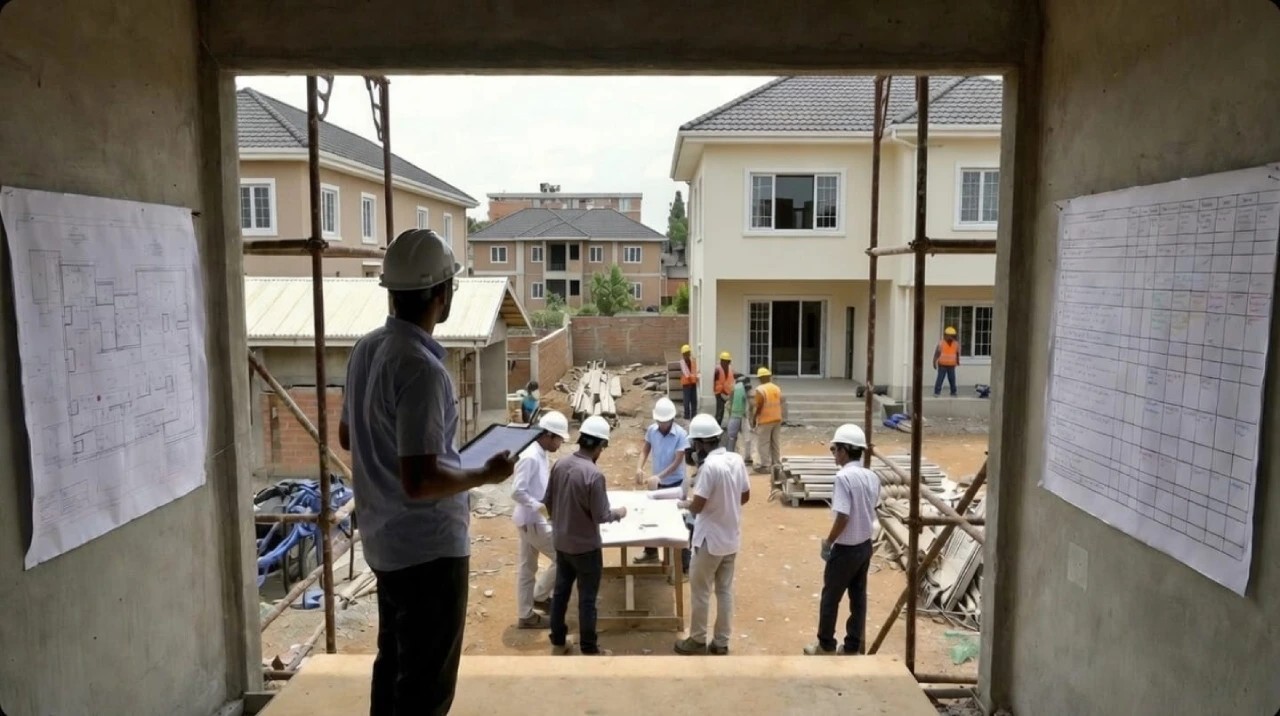
One of the most misunderstood realities in construction management is this:
A company can have highly capable individuals and still operate inefficiently.
This happens because performance in construction is not determined only by individual competence.
It is determined by how responsibilities interact across the system.
In many organizations:
- responsibilities overlap
- authority boundaries are unclear
- escalation paths are undefined
- decision ownership changes between projects
As a result:
People spend significant energy trying to understand:
- Who should make the decision?
- Who is responsible for this issue?
- Who has approval authority?
- Who should coordinate between departments?
When these questions are unclear, even strong teams become inefficient.
2. The Hidden Cost of Role Ambiguity

Role ambiguity creates operational problems that are often invisible at first.
But over time, the impact becomes significant.
Slow Decision-Making
When ownership is unclear, decisions move slowly.
People hesitate because they are unsure:
- whether they have authority
- whether someone else is responsible
- whether escalation is needed
This creates organizational friction.
And in construction, delays in decisions quickly become delays in execution.
Accountability Gaps
One of the most common symptoms of unclear roles is:
Everyone is involved.
But no one is accountable.
Tasks are discussed across multiple departments.
But when problems appear, responsibility becomes difficult to trace.
This creates a culture where:
- issues circulate
- meetings increase
- ownership decreases
Coordination Breakdown
Construction projects involve many interconnected teams:
- project management
- procurement
- finance
- contractors
- site operations
Without clear role boundaries:
- teams duplicate work
- communication becomes fragmented
- dependencies are poorly managed
The result is not simply inefficiency.
It is loss of control.
3. Why Construction Companies Become “Hero-Based Organizations”

Many construction companies unknowingly operate through what can be called a:
👉 “hero-based management model”
A small number of experienced individuals become the center of coordination.
They:
- solve conflicts
- connect departments
- make critical decisions
- manage escalation informally
At first, this appears effective.
Projects continue moving.
Problems get solved.
But over time, the organization becomes dependent on individuals rather than systems.
This creates serious scalability risks:
- decision bottlenecks
- leadership overload
- inconsistent project performance
- operational instability when key people leave
The organization functions because certain individuals continuously compensate for structural weaknesses.
4. What Role Clarity Actually Means
Role clarity is not simply job descriptions.
It is the structural definition of:
- who decides
- who executes
- who approves
- who escalates
- who owns the outcome
In high-performing organizations, these boundaries are explicit.
Not assumed.
This creates several advantages:
Faster decisions
Because ownership is clear.
Better coordination
Because interaction boundaries are defined.
Stronger accountability
Because responsibilities are traceable.
More scalable operations
Because the system does not depend on a few individuals.
5. From People Dependency to System Dependency
One of the most important leadership transitions in construction management is moving from:
👉 dependency on people
to:
👉 dependency on systems
This does not mean people become less important.
It means organizations become less vulnerable to inconsistency.
A mature construction organization should not rely on:
- informal coordination
- personal experience
- undocumented workflows
Instead, it should rely on:
- structured processes
- defined ownership
- standardized escalation mechanisms
This is what allows organizations to scale sustainably.
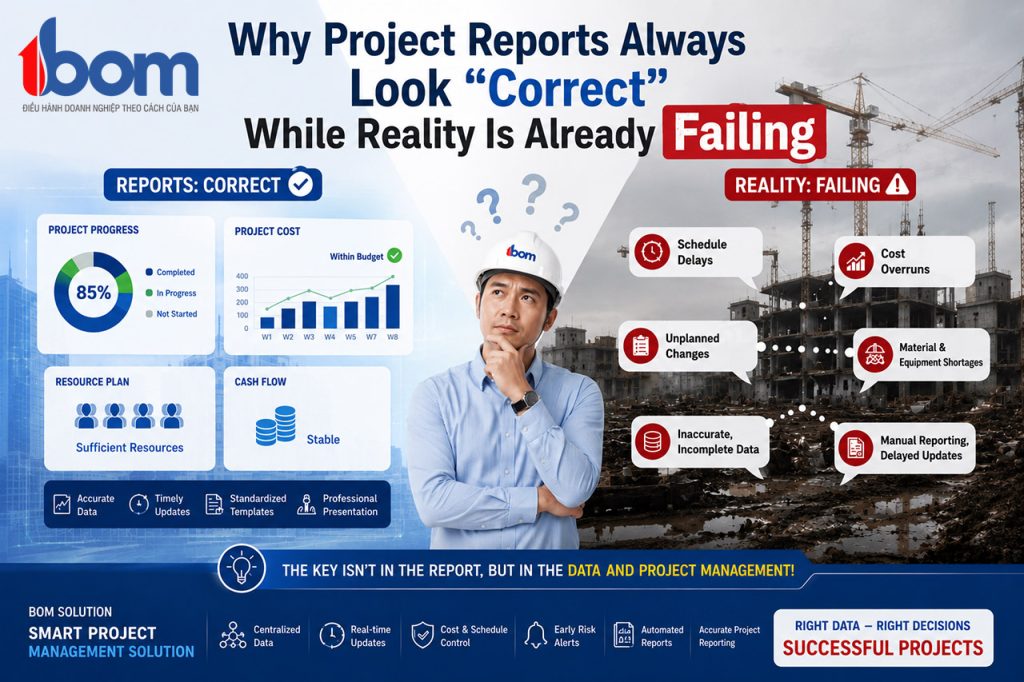
6. The Role of Systems in Clarifying Ownership
This is where modern project management systems become critical.
A system should not only track data.
It should clarify operational responsibility.
A well-designed system helps organizations define:
- who owns each workflow
- when actions are triggered
- who must respond
- how accountability is monitored
Platforms like IBOM support this by combining:
- workflow management
- project coordination
- responsibility tracking
- operational visibility
inside a unified project management structure.
7. The Leadership Question That Matters
The real question for construction leaders is not:
“Do we have good people?”
But:
“Do we have a system where good people can operate with clarity?”
Because in construction:
Organizations rarely lose control because people are incapable.
They lose control because:
👉 responsibilities are unclear
👉 ownership is fragmented
👉 and coordination depends too heavily on individuals
Đỗ Hữu Binh
CEO, ISOFT
This article is part of a professional series analyzing construction project management and cost control strategies.
© 2026 Đỗ Hữu Binh. All rights reserved.
Any citation or reuse of this content must clearly state the source and author.