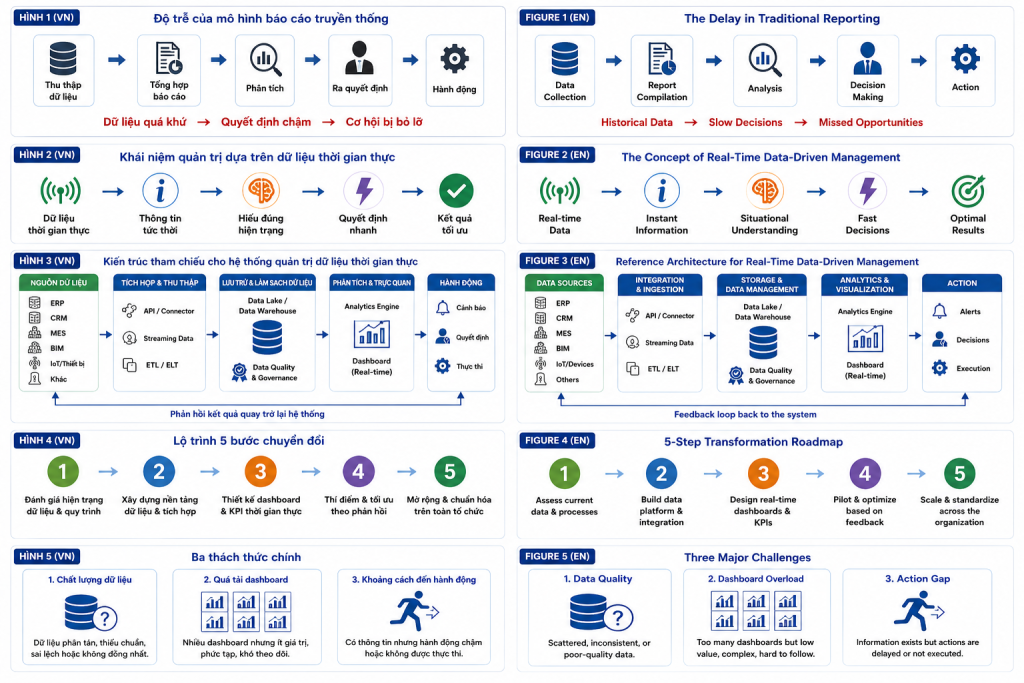

Construction schedules are often treated as reporting artifacts: a set of start dates, finish dates and percent-complete values. That view is too narrow. A schedule should be a working model of how the project is expected to be executed and a control mechanism for testing whether that model remains feasible as field conditions change.
Articles “Construction Project Management: From the Master Plan to Execution Control on Site” and “How Can AI Predict Construction Project Delays?” established the wider project-control and predictive context. This article returns to the foundation. If scope, logic, durations and actual progress are unreliable, dashboards and AI will simply process an unreliable representation of the project. Effective schedule management is therefore a continuous cycle of planning, baselining, status capture, recalculation, variance analysis, forecasting and corrective action.
1. A construction schedule is first a logic model
Dates are outputs of a schedule, not its essence. The schedule must explain the sequence in which work can physically and organizationally occur. An activity duration should be supported by quantity, productivity, crews, shifts and access assumptions. A dependency should represent a real technical or execution condition rather than a link inserted merely to make the chart look orderly.
This distinction matters because site readiness is multidimensional. A finishing activity may depend on predecessor construction, embedded MEP work, inspection, design information and work-front release. If those conditions are not represented at the appropriate planning level, the schedule can say an activity is ready while the field cannot actually start it.
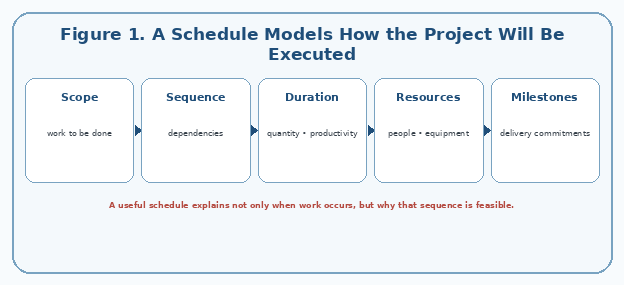
Figure 1. A Schedule Models How the Project Will Be Executed
2. Scope and the Work Breakdown Structure provide the scheduling backbone
Reliable scheduling begins with a manageable decomposition of scope. The Work Breakdown Structure (WBS) should support responsibility, measurement and linkage to quantities, contracts and cost. It does not need to be excessively complex; it needs to be stable enough to become a common management reference.
Too little detail hides variance. Too much detail creates administrative burden and false precision. The right level is the level at which responsibility can be assigned, progress can be measured and variance can trigger action with data the project can realistically maintain.
3. Dependency logic is the structural core of schedule quality
Predecessor-successor relationships determine how delay propagates. Finish-to-start logic is often the easiest to trace, while overlapping work may require other relationship types. Whatever the relationship, it should have a clear execution rationale.
Teams should also be cautious about hiding manageable processes inside lags or using hard date constraints simply to hold desired dates in place. Where a waiting period is a real process—approval, curing, fabrication—it is often more transparent to model it explicitly. A schedule should expose consequences, not suppress them.
4. Durations should reflect quantity, productivity and execution conditions
Durations are management assumptions. For measurable work, they should be linked to quantity, expected productivity, crew configuration, shifts and work conditions. Similar quantities can require very different durations when access, repetition, congestion or logistics differ.
Once execution begins, actual productivity becomes evidence. If actual production remains below the planning assumption, remaining duration should be reassessed. Preserving the original remaining duration merely because it was approved makes the forecast progressively less credible.
5. The baseline preserves the approved commitment
An approved baseline captures the accepted schedule at a point in time and provides the reference for performance comparison. Its management value comes from preserving the original commitment so that current performance can be understood in context.
Baselines should not be rewritten to erase poor performance. At the same time, formally approved scope or commitment changes may justify controlled baseline revision. Good governance therefore preserves both history and meaning: what was originally approved, what changed legitimately, and which reference is currently used for control.
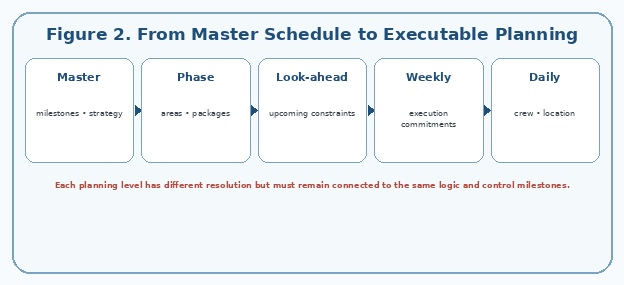
Figure 2. From Master Schedule to Executable Planning
6. The master schedule must be translated into executable planning
A high-level schedule cannot directly manage daily site production. Projects need connected planning layers such as phase planning, look-ahead planning, weekly commitments and daily coordination.
Look-ahead planning is especially important because it tests readiness before work enters the execution window. Drawings, materials, access, methods, labor, equipment and predecessor work should be checked early enough to remove constraints. This turns scheduling from date administration into production preparation.
7. Updating the schedule is not the same as entering percent complete
A meaningful update begins with a clear data date separating known actuals from remaining forecast work. Started activities need actual start information, completed work, remaining duration and current constraints. Completed activities need reliable actual finish dates. Not-started work must be reassessed against current readiness.
Percent complete should also have a defined basis. Quantity-based work can use installed or accepted quantities; milestone-based work can use weighted steps. After actuals are entered, the remaining network should be recalculated so that critical paths, float and forecast dates reflect current reality rather than manually protected dates.
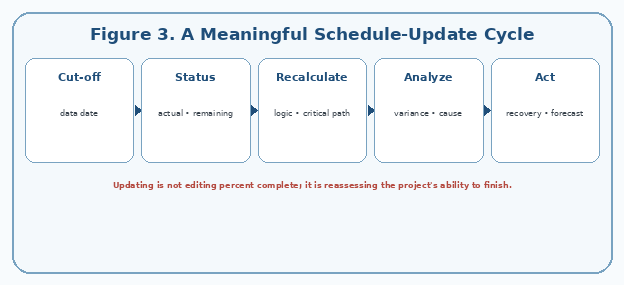
Figure 3. A Meaningful Schedule-Update Cycle
8. Control requires variance, trend and cause analysis
Baseline comparison identifies late starts, late finishes and milestone movement, but one-period variance is not enough. Trend matters. Float consumption, repeated date movement, weekly-plan reliability, unresolved constraints and productivity trends reveal whether schedule health is improving or deteriorating.
Variance must then be traced to causes such as design, procurement, access, productivity, subcontractor performance, change or delayed decisions. Without cause and ownership, schedule reporting describes the problem without creating a management response.
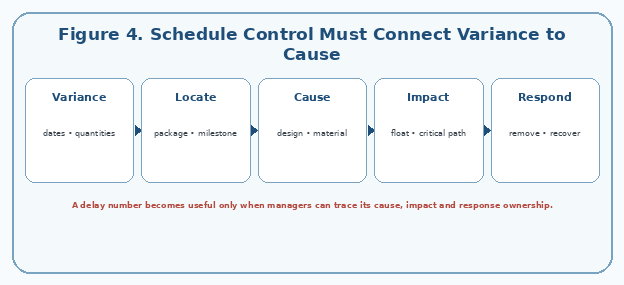
Figure 4. Schedule Control Must Connect Variance to Cause
9. Critical path and float are management signals, not chart colors
The Critical Path Method identifies the network of activities that currently drives project completion. That path can change as actual progress, remaining duration and logic change. Near-critical paths also deserve attention because low float can disappear quickly.
Frequent unexplained movement in the critical path may indicate genuine project volatility, but it can also signal weak logic or inconsistent updating. Schedule control should distinguish changes in execution reality from changes created by poor model quality.
10. Recovery planning is a trade-off problem
Schedule recovery is rarely solved by simply adding labor. Overtime, extra crews, resequencing, parallel work, alternative methods and expedited procurement all have technical, safety, quality and cost consequences.
Recovery should therefore focus on work that actually influences the target milestone and compare alternatives on both time impact and wider project consequences. Once approved, the recovery logic should be incorporated into the schedule and measured in subsequent updates.
11. The schedule itself requires quality control
Projects should audit schedule health as well as schedule performance. Open-ended activities, excessive hard constraints, unexplained lags, very long durations and stale status beyond the data date can distort analysis.
A high-quality schedule is also explainable. When a milestone moves, the scheduler should be able to trace the driving chain and explain which assumption or actual condition changed. ‘The software calculated it’ is not an adequate management explanation.
12. From schedule files to data-driven execution control
Many organizations still update the schedule in one application while procurement, documents, quantities, labor and field issues remain elsewhere. The scheduler then spends significant effort collecting and reconciling information.
A more useful architecture connects schedule activities with execution objects: location, drawing, material, contractor, quantity and constraint. This does not require one monolithic system. It requires shared identifiers and traceable relationships so that execution status can become schedule-control evidence.
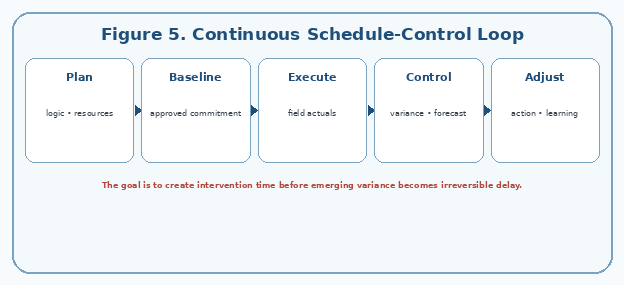
Figure 5. Continuous Schedule-Control Loop
13. A practical weekly schedule-control cycle
A weekly cycle should begin with a consistent field cut-off. Actual quantities, dates, remaining duration and constraints are confirmed; the schedule is recalculated; logic and critical-path movement are reviewed.
The team then analyzes meaningful changes before producing management reporting. Which milestones moved? Which paths consumed float? Which commitments failed? Which causes are recurring? Which constraints threaten the next two to six weeks? The meeting should end with decisions, owners and deadlines, and the next cycle should show whether those actions changed the forecast.
Conclusion
Construction schedule management is not the periodic maintenance of a Gantt chart. It is the discipline of building and continuously validating a logical model of project execution.
A credible schedule starts with clear scope, sound decomposition, defensible logic and realistic durations. The baseline preserves commitment; look-ahead planning creates readiness; updating injects field reality; and critical-path, float, trend and cause analysis turn data into intervention.
The ultimate value of scheduling is not a perfectly precise finish date. It is an early, credible view of emerging consequences that gives management time to change the outcome. Only on that foundation can cost, resource and AI-driven optimization be trusted.
References
- Project Management Institute (PMI), PMP Examination Content Outline 2026.
- Oracle Primavera Cloud, Schedule Management User Guide and Managing Your Contract Schedule.
- Oracle Primavera P6 Professional User Guide, Version 26.
- Autodesk Construction, construction planning and schedule-management resources.
- How Can AI Predict Construction Project Delays?
- Decision Infrastructure: The Next Competitive Advantage for Modern Organizations
- The Data Layers Required for Enterprise Management and Operations
- Why Excel Is Still Causing Cost Overruns in Construction Projects
- Digital Transformation Is a Workflow Problem, Not a Technology Problem