
The Rise of Construction Operating Systems

In our previous article, we explored a fundamental shift taking place across the construction industry:
Future construction companies will increasingly become data organizations.
As projects grow more complex, as portfolios expand, and as decision-making becomes more critical, data is emerging as a strategic asset rather than a byproduct of project execution.
But this realization immediately raises another question:
If data is becoming the foundation of competitive advantage, what enables organizations to transform data into decisions, coordination, and action?
The answer is not simply software.
It is not merely reporting.
And it is certainly not another spreadsheet.
The answer is an operating system.
A Construction Operating System.
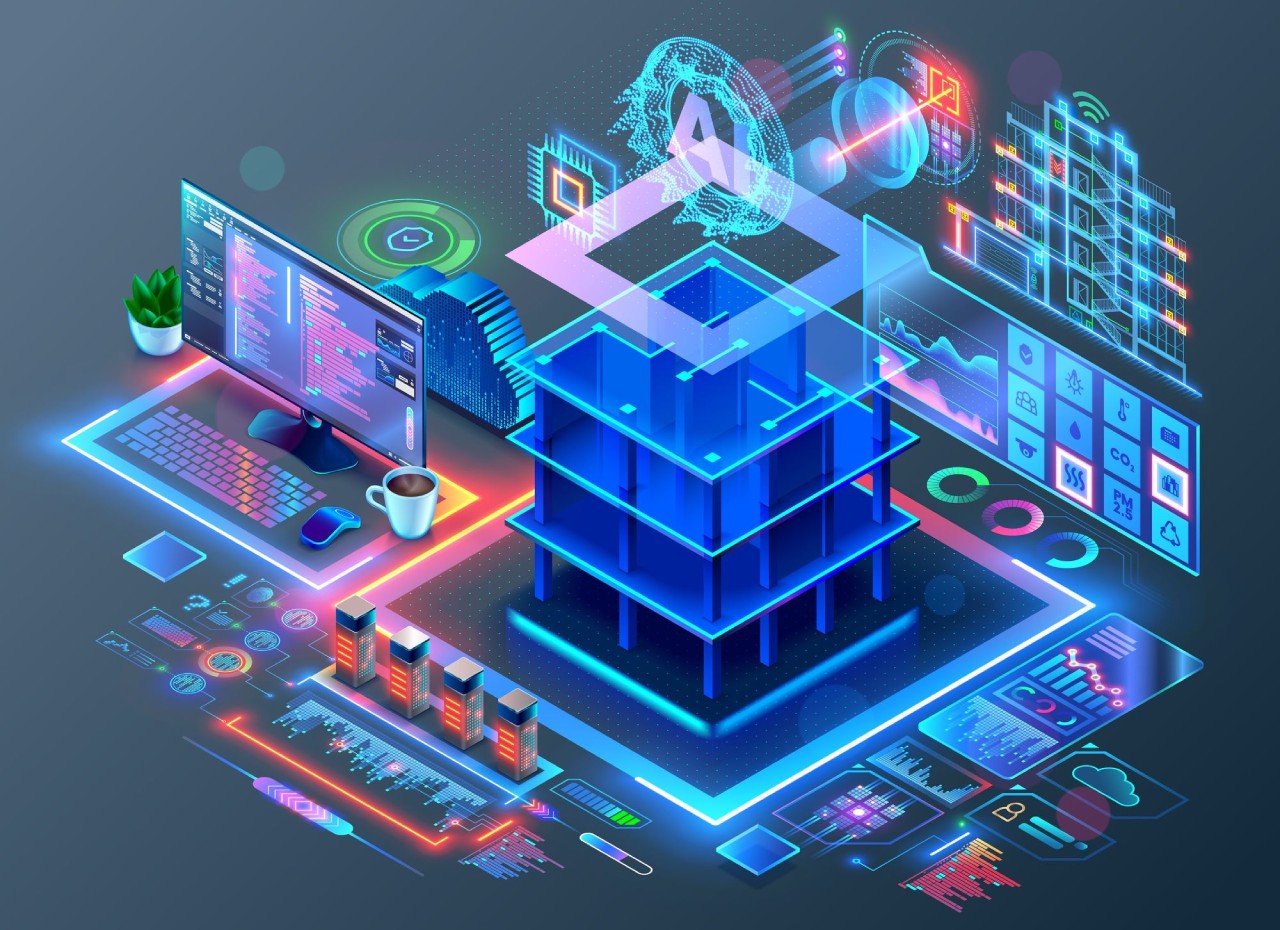
Just as modern businesses rely on operating systems to coordinate information, resources, and workflows, future construction companies will require a structured operating layer that connects projects, people, data, and decisions into a single management framework.
Growth Creates Complexity
Most construction companies begin with relatively simple operating models.
Leadership maintains visibility across projects.
Project managers coordinate directly with site teams.
Departments communicate informally.
Critical decisions are made through experience and personal relationships.
At a small scale, this approach works remarkably well.
However, growth changes everything.
More projects create more dependencies.
More subcontractors create more coordination challenges.
More contracts create more risk.
More data creates more complexity.
As organizations expand, management becomes less about controlling individual projects and more about orchestrating an entire ecosystem of projects simultaneously.
The challenge is that many companies continue using management approaches designed for a much smaller organization.
The result is predictable:
Decision-making slows down.
Information becomes fragmented.
Leaders spend more time collecting updates than leading.
And organizational complexity begins to outgrow management capability.
Most Construction Companies Have Many Systems but No Operating System

Today, many construction firms already use multiple technologies.
They have:
- accounting systems
- HR systems
- procurement tools
- scheduling software
- project management platforms
- spreadsheets
- reporting tools
From a technology perspective, they appear well equipped.
Yet many executives still struggle to answer simple questions:
Which project requires immediate attention?
Which risks are emerging across multiple projects?
How will current delays impact future cash flow?
Where should management intervene first?
The reason is simple.
Most organizations possess systems.
Very few possess an operating system.
A system manages a specific function.
An operating system coordinates the entire organization.
This distinction becomes increasingly important as companies scale.
Why Construction Companies Will Compete on Decision Speed, Not Execution Speed
A Construction Operating System Is More Than Software

Many people associate operating systems with technology.
But a true operating system is not merely software.
It is the framework that connects:
- data
- processes
- responsibilities
- decisions
- actions
Its purpose is not simply to store information.
Its purpose is to ensure that information flows to the right people at the right time and triggers the right actions.
For example:
When a project delay occurs:
Who sees it first?
Who is responsible?
When does escalation occur?
Who approves corrective action?
How is the outcome tracked?
How is the lesson shared across future projects?
Without clear answers to these questions, organizations rely on individuals.
With clear answers, organizations rely on systems.
And systems scale better than individuals.
Lessons from Toyota
Toyota is often celebrated for manufacturing excellence.
Yet its true advantage is not its factories.
Its advantage is the Toyota Production System.
Toyota built a management framework where:
- quality is embedded into processes
- problems are identified early
- escalation paths are clear
- learning is institutionalized
Success does not depend on heroic individuals.
It depends on a repeatable operating model.
Construction companies face a similar challenge.
As organizations grow, relying on exceptional people becomes increasingly risky.
The future belongs to companies that can embed expertise into systems rather than individuals.
Why Great Construction Companies Don’t Depend on Great People
Lessons from Amazon
Many people view Amazon as an e-commerce company.
In reality, Amazon’s greatest strength lies in its operating system.
Its logistics network, inventory management, forecasting capabilities, decision frameworks, and data infrastructure are all connected through a unified operating model.
Customers experience a website.
What creates competitive advantage is the operating system behind it.
Construction companies face a similar reality.
Projects may be the visible output.
But sustainable competitive advantage comes from the operating architecture supporting those projects.
Why Many Construction Companies Struggle to Scale
When construction companies encounter growth challenges, leaders often assume they need:
- more project managers
- more engineers
- more resources
While these investments help, they rarely solve the root problem.
Many organizations are not constrained by talent.
They are constrained by coordination.
As project portfolios expand, complexity grows faster than management capacity.
Without an operating system, every new project increases organizational friction.
With an operating system, growth becomes far more manageable.
This is why scaling successfully requires more than winning projects.
It requires building infrastructure for managing complexity.
The Emerging Role of Construction Operating Systems
The next generation of construction companies will likely operate differently.
Their competitive advantage will not come solely from execution capability.
It will come from their ability to coordinate information, resources, decisions, and risks across an entire portfolio.
A Construction Operating System provides this capability.
It creates:
- a single source of operational truth
- integrated project visibility
- structured accountability
- early warning mechanisms
- faster decision cycles
In short, it transforms fragmented project management into organizational intelligence.
The Future of Construction Management
For decades, construction leadership focused on delivering projects.
Future construction leadership will increasingly focus on designing systems.
Systems that:
- connect projects
- connect people
- connect data
- connect decisions
The companies that succeed over the next decade may not simply be those that execute projects better.
They may be those that build better operating systems.
Because ultimately:
Great construction companies are not collections of projects.
They are systems that continuously produce successful projects.
Đỗ Hữu Binh
CEO, ISOFT
This article is part of a professional series analyzing construction project management and cost control strategies.
© 2026 Đỗ Hữu Binh. All rights reserved.
Any citation or reuse of this content must clearly state the source and author.
- From Data to Action: How AI Turns Enterprise Data into Decisions
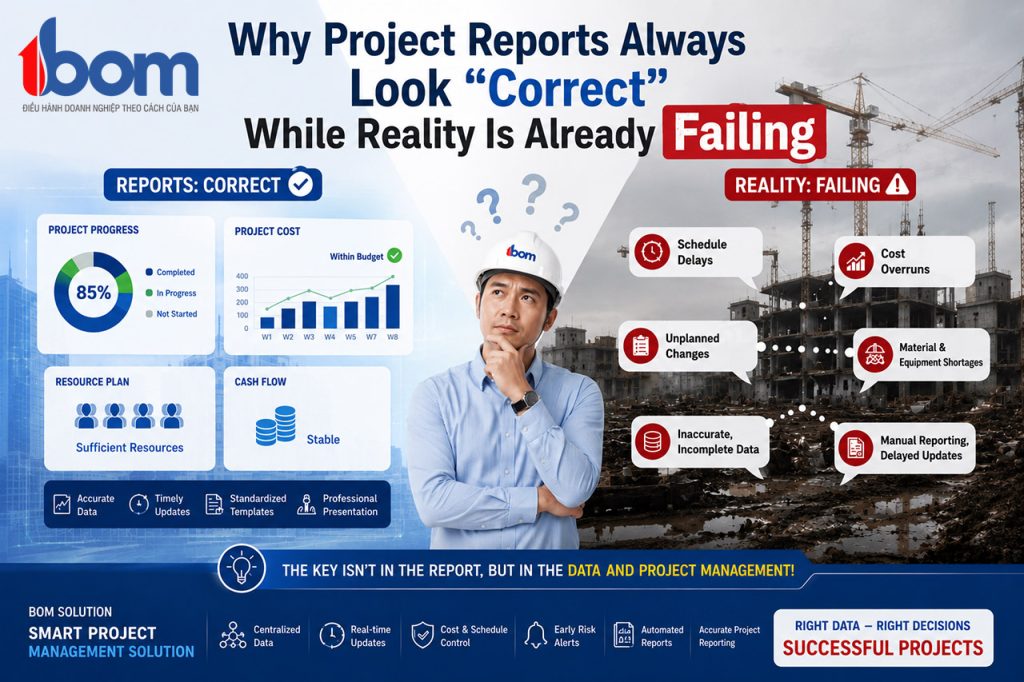
- Why Project Reports Always Look “Correct” While Reality Is Already Failing
- Why Future Construction Companies Need an Operating System
- Execution Data: Why It Is Fundamentally Different from Reporting Data
- Construction Leadership Truth #3