
Introduction
Construction budgets rarely fail on the day an unexpected invoice arrives. Cost pressure usually begins earlier: scope is insufficiently defined, quantities change without a corresponding budget update, procurement prices exceed assumptions, productivity falls, equipment remains on hire longer than planned, or field changes are executed before their commercial consequences are fully recorded.
Cost management therefore cannot be reduced to comparing money spent with an approved budget. Actual cost is often a lagging signal. By the time an invoice reaches the ledger, many of the decisions that created the cost are already difficult to reverse. Effective control must connect budget, commitments, actual cost, remaining work and the forecast total cost at completion.
Article “How AI Can Optimize Construction Planning and Site Resource Coordination” showed that resource decisions involve trade-offs among time, cost, productivity, safety and operational stability. This article develops the cost side of that decision system: how estimates become control budgets, how commitments and changes create early signals, and how forecasting turns cost data into management action.
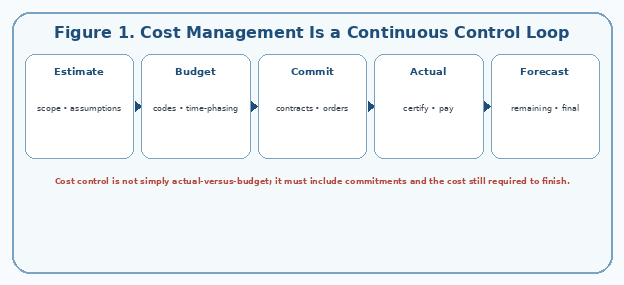
Figure 1. Cost Management Is a Continuous Control Loop
1. An estimate starts cost management, but it is not yet a control budget
An estimate predicts the cost of a defined scope at a particular point in project development. Its reliability depends on scope maturity, quantities, rates, productivity assumptions, market conditions and risk. AACE estimate-classification guidance explicitly relates estimate purpose and expected characteristics to the maturity of project definition.
A control budget requires an additional step. Approved cost must be organized into controllable packages with owners, cost codes, time-phasing and links to execution. The estimate answers how much the project may cost; the control budget must answer where the money is allocated, who is accountable and how performance will be measured.
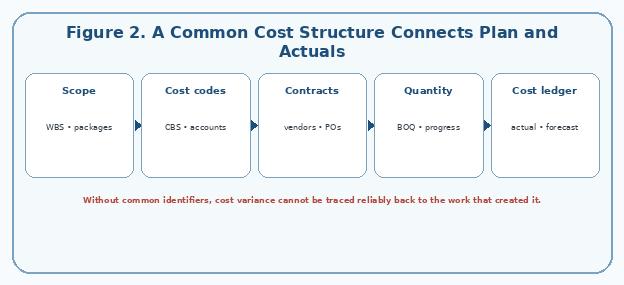
Figure 2. A Common Cost Structure Connects Plan and Actuals
2. Cost control needs a common structure across scope, schedule, contracts and accounting
Engineering, estimating, procurement, site teams and accounting often describe the same project through different structures. Without mapping among them, a ledger variance cannot be traced reliably to the work, cause and accountable party that created it.
A Cost Breakdown Structure (CBS) and stable cost-code system should connect work packages, quantities, budgets, contracts, progress, invoices and forecasts. The right level of detail is a management choice: too coarse and problems are detected late; too granular and the reporting burden exceeds the value of the data.
3. A budget must be time-phased to connect cost with execution
A total budget without time does not provide enough information for control. Cost needs to be distributed against the expected execution plan to create a cost baseline. AACE defines a cost baseline as a time-phased budget used to measure and monitor cost performance.
This distinction prevents a common error: interpreting low spending as good performance when the real reason is that planned work has not occurred. Time-phased cost also provides the foundation for Earned Value Management (EVM), but EVM is only as reliable as the underlying alignment of scope, progress, budget and actual cost.
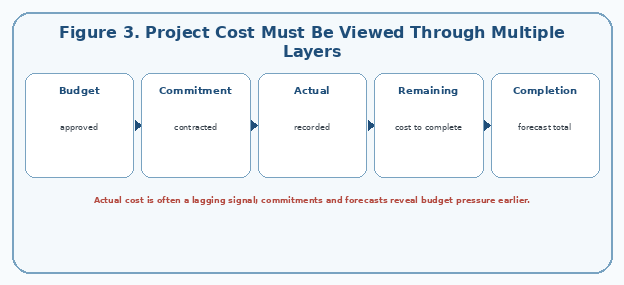
Figure 3. Project Cost Must Be Viewed Through Multiple Layers
4. Control must view budget, commitments, actuals and remaining cost together
Accounting actuals are only one layer of the project cost picture. Once a subcontract is signed or a purchase order is issued, the project has created an economic obligation even if no invoice has arrived.
A management cost ledger should therefore distinguish approved budget, committed cost, recorded actual cost, Estimate to Complete (ETC) and Estimate at Completion (EAC). AACE defines ETC as the estimated resources required to complete remaining scope and EAC as the estimated total cost accumulated at final completion.
A package with a budget of 20 billion VND and only 6 billion VND in actual cost may appear healthy. But if commitments and revised remaining work indicate a final cost of 21 billion VND, the management signal is the forecast, not the amount paid to date.
5. Commitments are an important early-warning layer
Commitments connect procurement decisions to future actual cost. Contracts, purchase orders and approved commercial changes lock portions of the budget before those costs reach the ledger.
Good control also distinguishes approved commitments from emerging exposure such as pending variations or highly probable claims. Treating every potential item as certain exaggerates the forecast; ignoring them produces false optimism. Status, probability and authority rules are therefore part of cost governance.
6. Actual cost should reflect economic activity, not only invoice timing
Financial accounting is driven by documentation and accounting periods, while project control needs to understand which work created cost and when. The two views must reconcile, but they do not always move at the same time.
Work may be completed before the subcontractor invoice arrives. Management reporting may therefore need accruals for work performed but not yet invoiced. Conversely, advance payment for materials does not mean equivalent construction progress has been earned. Progress, inventory, contracts and accounting data must be connected without confusing their different meanings.
7. Variance analysis must reach the cause
A report showing an eight-percent overrun describes an outcome, not a management problem. The variance may come from increased quantity, higher rates, weak productivity, material waste, extended equipment hire, rework, method changes or incorrect coding.
Useful analysis separates drivers that lead to different actions. Quantity variance points toward scope and design; rate variance toward procurement and market conditions; productivity variance toward execution; duration variance toward schedule and indirect cost. A single overrun often combines several of these.
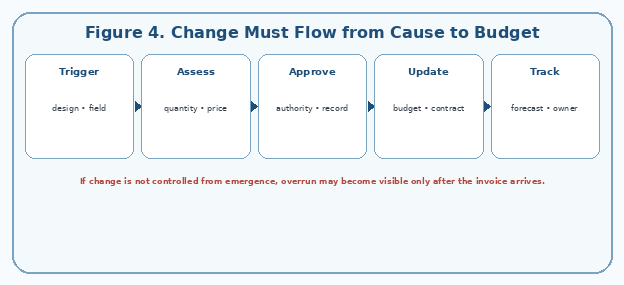
Figure 4. Change Must Flow from Cause to Budget
8. Change control is the budget’s most important line of defense
Projects often lose cost control not because the original estimate was unusable, but because changes develop faster than the budget and forecast are updated. A field instruction, design revision or unexpected condition can create cost before the formal commercial process is complete.
Change control should therefore begin when the cause emerges. Each change needs an identifier, cause, affected scope, time and cost assessment, status, accountability and forecast treatment. Waiting until a contract amendment is signed leaves the control system behind the field.
9. Contingency represents uncertainty; it is not simply spare money
Estimates are predictions of an uncertain future. AACE guidance on estimate accuracy emphasizes that uncertainty depends on scope definition, data quality and risk rather than on a universal plus/minus percentage.
Contingency should be separated from the base budget, governed by explicit authority and drawn down against identifiable risk or uncertainty. Distributing it casually into work packages can turn it into spendable budget; hiding it without transparent rules prevents teams from understanding the project’s true risk position.
10. Forecast cost at completion is the center of modern cost control
The central question is not how much has been spent, but what the project is now expected to cost when finished. EAC answers that question, while ETC represents the cost still required for the remaining scope.
ETC should not be calculated mechanically as unused budget. It should be re-estimated from remaining quantities, current productivity, contractual obligations, market prices, changes, risk and the latest execution plan. A living EAC therefore requires package owners to update assumptions and explain forecast movement from one reporting period to the next.
11. Earned Value Management is valuable when it leads to the right questions
EVM combines planned value, earned progress and actual cost to examine schedule and cost performance in one framework. Its strongest value is diagnostic: high cost with limited earned progress should trigger investigation into productivity, rework or scope; low cost with schedule delay may simply mean planned work has not occurred.
EVM has limitations when progress is subjective, budgets are poorly aligned to work, or actual cost arrives late. Organizations should therefore build reliable structures and recognition rules before focusing on sophisticated indices.
12. Cash flow and cost are different views that must be managed together
Cost represents economic resources consumed by project execution; cash flow represents when money is actually paid or received. A project can remain within cost expectations and still experience serious working-capital pressure because of payment terms, certification delays, retention or advance payments.
Forecast cost should therefore connect to payment schedules to produce a time-based cash forecast. The two layers should be reconciled but not confused: early payment does not equal earned progress, and late payment does not mean the underlying cost has not been incurred.
13. Cost reporting should drive action rather than produce more tables
An effective report answers three questions: where is variance forming, why is it forming, and where will final cost land if no action is taken? Trend, forecast and causality are therefore more valuable than long tables of historical transactions.
Executives need budget, commitments, actuals, EAC, remaining contingency and major changes. Package managers need quantity, rate, productivity, contract and ETC detail. Every aggregate number should be drillable to the work and transaction that created it.
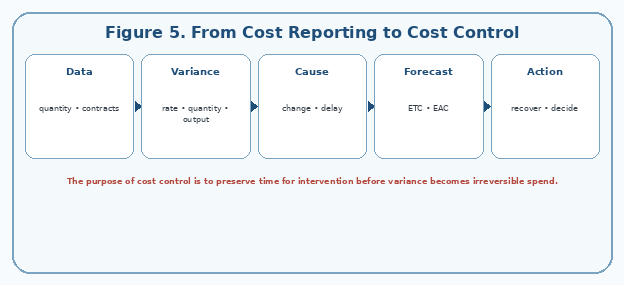
Figure 5. From Cost Reporting to Cost Control
14. Cost control is a closed operating loop
A complete loop begins with execution data—quantities, labor, equipment, materials, contracts and changes. The system compares these with the baseline, identifies variance, traces causes, updates ETC and EAC, and moves the issue into management decision-making.
Actions may include procurement renegotiation, method change, resource reallocation, stopping an unauthorized change, drawing contingency or accepting additional cost to protect a critical milestone. Outcomes then return to the system so assumptions can be tested and forecasts improved.
15. A practical implementation roadmap
Start by standardizing the cost structure and governance language: project, work package, cost code, contract, vendor, cost type, original budget, current budget, commitment, actual, ETC, EAC and contingency.
Then connect procurement and change management to the cost ledger so commercial decisions update budget exposure. Add quantity and schedule data to analyze productivity and remaining work. Establish a regular forecasting cadence in which package owners explain EAC movement and document key assumptions.
Only after this foundation is stable should the organization add advanced analytics such as trend alerts, scenario simulation and AI-based overrun prediction. Better algorithms cannot compensate for a cost model that does not represent the project accurately.
Conclusion
Construction cost management is not an accounting exercise performed after spending occurs. It is an operating system that begins with estimate quality, converts approved cost into a control baseline, tracks commitments and actuals, governs change, re-estimates remaining work and continuously forecasts final cost.
The difference between cost reporting and cost control is timing. Reporting explains what has happened; control must reveal what is forming early enough for managers to retain choices.
When scope, schedule, quantities, contracts and cost share a coherent structure, the organization can move beyond ‘how much are we over?’ toward more useful questions: why is cost moving, where will the project finish if nothing changes, and which decision can still alter the outcome? That foundation leads directly to Article #14 on AI-based construction cost-overrun prediction.
References
- AACE International, Total Cost Management Framework.
- AACE International, Recommended Practice 10S-90: Cost Engineering Terminology, revised February 2026.
- AACE International, Professional Guidance Document No. 01: Guide to Cost Estimate Classification Systems.
- AACE International, Recommended Practice 104R-19: Communicating Expected Estimate Accuracy.
- AACE International, Recommended Practice 137R-25: Owner’s Costs – Definition & Considerations for Estimating.
- Why Future Construction Companies Need an Operating System
- Why Construction Projects Always Run Late
- The Hidden Cost of Quantity Errors Most Construction Project Managers Never See
- AI Does Not Replace Managers – It Exposes Them
- Báo cáo công nợ phải thu chính xác nhất bằng phần mềm IBOM.SCM 1