
Traditional management decisions have depended heavily on managers collecting information, interpreting situations and applying experience. As organizations become more interconnected and data volumes increase, the limiting factor is often no longer access to information but the human capacity to process many signals at the speed at which operations change.
AI changes this constraint. Its management value extends beyond content generation or task automation. AI can participate across the decision cycle: detecting signals, identifying exceptions, explaining likely drivers, forecasting outcomes, comparing options and, in bounded cases, executing decisions governed by predefined rules. The key question is therefore not simply what AI can do, but where AI should participate in a decision and where human authority should remain explicit.
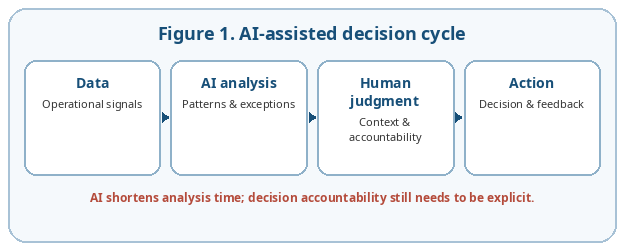
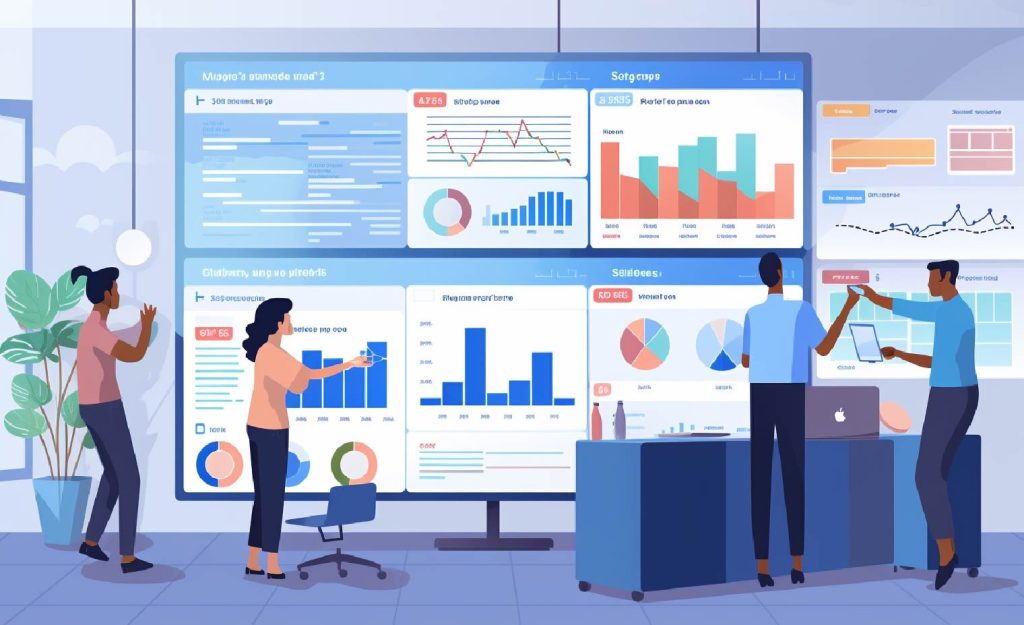
Figure 1. AI-assisted decision cycle: data → AI analysis → human judgment → action and feedback.
1. From report-driven decisions to signal-driven decisions
Article #01 described the move from periodic reporting toward near-real-time data-driven operations. Once that foundation exists, AI creates another shift: managers no longer need to search through every report themselves because systems can proactively surface signals that deserve attention.
A sales leader, for example, may receive an explanation that a product group is declining unusually fast, together with evidence linking the change to conversion rates in one region and availability constraints for selected items. In manufacturing, AI may detect relationships among downtime, quality variation and operating parameters before they become a major incident.
The managerial starting point changes from “Which report should I open?” to “What requires my attention now?” This is the transition from information-search management to signal- and exception-driven management.
2. Where can AI participate in the decision process?
AI can play four distinct roles. First, it can observe by aggregating information across sources and identifying changes, anomalies or relationships that are difficult to see in fragmented data. Second, it can explain by narrowing the set of factors that may be driving an outcome.
Third, AI can predict. Historical and current data can be used to estimate the probability of events such as schedule delays, material shortages, customer churn, equipment failure or cash-flow pressure. Fourth, AI can recommend by comparing options, estimating impacts and proposing priorities.
These roles do not need to be deployed at once. Organizations can begin with anomaly detection, add prediction, and only later introduce recommendation or automation. This staged approach lets the business validate value before granting systems broader authority.
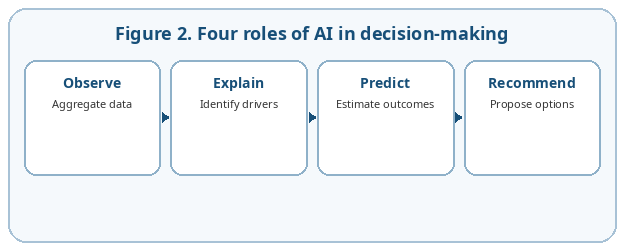
Figure 2. Four roles of AI in decision-making: observe, explain, predict and recommend.
3. Which decisions can be delegated to AI?
Decisions differ in their suitability for automation. High-frequency decisions with clear rules, sufficient data and limited downside can often be automated to a greater degree. Decisions with major financial, legal, human or reputational consequences, or those requiring nuanced context, should retain a human final decision-maker.
McKinsey frames this issue through decision risk and complexity: low-risk, low-complexity decisions are stronger candidates for automation, while high-risk, high-judgment situations require human oversight. NIST similarly emphasizes that human roles and responsibilities in AI oversight should be explicitly defined.
The objective is therefore not to maximize the number of decisions made by AI. It is to design the right human-AI configuration for each decision: AI contributes computational scale and pattern recognition; humans contribute context, accountability, ethics and exception handling.
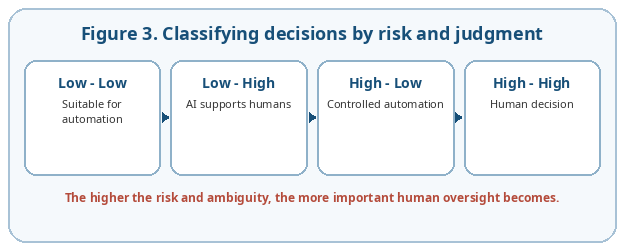
Figure 3. Decision classification by risk and judgment to determine an appropriate level of automation.
4. How does AI change the manager’s role?
As AI absorbs more analytical work, management does not disappear; it shifts. Managers can spend less time assembling numbers and more time framing the right questions, challenging assumptions, resolving competing objectives and making choices where no answer is fully certain.
This requires a new capability: using AI recommendations without becoming dependent on them. A highly persuasive recommendation can still be based on incomplete data, outdated assumptions or a model that does not understand the full business context. Harvard Business Review has warned that AI can create overconfidence and can weaken judgment when leaders outsource thinking rather than augment it.
Managers therefore need to challenge the system: What data produced this conclusion? Which factors matter most? How uncertain is the result? What is outside the model’s scope? What happens if the recommendation is wrong? The more capable AI becomes, the more important disciplined human judgment becomes.
5. From decision support to AI agents that execute
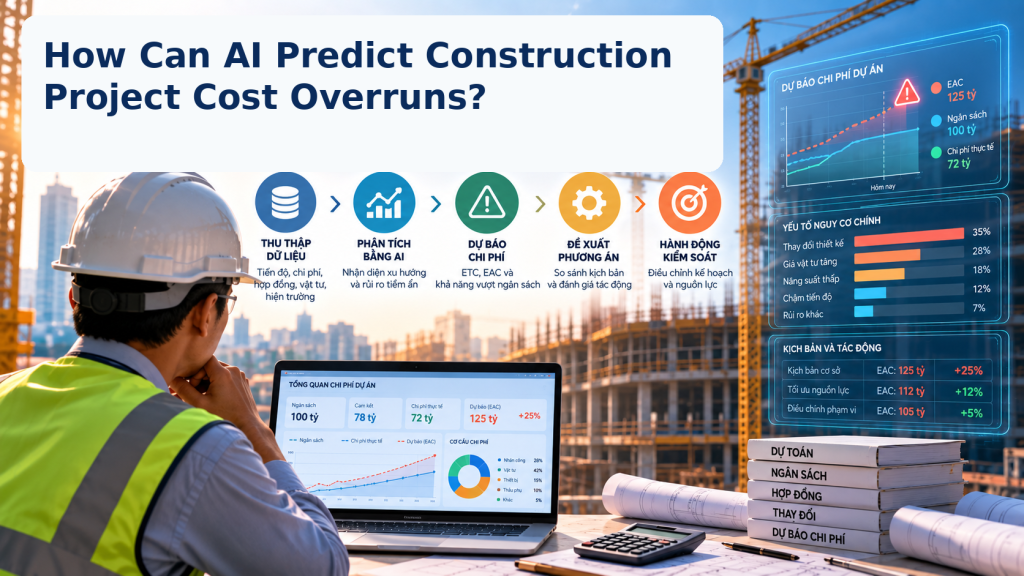
Agentic AI is narrowing the distance between supporting a decision and carrying it out. AI agents can coordinate tools, retrieve information, perform sequences of tasks and respond to goals rather than merely generate an analysis.
Instead of only warning that inventory is low, an agent could check production plans, orders, available stock and lead times; calculate a purchase requirement; prepare a requisition; and route it to the appropriate approver. In lower-risk workflows, selected steps could be executed automatically within approved budgets and supplier rules.
This development means enterprises increasingly need to manage AI not merely as software, but as a participant in operating processes with defined roles, authority, performance expectations and oversight.
6. The architecture required for AI-assisted decisions
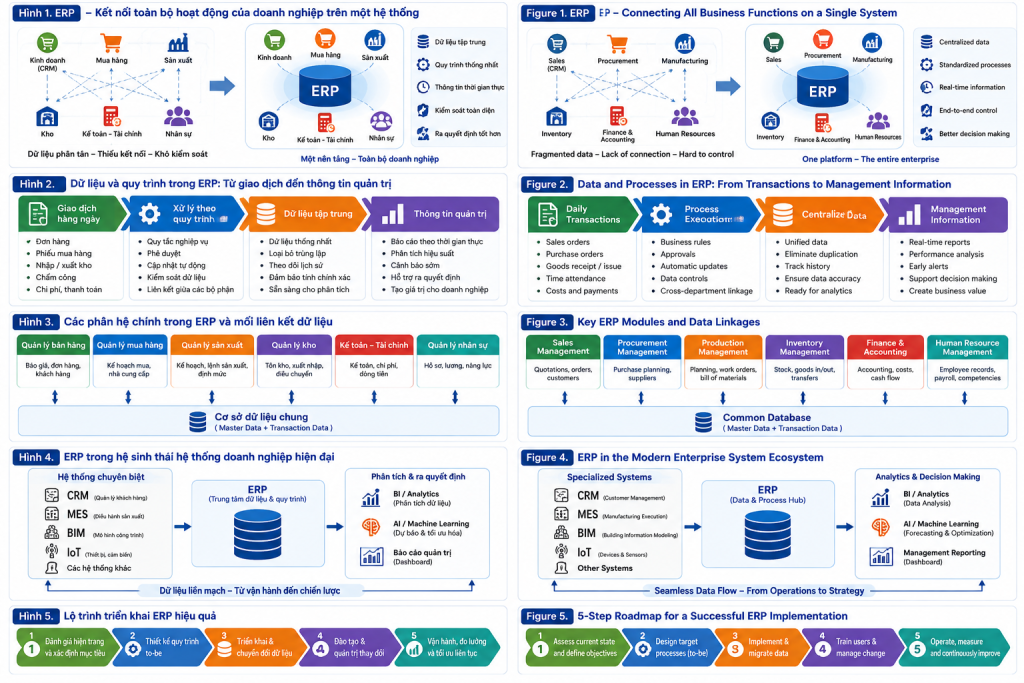
AI cannot produce consistently good decisions when it is disconnected from operations. A chatbot without trusted enterprise data creates a new interface, not a new management capability. Effective AI-assisted decision-making requires connected layers: operational source systems; a governed data foundation; AI capabilities such as analytics, prediction, language models and agents; governance defining access and authority; and execution workflows that turn recommendations into tasks, approvals or actions.
The feedback loop is essential. Organizations need to know which recommendations were accepted, which were overridden and what outcomes followed. Without this evidence, they cannot determine whether AI is improving decision quality or merely making analysis faster.
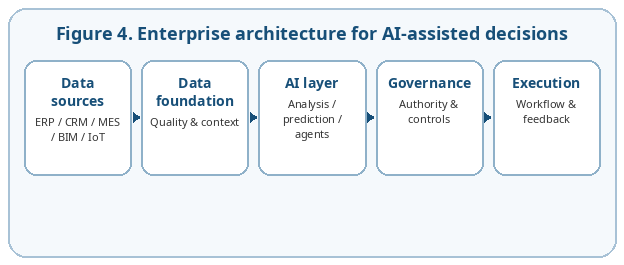
Figure 4. Reference architecture connecting AI-assisted decisions with data, governance and execution.
7. Risks of embedding AI in decisions
The first risk is poor or context-deficient data. AI can process information quickly, but it cannot transform unreliable data into truth. A second risk is bias in historical data, objectives or user interpretation. A third is automation bias: users may accept a recommendation because it is delivered fluently and confidently.
Another risk is unclear accountability. If AI recommends and a person approves, who owns a bad outcome? If a system can execute automatically, what boundary forces escalation to a human? NIST recommends explicitly defining oversight roles, authority and responsibilities for human-AI configurations.
AI governance must therefore be designed alongside AI use. Inputs, recommendations, final decisions and outcomes should be traceable, with review and intervention mechanisms proportional to risk.
8. A roadmap for embedding AI into management decisions
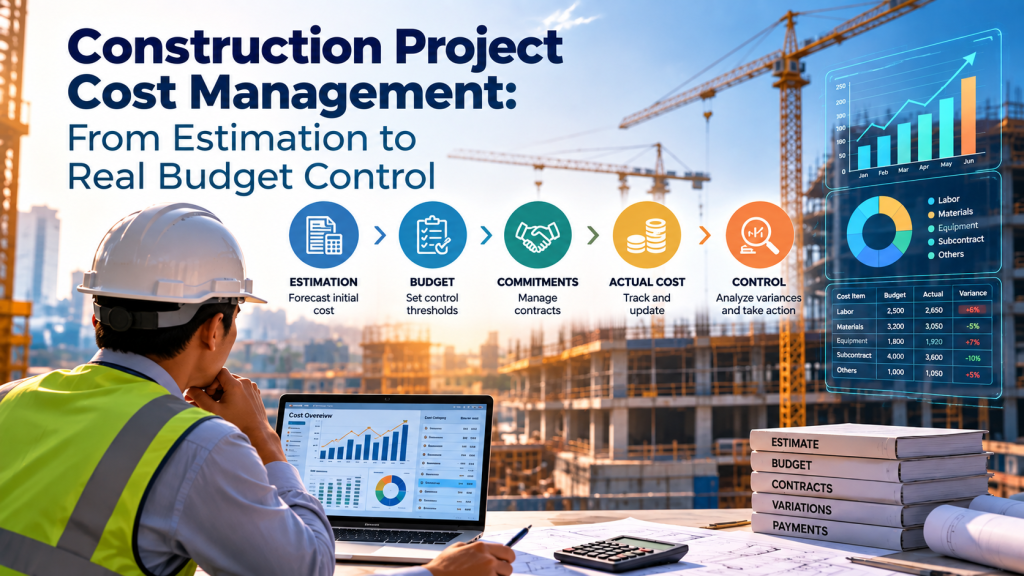
A practical roadmap begins with the decision rather than the AI model. Select decisions that occur frequently enough, have reasonably available data and offer measurable value from improvement. Standardize the required data and define whether AI will observe, predict, recommend or execute.
Pilots should measure more than model accuracy. They should evaluate decision lead time, exception rates, business outcomes and whether managers understand the basis of recommendations. Authority should expand only after these measures demonstrate reliable value.
The central principle is simple: AI value is not measured by how many models are deployed, but by how many decisions improve in a controlled and repeatable way. Enterprise-scale impact emerges when technology is accompanied by redesigned workflows, governance and operating models.
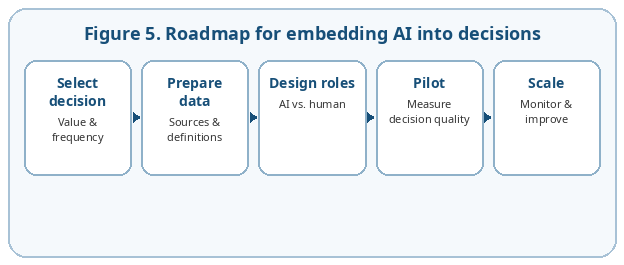
Figure 5. Roadmap for embedding AI into decisions, from use-case selection to controlled scaling.
Conclusion
AI is changing decision-making in a way that goes beyond faster analysis. When connected to operational data and execution workflows, it can help organizations move from reacting after events to detecting signals early, anticipating outcomes and choosing actions proactively. Agentic AI can extend selected decisions into automated execution within designed boundaries.
This capability increases rather than reduces the importance of governance. The more authority an enterprise gives AI, the more clearly it must define data quality, accountability, permissions and human intervention points. The future of enterprise decision-making is therefore not AI replacing managers, but a deliberately designed human-AI system that can make decisions faster, more consistently and with stronger evidence.
References
- McKinsey & Company (2025), When can AI make good decisions? The rise of AI corporate citizens.
- McKinsey & Company (2026), The operating model advantage: Why AI winners are rewiring their organizations.
- McKinsey & Company (2026), The symbiotic enterprise: A new model for growth.
- NIST AI Resource Center, AI Risk Management and Human-AI Interaction; AI RMF Playbook – Govern and Map.
- Harvard Business Review (2025), How AI Can Help Managers Think Through Problems.
- Harvard Business Review (2025), Companies Are Using AI to Make Faster Decisions in Sales and Marketing.
- Harvard Business Review (2025), Don’t Let AI Distort Your Decision-Making.
- AI in Construction Project Management: From Manual Reporting to Intelligent Decision Support (Part 1)
- The CEO’s Project Governance Framework
- The Hidden Cost of Construction Projects: It’s Not What You Think
- Construction Leadership Truth #2
- From Data Visibility to Strategic Control: Governance in the Age of AI