
Introduction
For many years, enterprise management followed a relatively stable rhythm: operations took place, data was consolidated at the end of a reporting period, management reports moved upward, and decisions were made once the picture was reasonably complete. That approach becomes less effective when customer demand, supply chains, projects and production conditions can change within days or hours. The delay in information then becomes a delay in management.
Data-driven management should therefore not be reduced to having more reports or dashboards. Its real purpose is to place reliable and timely data at the points where decisions are made, so managers can recognize what is happening, understand its implications and act while the situation is still controllable.
1. The limits of traditional report-based management
Many enterprises already possess large volumes of data. Sales, finance, inventory, manufacturing and project teams all generate operational records. The problem is that these records are often created in different systems and at different cadences. By the time they are consolidated into a management report, the underlying event may already be days or weeks old.
A report can be numerically correct and still arrive too late to influence the outcome. This explains a common paradox: companies have extensive systems and reports, yet managers still rely on phone calls, messaging groups, meetings and spreadsheets to understand what is happening right now.
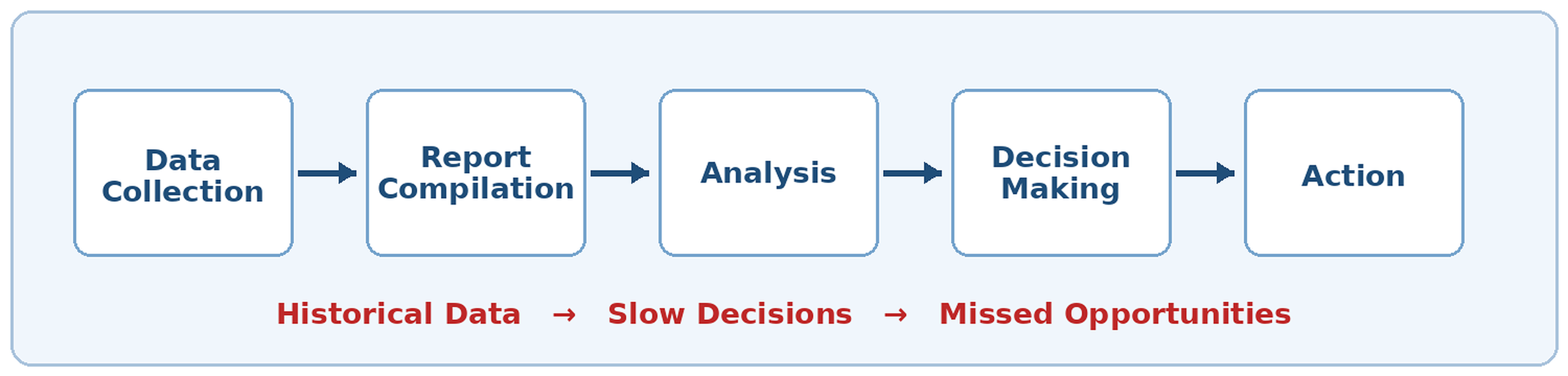
Figure 1. Reporting delay can turn historical data into slow decisions and missed opportunities.
2. What is real-time data-driven management?
Real-time data is information that becomes available for processing and analysis immediately, or with sufficiently low latency, after it is generated. In enterprise management, real time does not mean that every metric must update within milliseconds. The appropriate cadence depends on the decision. Equipment conditions may require second-level data, logistics may require minutes, while cash-flow management may work at hourly or daily intervals.
Real-time management is therefore the organizational capability to connect operational events with timely visibility and response. The objective is not speed for its own sake, but ensuring that information arrives while action can still change the result.
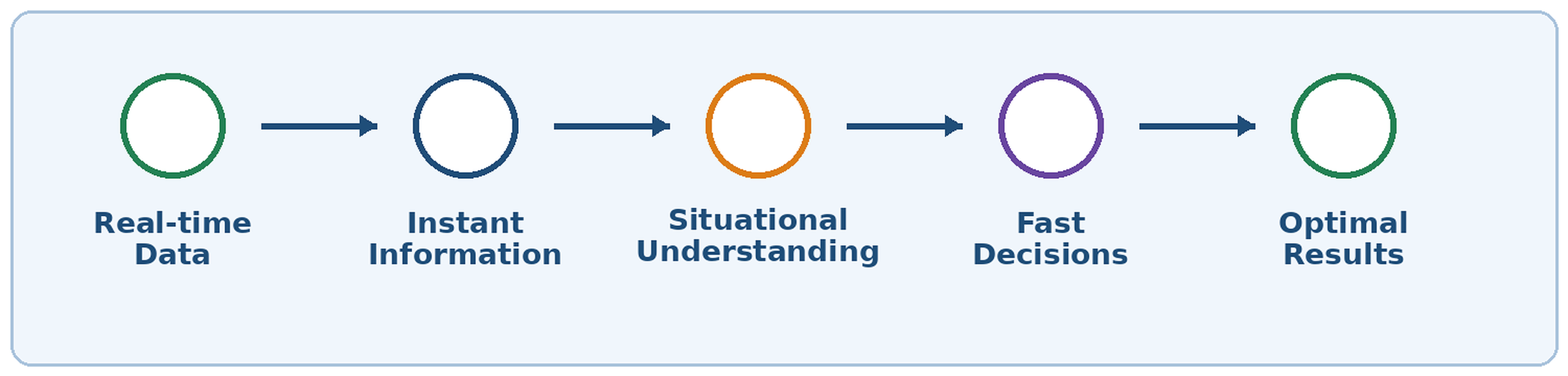
Figure 2. The real-time data-driven management cycle: current data, timely information, understanding, faster decisions and better outcomes.
3. Strategic benefits of real-time management
The first benefit is a shorter distance between an event and the organization’s response. Traditional reporting adds delay at every step: recording, consolidation, reporting, discussion, decision and assignment. Continuous operational data and exception-based alerts can remove much of that delay.
The second benefit is a shift from explaining outcomes to managing developments. Instead of discovering at month-end that sales missed the plan, managers can observe pipeline, conversion and order trends while the month is still in progress. A third benefit is a common management language: when metrics are consistently defined, discussions can move from whose number is correct to what caused the issue and what should be done.
Fresh operational data also provides a stronger foundation for predictive analytics and AI, because models and agents need current context to support timely decisions.
4. Core components of a real-time data system
A real-time management system should start with decisions, not dashboards. Enterprises need to identify which decisions matter, how frequently they are made, what information affects them and how much latency is acceptable.
The architecture typically includes source systems such as ERP, CRM, project platforms, MES, warehouse systems, accounting applications and IoT devices; an integration layer; data governance and common definitions; analytics and visualization; and, critically, an action layer. The action layer defines who receives an alert, what response is expected, how quickly it must occur and whether the result is captured back into the system. Without this final layer, an enterprise can have sophisticated dashboards while still operating through calls and meetings.
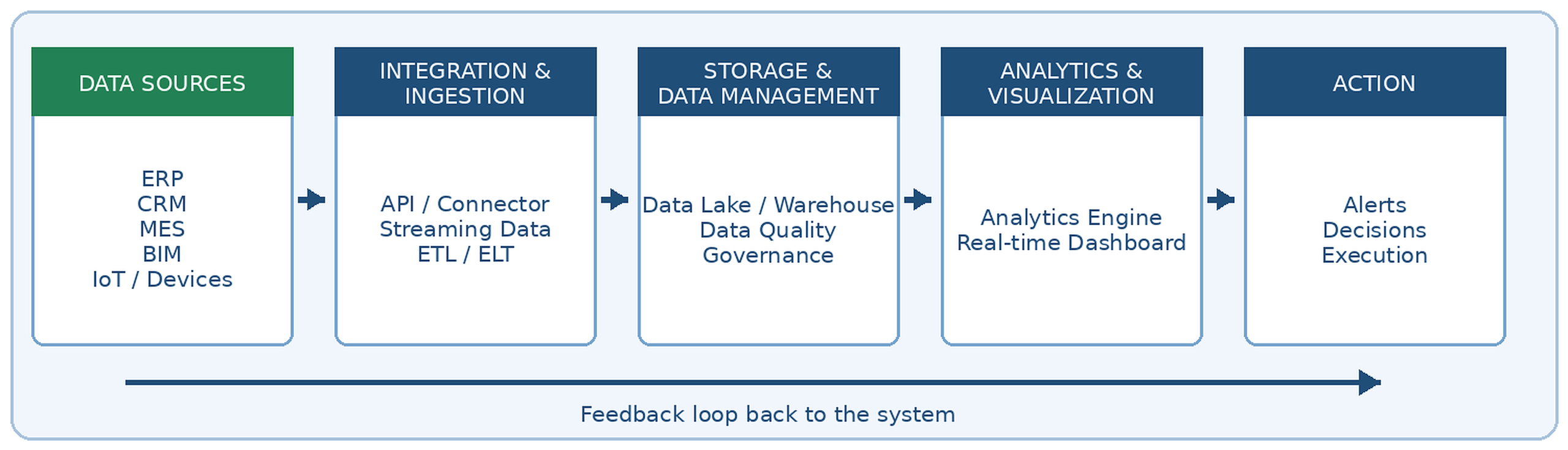
Figure 3. Reference architecture: data sources → integration → governance → analytics/visualization → alerts, decisions and execution.
5. Roadmap from periodic reporting to real-time operations
Organizations do not need to make every dataset real time. A practical approach is to begin with time-sensitive use cases such as project progress, inventory, equipment conditions, customer orders or short-term cash flow. For each use case, define the management decision, required data, update frequency, thresholds and accountable owner.
Once data is standardized and connected, dashboards should be designed around management roles and decisions rather than departmental boundaries. The next stage is to embed alerts and response workflows. More mature organizations can then add predictive analytics and AI so the system moves from describing what is happening toward anticipating what may happen next and recommending priorities.
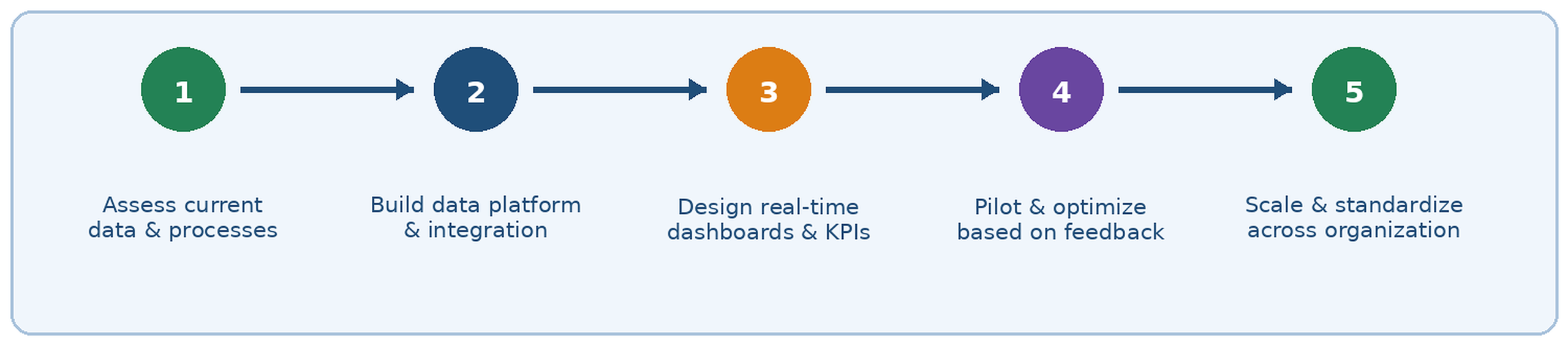
Figure 4. A five-step roadmap from periodic reporting to real-time operations.
6. Common challenges and how to address them
The most persistent challenge is often data quality and consistency rather than technology. If departments use different definitions for revenue, available inventory or completion percentage, faster data merely accelerates inconsistency. Governance, ownership and common definitions must therefore accompany technical integration.
Another challenge is dashboard overload. Management dashboards should emphasize decisions, exceptions and material changes rather than display everything the organization can measure. Finally, data does not eliminate managerial judgment. Research highlighted by Harvard Business Review shows that data-driven decisions can go wrong when evidence is poorly interpreted or treated as infallible. Data needs business context and informed judgment.
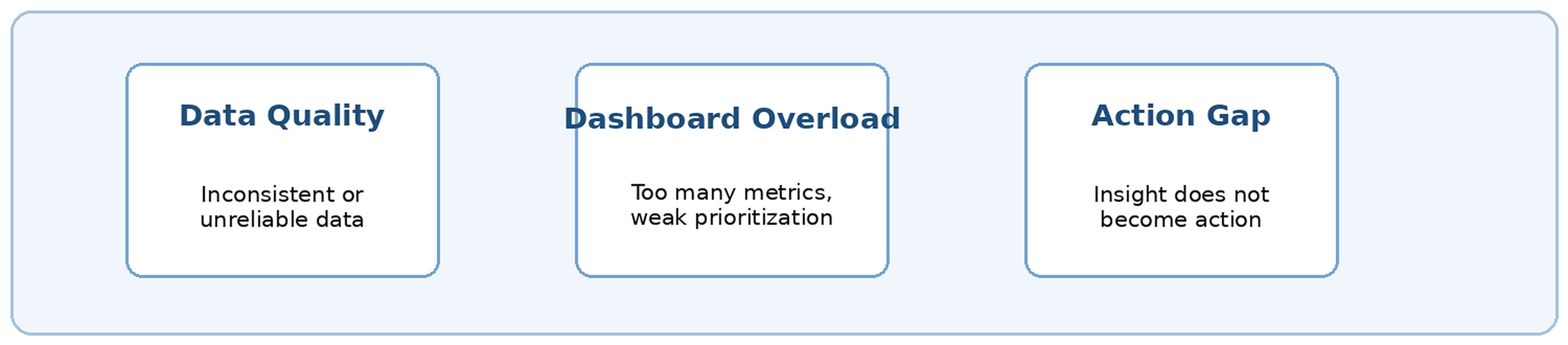
Figure 5. Three recurring challenges: data quality, dashboard overload and the action gap.
7. Data mindset: the foundation of a sustainable enterprise
The transition from periodic reporting to real-time management is ultimately an operating-model change. When data is captured as part of work, reporting stops being an end-of-period administrative exercise. When metrics are consistently defined, data becomes a common language. When alerts are tied to accountability, data becomes part of the management mechanism itself.
A data-driven enterprise is not one in which data makes every decision instead of people. It is one in which important decisions are supported by information that is sufficiently reliable, timely and traceable. This is also the foundation for more advanced forms of intelligent management in which predictive analytics and AI participate more deeply in operations.
Conclusion
Real-time data-driven management is not a race to build more dashboards or collect more data. Its value comes from shortening the distance between event, awareness, decision and action. When an enterprise identifies the right decisions, standardizes data, connects systems and creates clear response mechanisms, data moves from being a stored asset to becoming an operational management capability.
That transition—from having data to operating with data—is also a prerequisite for generating practical value from AI in enterprise management.
References
- IBM Think (2026), What Is Real-Time Data? – https://www.ibm.com/think/topics/real-time-data
- IBM Think (2026), What Is Real-Time Data Streaming? – https://www.ibm.com/think/topics/real-time-data-streaming
- IBM Think (2026), What Is Real-Time Data Ingestion? – https://www.ibm.com/think/topics/real-time-data-ingestion
- Harvard Business Review (2024), Where Data-Driven Decision-Making Can Go Wrong – https://hbr.org/2024/09/where-data-driven-decision-making-can-go-wrong
- Harvard Business Review (2025), The Right Way to Make Data-Driven Decisions – https://hbr.org/podcast/2025/03/the-right-way-to-make-data-driven-decisions
- Why Project Reports Always Look “Correct” While Reality Is Already Failing
- From Construction Site Data to CEO Decisions: Why Real-Time Project Visibility Matters in Construction
- Why Construction Projects Always Run Late
- From Data to Action: How AI Turns Enterprise Data into Decisions
- Why Great Construction Companies Don’t Depend on Great People