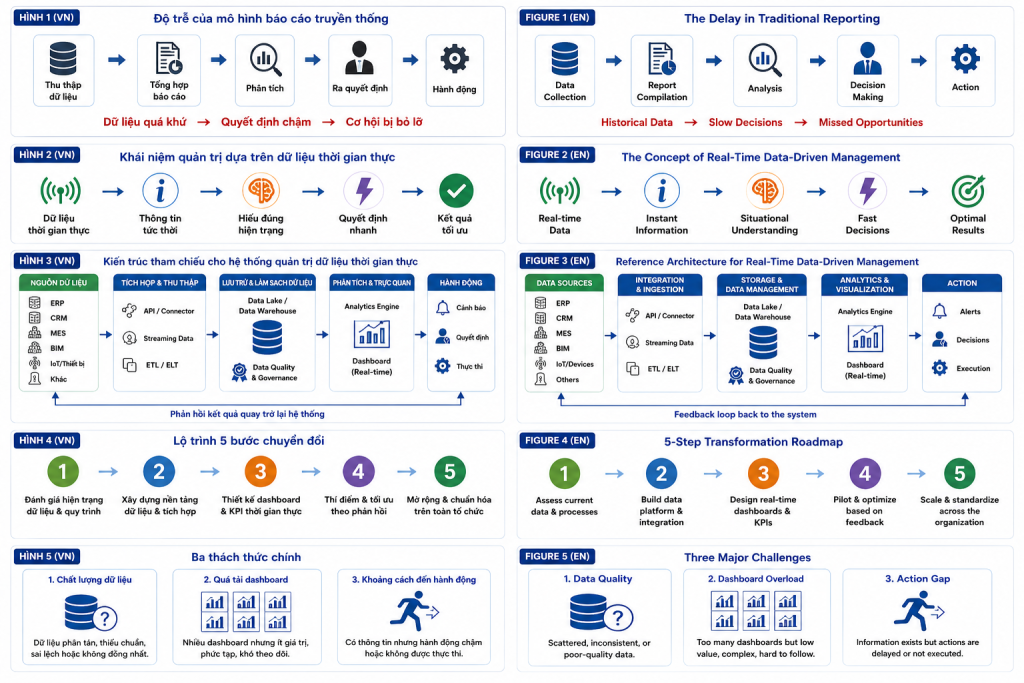

A construction project can have enough materials on paper and still be unable to proceed. The paradox occurs when a reported balance is mistaken for compliant, inspected, accessible material available at the location and date where work must be executed.
Following the earlier articles on schedule, resources and cost, material management is the next link in execution control. Materials can represent a substantial part of project cost and are essential to work continuity. Shortages idle crews; excess stock ties up cash, consumes space and increases damage exposure.
This article examines the complete material flow—from demand derived from design and schedule to procurement, receipt, acceptance, inventory, issue and reconciliation with installed work. The objective is not maximum stock but reliable material readiness at a sustainable total cost.
1. Materials are an execution flow, not merely goods in storage
On a construction site, steel, valves and finishing materials create project value only when they are installed in the right location, at the right time and to the required specification. A signed purchase order or paid invoice does not mean an activity is ready to proceed. Materials must still be manufactured, transported, inspected, stored, issued and installed under site-specific constraints.
This makes material management a coordination problem across design, scheduling, estimating, procurement, warehousing, quality assurance and construction. When departments work from separate spreadsheets, a drawing revision may never reach the purchasing team; early deliveries may congest the site; late deliveries may leave crews idle. Individual departments can meet their own targets while the project loses time and money.
The right measure is therefore not the number of purchase orders raised or the value of goods received, but whether compliant materials are available for executable work. Effective material control must answer three connected questions: what is needed, when is it needed, and how much is genuinely ready for use.
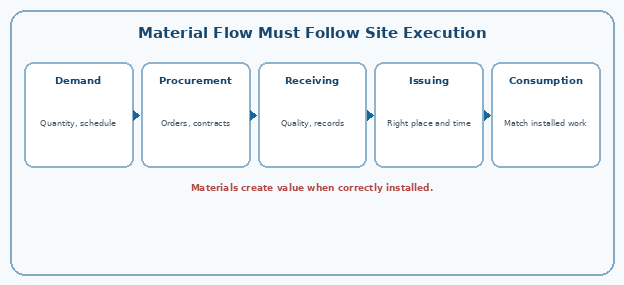
Figure 1. Material Flow Must Follow Site Execution
2. Demand planning must begin with work quantities and execution readiness
Material demand should not be calculated by taking a total estimate and spreading it evenly across months. Every item belongs to a particular element, location, method and execution date. Reinforcement for one floor may not be interchangeable with that for another, while an MEP component whose specification is still under review cannot be treated as a fully approved purchasing requirement.
A credible demand plan starts with controlled design revisions, quantities mapped to activities and locations, reasonable waste allowances, and the execution schedule. Procurement dates must work backward from approval, manufacturing, transportation, inspection and risk allowances. If a work package needs materials on the twentieth, its order date must be derived from the entire supply lead time rather than from the day the store reports a shortage.
Managers must distinguish gross demand, net demand and demand approved for ordering. Net demand accounts for usable inventory, timely inbound supplies and stock already reserved for other work. Requirements affected by unresolved design or site access should be explicitly flagged as uncertain rather than prematurely converted into firm orders.
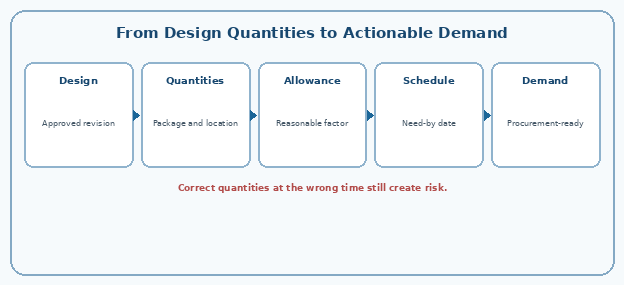
Figure 2. From Design Quantities to Actionable Demand
3. Different material categories require different control methods
Bulk aggregates, custom-built switchboards and imported equipment cannot be controlled under one replenishment rule. Common materials may have several suppliers and short lead times, making consumption and waste control important. Long-lead equipment requires early technical approval, manufacturing follow-up and inspection milestones. High-value or traceable items require batch, serial-number and installation-location records.
Materials can be classified by value, schedule criticality, substitutability, lead time and quality exposure. A low-cost component on the critical path may deserve more management attention than expensive stock that will not be installed for months. Conversely, readily available goods do not always justify large safety stocks.
Classification should produce operational rules: suitable buffers, approval authority, inspection requirements, storage conditions and review frequency. Its value lies in changing decisions, not in adding another field to the item master.
4. Procurement must follow need-by dates, not just promised delivery dates
Procurement teams are often measured by purchase price and delivery against contract dates. Yet a delivery can satisfy the contract and still miss the project’s actual need if the execution schedule has changed. Early deliveries consume storage space and create damage exposure; late deliveries idle crews and trigger costly recovery measures.
Procurement plans should connect directly to look-ahead construction planning. For critical packages, teams should track material submittal approval, drawing release, order placement, manufacturing, factory inspection, shipping, customs where relevant, receipt and readiness for issue. When an intermediate milestone slips, the project must assess the effect on the need-by date rather than wait for the supplier to miss final delivery.
Supplier capacity, payment terms, split deliveries, logistics exposure and alternatives all matter. A low purchase price combined with unreliable delivery can increase total project cost. Good procurement decisions optimize total cost under schedule, quality and cash-flow constraints.
5. Receiving and acceptance: delivered does not mean usable
The site gate is where three states are often confused: delivered, booked into inventory and accepted for use. A shipment may match the ordered quantity but have the wrong specification, missing certificates, transit damage or outstanding laboratory tests. If every delivery is immediately counted as usable stock, the schedule relies on resources that are not actually available.
Receiving should reconcile purchase orders, delivery notes, specifications, quantities, condition, batches and quality records. Nonconforming goods must be physically or digitally quarantined, assigned an owner and blocked from issue. Where traceability is required, batch identity and test results should follow the material to its installed location.
Records should preserve arrival time, delivered quantity, accepted quantity, held quantity, reason and resolution date. Schedulers can then distinguish inbound goods, goods under inspection and usable inventory, while procurement gains evidence for supplier performance management.
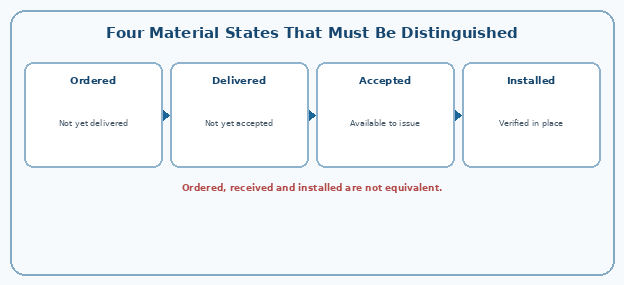
Figure 3. Four Material States That Must Be Distinguished
6. Site inventory depends on location, condition and allocation
A total stock balance can mislead management. A project may report 500 meters of cable while most of it is at another store, reserved for another zone or of the wrong specification for upcoming work. Inventory becomes meaningful only when differentiated by item, location, batch, acceptance status and allocation.
Available stock should be calculated from accepted, accessible quantities after deducting issued or reserved material and considering expiry and storage conditions. Transfers between central stores, floor stores and laydown areas must be recorded as transactions rather than verbal arrangements. Incorrect location data can destroy the benefit of on-time procurement through unnecessary searching and internal transport.
For perishable materials and equipment with special storage requirements, inventory management is also asset-quality management. A large quantity that cannot be used is not a safety buffer; it is a sunk cost and an operational risk.
7. Issuing and consumption must be linked to executed work
Issue from store is not equivalent to justified consumption, and consumption is not equivalent to accepted installed work. A crew may receive a week of material but install only part of it; the balance may remain at the workface, be moved elsewhere or be lost. Treating every issue as final consumption hides the true variance.
Issue records should connect to work packages, locations, crews, intended dates and material norms. After execution, actual use should be reconciled with completed quantities, permitted waste, recovered material and returns. Reusable items need transfer and condition records rather than being written off at first issue.
Suppose a zone installs 1,000 meters of pipe but receives 1,180 meters. It would be premature to label the full 180-meter difference as waste. Cut lengths, routing changes, on-site balances, damage and quantity takeoff differences must be examined. Evidence-based reconciliation separates justified use from avoidable loss.
8. Waste, loss and rework require cause-based analysis
Different materials have different loss mechanisms. Concrete is affected by transport and actual pour volumes; reinforcement generates cutting offcuts; finishing materials can break; MEP equipment may need replacement because of specification errors. A single blanket waste allowance makes control targets unreliable.
Allowances should reflect methods, specifications, work conditions and observed performance. When actual use exceeds the norm, managers must distinguish takeoff error, duplicate issue, poor storage, incorrect handling, design change and quality-driven rework. Each cause demands a different response; restricting store issues cannot correct a drawing problem.
Waste analysis should be linked to cost and productivity. Very low waste accompanied by crew stoppages may not be optimal, while excessive buffers raise working capital, theft exposure and handling costs. The objective is total project performance, not a single isolated metric.
9. Safety stock must balance shortage risk against carrying cost
Many sites respond to unreliable supply by buying earlier and buying more. This can reduce some shortage risk but increases working capital, storage space, preservation cost and obsolescence exposure when design changes. Conversely, reducing inventory at any cost can interrupt the schedule.
Appropriate buffers depend on demand variability, supplier reliability, replenishment lead time, schedule criticality and substitutability. For common materials, reorder points and lead-time-based buffers may be suitable. For custom-built equipment, manufacturing milestones and mitigation plans may matter more than physical safety stock.
Inventory must be time-phased. Goods in transit cannot solve this week’s shortage if they arrive next week. The control view should show period demand, opening usable stock, reliable inbound quantities and expected consumption. Warnings must appear before the shortage stops the crew.
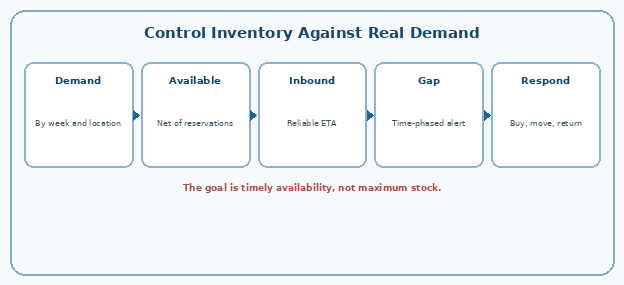
Figure 4. Control Inventory Against Real Demand
10. Connect materials to schedule, cost and quality to see the real impact
A material shortage becomes a schedule risk when it blocks work that is otherwise ready and no acceptable alternative exists. Equally, rising stock is not necessarily bad when the project is approaching a high-intensity execution phase. Inventory figures need the context of activities and quantities.
When item codes link to activity and cost codes, managers can trace delays back to orders, cost overruns back to consumption, and quality defects back to installed batches. This provides a stronger basis for forecasting remaining cost and assessing how design changes affect both procurement and execution.
The data model must distinguish ordered, delivered, accepted, issued and installed quantities. Without these intermediate states, a project may report adequate stock while crews cannot proceed, or recognize material cost as completed work before installation has been accepted.
11. Design material data around one shared operational truth
A useful material master needs consistent identifiers, names, units, specifications, categories, storage requirements and links to activities. Approved substitution rules are essential; departments should not independently assume that similar descriptions represent interchangeable items.
Transaction data should capture who requested and approved material, which order and batch were involved, where goods were received, when they passed inspection, to whom they were issued and where they were installed. Sophisticated technology is not the starting requirement. Consistent structure and clear update ownership are. A polished dashboard cannot compensate for delayed or unreliable field records.
Connecting planning, estimating, procurement, stores and inspection creates a continuous data trail. Organizations should prioritize handoffs where errors accumulate: revised drawings not reflected in demand, deliveries awaiting acceptance, issued goods not reconciled with consumption, and surplus material never returned.
12. Illustrative case: sufficient stock on paper, shortage at the workface
Consider a project requiring 2,400 meters of cable across three zones over the next four weeks. The store reports 2,700 meters on hand, so procurement concludes that no additional order is necessary. A closer review shows that 800 meters are reserved for another zone, 500 are awaiting inspection and 300 are at an off-site warehouse without a confirmed transfer date. Only 1,100 meters are actually usable at the required workface.
If management relies on the aggregate balance, crews may stop two weeks later while the system still reports stock on hand. The correct approach reconciles weekly, location-specific demand against accepted, unreserved quantities and confirmed inbound transfers. The gap becomes visible early enough to move stock, resequence work or place an additional order.
The figures are illustrative rather than industry benchmarks. The underlying lesson is general: a book inventory balance cannot replace an assessment of material readiness for a specific activity. Condition, location and timing determine whether stock is operationally available.
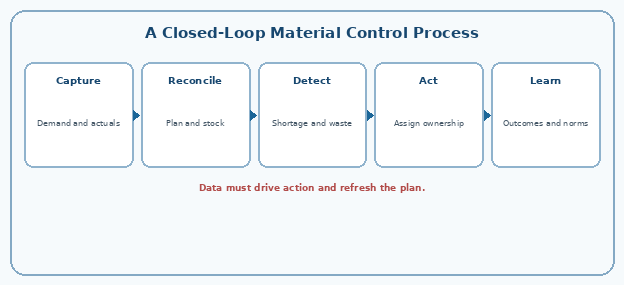
Figure 5. A Closed-Loop Material Control Process
13. Implementation roadmap: standardize control before automating
The first step is not buying a large platform. Select material categories with clear schedule or cost impact, standardize item codes, units, locations, acceptance states and activity links, then define demand, approval, procurement, receipt, issue, return and consumption-reconciliation workflows. A simple process updated consistently is more useful than numerous contradictory reports.
Next, connect time-phased demand to procurement plans and usable inventory. Measures may include on-time material availability, crew stoppages caused by shortages, inspection waiting time, consumption variance, unused material and inventory days. These indicators must be interpreted by material category rather than applying one universal threshold.
Only after a reliable history exists should organizations expand into AI-assisted demand forecasting, anomaly detection and transfer recommendations. Article #16 will examine those capabilities. AI needs real demand, usable stock, lead times and consumption outcomes; if its input is limited to receipts and issues, a statistically accurate forecast may still fail to prevent shortages on site.
Conclusion
Construction material management is fundamentally the management of work readiness, not merely goods in a warehouse. Reliable control connects design- and schedule-based demand with purchasing, acceptance, available stock, issues and verified installed quantities.
A receipts-and-issues system alone cannot explain material readiness. Managers need to distinguish ordered, delivered, accepted, allocated and installed states, while knowing where materials are located and when they can be used. This is how projects separate genuine shortages from data errors, justified waste from avoidable loss, and sensible buffers from excessive inventory.
That connected history also provides the foundation for Article #16 on AI-driven material demand forecasting. Technology can make useful recommendations only when material data accurately reflect site activities, timing and operational constraints.
Professional references and conceptual foundations
- Construction Industry Institute (CII) – construction materials management and project supply-chain practices.
- Project Management Institute (PMI) – resource planning, procurement and project control principles.
- AACE International – cost engineering terminology and cost/quantity control practices.
- Numerical examples are illustrative scenarios developed for this article, not industry statistics.
- Construction Project Cost Management: From Estimating to Real-World Budget Control
- How AI Can Optimize Construction Planning and Site Resource Coordination
- How Can AI Predict Construction Project Cost Overruns?
- Construction Leadership Truth #3
- Why Do Growing Enterprises Need Standardized Management Processes?