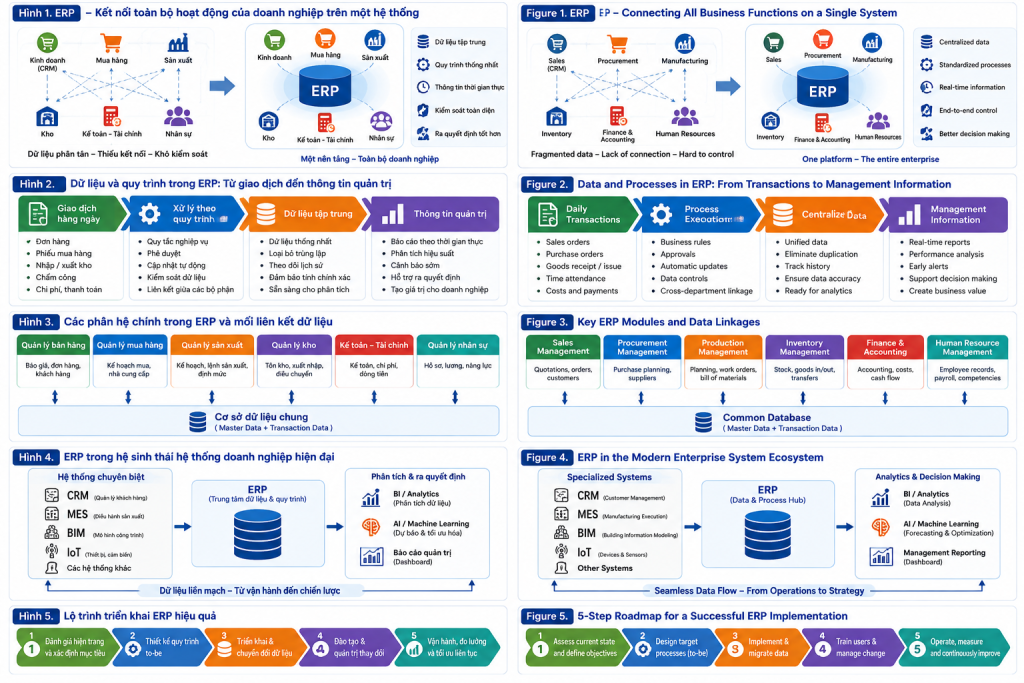

For decades, ERP has been built around a clear responsibility: record critical business transactions in a consistent structure and ensure that those transactions pass through defined controls. Sales orders, purchase requests, inventory movements, production orders, invoices, receivables, costs, and accounting entries are captured in one operating backbone so that the enterprise can establish what happened, who performed the action, and what the current state is. This reliable operational ledger is why ERP remains foundational to modern enterprise management.
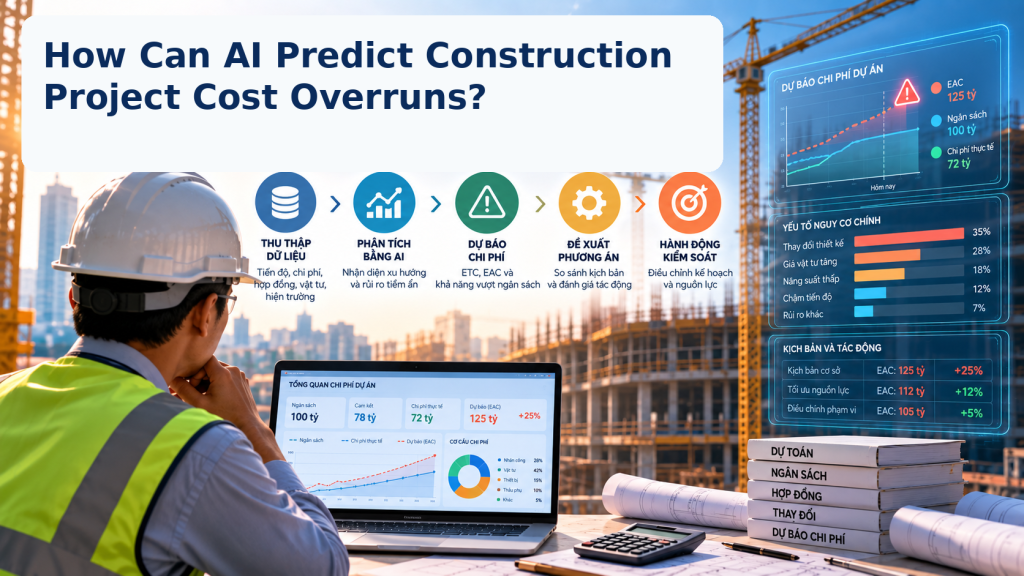
Business leaders, however, increasingly need more than records. They want to know not only how much inventory exists today, but which items are likely to run short; not only how much a project has spent, but where budget overrun risk is forming; not only which receivables are overdue, but which customers are likely to delay payment and which intervention should be prioritized. Traditional ERP contains part of the evidence, yet it was not designed to continuously reason, predict, and recommend.
AI changes that boundary. When predictive models, generative AI, and AI agents operate on trustworthy ERP data, ERP can evolve from a system of record into a decision-support platform. Transactions become business context, weak signals can be surfaced earlier, scenarios can be evaluated, and actions can be prepared or executed within defined limits. Importantly, AI does not make ERP less relevant. The more autonomy an organization gives AI, the more it needs a reliable core that tells the AI which transaction it is touching, which policy applies, and who remains accountable.
#01 – Data-driven management
1. Traditional ERP is strong at “what happened” but less capable at “what should happen next”
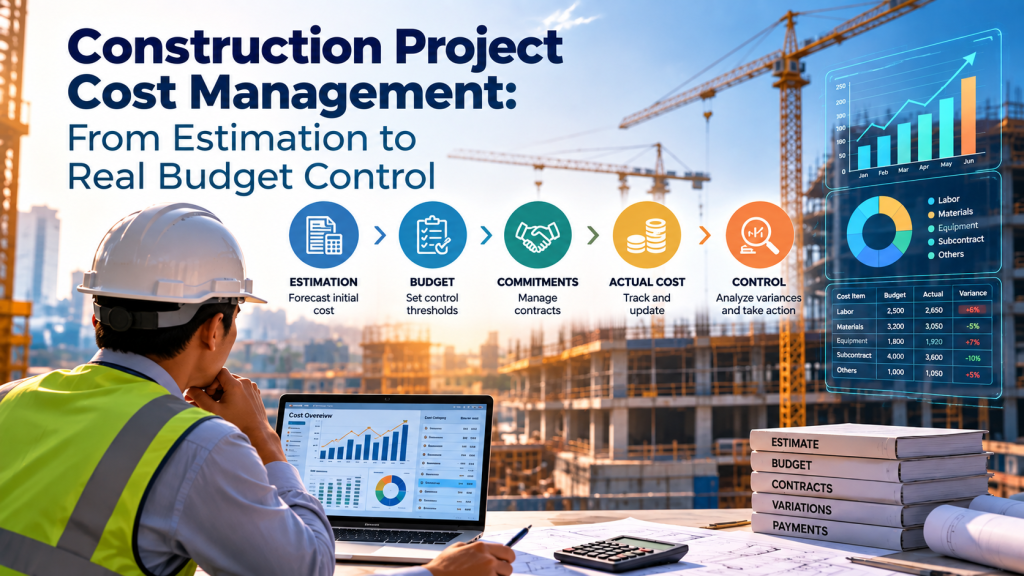
Transactional ERP is optimized for correctness and control. A purchase order can be checked against supplier master data, item codes, approval limits, budgets, and user permissions. A goods receipt updates inventory; an invoice updates liabilities and cost; a payment changes cash and accounting. This chain creates traceability and is indispensable for operational control.
But transaction systems mostly respond to what users enter or to rules configured in advance. A reorder point can flag low inventory, but deciding whether to buy more requires demand forecasts, open commitments, supplier lead times, available cash, substitutes, and disruption risk. That is not a single-condition validation problem; it is a contextual decision with competing objectives.
The distinction is therefore important: traditional ERP standardizes execution after a decision, while AI can help shape the decision before execution. ERP answers “where is the order?”, “who approved it?”, or “how much was received?” AI can extend this to “why is the order at risk?”, “what will be affected if the supplier slips by three days?”, and “should we transfer stock, change supplier, or adjust the production plan?” Together, they can compress the path from event to awareness, awareness to decision, and decision to action.
An “intelligent ERP” should therefore mean more than placing a chat box on top of screens. The deeper value is to add explanation, prediction, recommendation, and—in selected cases—governed execution directly into the processes ERP already controls.
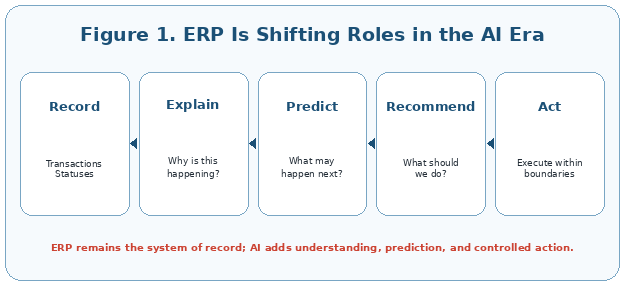
Figure 1. ERP is shifting roles in the AI era.
2. How AI moves ERP from a system of record to a decision-support platform
#02 – AI and enterprise decisions
The shift can be viewed in five levels. First comes record: ERP remains the authoritative source for transactions, states, and permissions. Second comes explain: AI helps users interpret data in natural language, connect related transactions, summarize changes, and identify likely drivers. Third comes predict: models use history and current signals to estimate demand, cash position, delivery risk, cost overrun, or the probability that a receivable will become overdue.
The fourth level is recommend. This is where ERP becomes a genuine decision-support platform. Instead of merely warning that stock may run short, the system can compare alternatives such as replenishing, transferring stock, changing production priorities, or accepting a temporary service trade-off. Useful recommendations must show consequences across cost, cash, capacity, and commitments—not optimize a single variable in isolation.
The fifth level is act. An AI agent can prepare a purchase request, draft a plan adjustment, contact a supplier, update a field, or initiate an approval workflow. For low-risk, tightly bounded scenarios, an agent may complete the transaction within delegated authority. This changes the operating model from “people read data and then navigate the ERP” to “people express an outcome, AI prepares or performs part of the work, and ERP records and controls the result.”
Product direction in 2026 makes this shift visible. Microsoft describes ERP experiences that connect business intent to insight to execution while keeping humans in the loop. SAP is expanding Joule Assistants and domain agents embedded in business processes. Oracle is introducing ERP agents directly into finance workflows. The vendor names differ, but the underlying pattern is consistent: AI is being connected to process context and execution rights rather than remaining a detached conversational layer.
3. Why ERP data is a powerful foundation for AI—but not a complete one
Enterprise AI needs business context. ERP is unusually valuable because it holds structured, semantically meaningful objects: customers, suppliers, materials, accounts, cost centers, projects, orders, inventory, receivables, plans, and transaction histories. More importantly, those objects are linked by business processes. A cost can often be traced to a purchase order, receipt, contract, and accountable organizational unit. These relationships give AI a stronger semantic map than a collection of disconnected tables.
ERP also contains the constraints that make recommendations executable. A procurement option depends not only on price but on approval limits, approved suppliers, payment terms, budget, and user authority. A production change must consider capacity, bills of material, inventory, priorities, and maintenance windows. Without those constraints, AI may produce plausible language while proposing something the organization cannot actually do.
Yet ERP does not contain every signal needed for every decision. Important evidence may live in supplier emails, contracts, machine telemetry, site imagery, CRM, BIM, MES, external price feeds, weather, regulation, or market-risk information. An AI system that reads only ERP may know that a delivery is late but miss the supplier email explaining port congestion; it may see repeated maintenance orders without observing abnormal vibration from IoT sensors.
An effective architecture therefore distinguishes the system of record from the decision context. ERP remains authoritative for core transactions; integration and data layers bring in additional evidence; AI uses both. This avoids two common mistakes: forcing every dataset into ERP, or building an AI island that does not understand transaction status, business rules, and accountability.
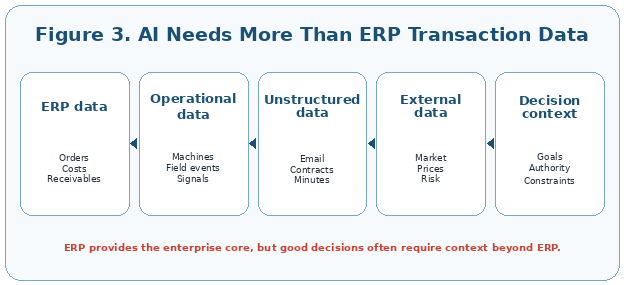
Figure 2. AI needs more than ERP transaction data.
4. From dashboards to a closed decision loop: where AI creates real value
In a traditional reporting model, data moves in one direction: transactions are captured, aggregated into dashboards, read by managers, and translated manually into action. The largest gap sits between “seeing information” and “changing operations.” A dashboard can be visually excellent and still have little operational impact if people must independently investigate causes, call other teams, compare options, and re-enter the decision into another system.
AI becomes valuable when it helps close that loop. A strong decision cycle can include six steps: detect a signal; retrieve context from ERP and related sources; analyze causes and scenarios; recommend an option; apply approval or policy; execute and record the outcome. The outcome then becomes feedback for the next cycle. Once this operates continuously, management becomes more proactive rather than waiting for end-of-period reports.
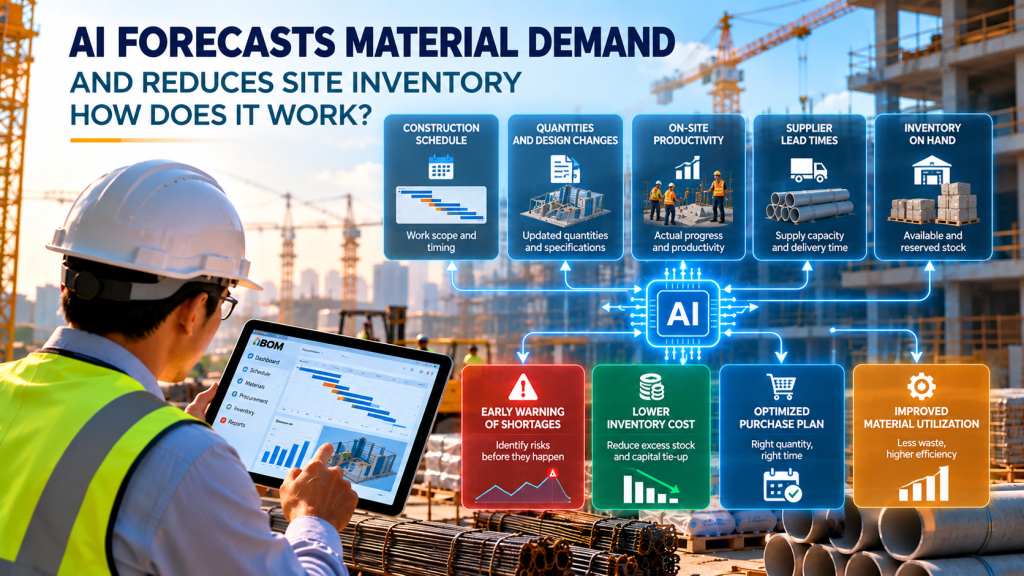
In procurement, a late-supplier signal should lead to more than an email summary. AI can identify affected purchase orders, the materials and customer commitments they support, days of remaining stock, available substitutes, and the financial effect of alternatives. It can recommend transferring stock, accelerating another order, or requesting partial delivery. After approval, ERP records the updated plan and transaction history.
The same logic applies to finance and manufacturing. Instead of listing overdue receivables, AI can segment causes, rank collection priorities, estimate cash impact, and prepare next actions. In production, it can combine orders, inventory, capacity, maintenance, and quality risk to recommend a revised schedule. The value comes not from prediction alone, but from placing prediction inside a decision path that can return to governed execution.
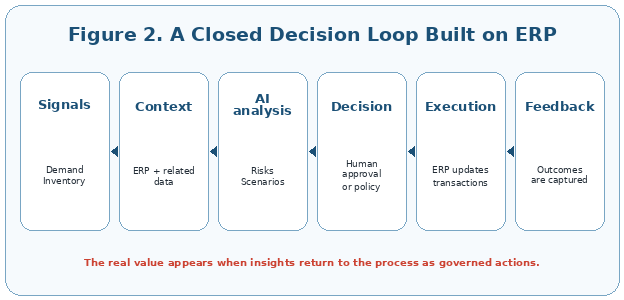
Figure 3. A closed decision loop built on ERP.
5. AI agents change how people interact with ERP
Traditional ERP expects users to know which screen to open and which sequence of actions to follow. Generative AI makes interaction more natural by allowing users to ask questions in ordinary language. AI agents go further: they can hold an objective across multiple steps, call tools, retrieve data, check conditions, and perform actions.
The difference between a chatbot and an agent is persistence toward an outcome. If a CFO asks, “Identify receivables that could affect this month’s cash position and prepare a collection plan,” an agent may need to analyze aging, payment history, customer commitments, disputes, cash forecasts, and credit policy; rank risk; propose interventions; and create a worklist. With permission, it might also draft messages or create tasks.
This changes ERP user experience from interface navigation to intent expression. But convenience must not be confused with unrestricted authority. Actions still need to comply with role permissions, segregation of duties, approval thresholds, and audit requirements. An agent may prepare a payment but should not collapse maker and approver roles. It may recommend a substitute supplier, but still needs to respect the approved-vendor list and procurement policy.
Microsoft now provides an ERP MCP Server that exposes business data and logic to agents through a governed layer; SAP emphasizes agents grounded in process context, business data, and governance; Oracle places agents directly in finance processes. These approaches point to an architectural principle: agents should enter ERP through controlled business interfaces, not through shortcuts that bypass the application’s rules.
6. ERP + AI should be designed as a decision system, not a disconnected AI feature
A practical architecture typically contains at least five layers. The first is operational systems: ERP for core transactions, with CRM, MES, BIM, IoT, and specialist applications for domain depth. The second is integration and data, where information is synchronized, governed, and exposed with consistent semantics. The third is AI: predictive models, generative models, semantic retrieval, and agents. The fourth is policy and authority: identity, permissions, approval limits, business rules, and risk controls. The fifth is monitoring: action logs, quality metrics, alerts, feedback, and stop mechanisms.
The most important rule is that AI should not create a competing “truth” alongside ERP. When AI analyzes an order, its identifier, state, quantity, value, and ownership should resolve to an authoritative source. When an agent changes something, the update should be written through a valid ERP or source-system transaction. That preserves a consistent audit chain even when the initiating interface is conversational.
A good architecture also separates probabilistic reasoning from deterministic controls. AI can estimate that a supplier has a 78% risk of delay and recommend switching an order. But a hard rule such as “this user cannot approve orders above a defined threshold” should be enforced deterministically by identity and workflow controls, not left to the model’s judgment.
Finally, the architecture must measure business outcomes. If AI recommends raising safety stock and the organization accepts, it should later evaluate stockouts, working capital, and service level. If the only metrics are number of prompts or agent runs, the organization will optimize technology usage rather than decision quality.
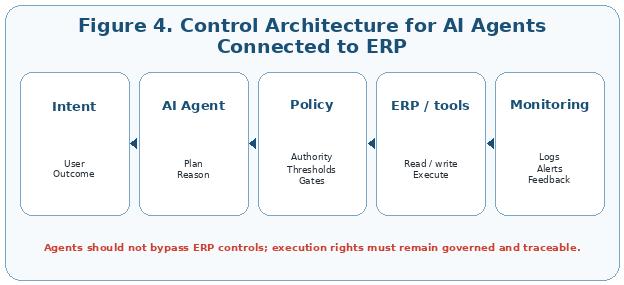
Figure 4. Control architecture for AI agents connected to ERP.
7. New risks emerge when AI can directly affect ERP transactions
When AI only generates a summary, an error may have limited impact. When AI can create an order, change a plan, send a supplier instruction, allocate budget, or prepare a payment, the same error can become an operational incident. Autonomy therefore needs stronger controls as it expands.
The first risk is incomplete context: AI can reason correctly from the data it sees yet still be wrong because a critical condition is missing. The second is plausible but inaccurate output, especially with generative models. The third is access control: an agent may accidentally receive broader rights than the user or combine multiple narrow permissions into a materially powerful sequence. The fourth is error propagation at machine speed—one faulty rule or recommendation can affect hundreds of transactions faster than a human process would.
Controls should therefore be risk-based. Low-risk, reversible, easy-to-verify actions can be automated more aggressively. Decisions affecting cash, contracts, people, safety, or customer commitments need stronger approval gates. Exceptions require stop conditions and escalation. The enterprise also needs evidence of what data the agent used, which policy applied, what it recommended, who approved, and what ultimately changed.
NIST’s AI Risk Management Framework emphasizes explicit human-AI roles, appropriate oversight, and lifecycle risk management. Applied to ERP, this means that before granting execution rights the organization should define scope, risk tolerance, process ownership, approval design, monitoring, and post-deployment quality measures.
8. A practical roadmap for adding AI to ERP without turning the program into a technology experiment
The first step is not selecting a model. It is selecting a decision worth improving. Look for places where managers spend significant time gathering context, where slow response creates measurable cost, or where early warning has high value: material shortages, collection prioritization, budget overrun, delivery-risk analysis, or production scheduling. A strong use case has measurable outcomes and enough history to test against reality.
The second step is to assess data and process readiness. Duplicate master data, stale order status, off-system workarounds, and ambiguous permissions will be amplified by AI. A disciplined ERP with trusted data is usually a stronger AI foundation than a feature-rich ERP that people do not use consistently.
The third step is to start with advisory AI. Let the system explain, predict, and recommend while humans decide. This allows the organization to measure accuracy, learn edge cases, and refine policy. Once quality is stable, the fourth step is to close the action loop: AI prepares the transaction, a person approves, ERP executes, and results are measured. This is where productivity gains become material because the handoff between analysis and operations is reduced.
The fifth step is selective autonomy. Only tasks with clear boundaries, low downside, strong verification, and good rollback mechanisms should become fully automated. Higher-risk decisions can use a human-on-the-loop model in which people do not inspect every step but monitor exceptions and retain stop authority. Autonomy should be adjustable based on empirical quality and risk—not treated as a permanent switch.
Finally, AI must be managed as an ongoing operating capability. Models, data, processes, and market conditions change. An agent that performs well today can degrade after policy changes, product changes, or shifts in demand. Organizations therefore need business owners, quality metrics, review cycles, incident procedures, and update mechanisms. AI in ERP does not end at go-live; it enters a continuous improvement cycle just as ERP itself does.
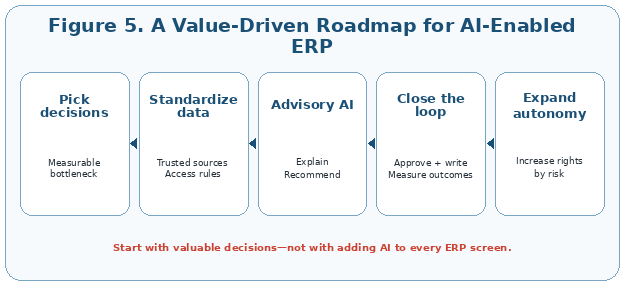
Figure 5. A value-driven roadmap for AI-enabled ERP.
9. ERP in the AI era is about proactive management—not “ERP doing everything automatically”
The practical goal is not to remove people from every process. The larger opportunity is to shift human effort away from data gathering, reconciliation, repetitive navigation, and obvious cases toward priority setting, strategic trade-offs, exception management, and accountability for consequential decisions.
ERP continues to do what it does best: provide a traceable system of transactions, permissions, and workflows. AI adds what traditional ERP lacks: the ability to interpret signals, combine context, reason across sources, predict, and prepare actions. Connected through sound data architecture and governance, these layers can shorten the entire decision cycle rather than simply produce more information.
This is also a foundation for higher levels of autonomous enterprise operation. Autonomy does not mean AI freely deciding. It means that many recurring decisions can be detected, analyzed, and executed according to designed policies while people remain responsible for objectives, boundaries, exceptions, and outcomes. ERP is one of the most important control infrastructures that makes such a model possible.
Conclusion
ERP in the AI era is moving from a system that primarily records “what happened” toward a platform that can help explain “why,” predict “what may happen,” recommend “what to do,” and—in appropriate boundaries—assist with execution. That evolution is sustainable only if ERP continues to anchor authoritative transactions, process controls, permissions, and auditability.
Organizations should therefore ask a more valuable question than “Does our ERP have AI?” They should ask which decisions are currently slow or weak, which data is required to improve those decisions, how much authority AI should receive, and how the result will return to the process as a governed action. When those questions are answered, AI stops being a decorative ERP feature and becomes part of the enterprise management system.
References
- Microsoft Learn. “Use Copilot Cowork to orchestrate insights and actions across Dynamics 365 ERP.” Updated 03/09/2026. https://learn.microsoft.com/en-us/dynamics365/release-plan/2026wave1/enterprise-resource-planning/finance-operations-crossapp-capabilities/use-copilot-cowork-orchestrate-insights-actions-across-dynamics-365-erp
- Microsoft Learn. “Build agents for finance and operations with Model Context Protocol.” General availability 27/01/2026. https://learn.microsoft.com/en-us/dynamics365/release-plan/2025wave1/finance-supply-chain/finance-operations-crossapp-capabilities/build-agents-dynamics-365-finance-operations-model-context-protocol
- Microsoft Dynamics 365 Blog. “Reinventing source-to-pay with agentic ERP.” 18/06/2026. https://www.microsoft.com/en-us/dynamics-365/blog/business-leader/2026/06/18/reinventing-source-to-pay-with-agentic-erp/
- SAP News Center. “SAP Unveils the Autonomous Enterprise.” 12/05/2026. https://news.sap.com/2026/05/sap-sapphire-sap-unveils-autonomous-enterprise/
- SAP News Center. “SAP Business AI: Release Highlights Q2 2026.” July 2026. https://news.sap.com/2026/07/sap-business-ai-release-highlights-q2-2026/
- Oracle Fusion Cloud Applications. “Enterprise Resource Planning features with AI.” https://docs.oracle.com/en/cloud/saas/fusion-ai/aiafl/ai-erp.html
- “AI Risk Management Framework (AI RMF).” https://www.nist.gov/itl/ai-risk-management-framework